


Overview
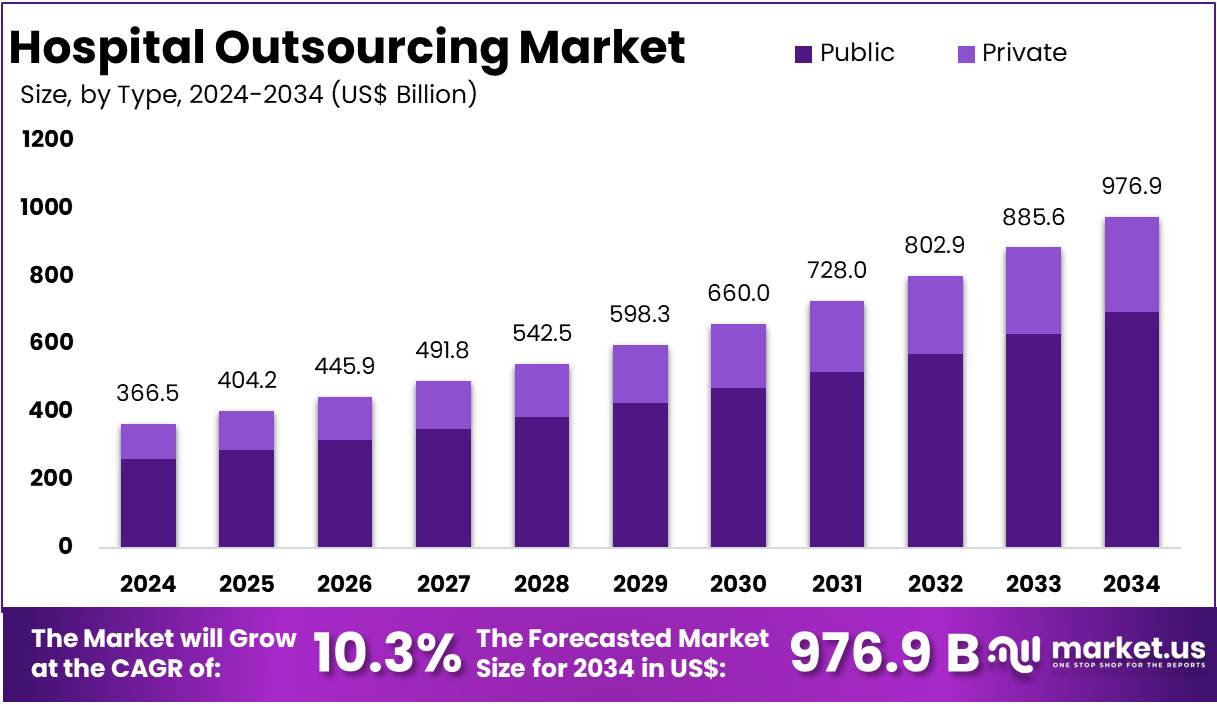
New York, NY – May 20, 2026 – The Global Hospital Outsourcing Market Size is expected to be worth around US$ 976.9 Billion by 2034, from US$ 366.5 Billion in 2024, growing at a CAGR of 10.3% during the forecast period from 2025 to 2034. North America held a dominant market position, capturing more than a 65.6% share and holds US$ 240.4 billion market value for the year.
The global hospital outsourcing market is witnessing steady growth, driven by the increasing need for cost optimization, operational efficiency, and improved patient care across healthcare facilities. Hospital outsourcing refers to the practice of delegating non-core and specialized functions such as medical billing, IT services, laboratory management, housekeeping, catering, and diagnostic services to third-party service providers. This approach enables hospitals to focus on core clinical operations while reducing administrative burden and operational costs.
The growing adoption of digital healthcare systems, rising patient volumes, and increasing pressure to comply with healthcare regulations are supporting the demand for outsourced services. In addition, hospitals are increasingly outsourcing revenue cycle management, telehealth support, and data management functions to improve service quality and workflow efficiency. The shortage of skilled healthcare professionals in several regions has further accelerated the reliance on outsourcing solutions.
North America holds a significant share of the hospital outsourcing market due to advanced healthcare infrastructure and high adoption of healthcare IT services. Meanwhile, the Asia-Pacific region is expected to witness notable growth owing to expanding healthcare investments, rising medical tourism, and increasing private sector participation.
Key market participants are focusing on strategic partnerships, service expansion, and technology integration to strengthen their market presence. The long-term outlook for the hospital outsourcing market remains positive as healthcare providers continue to prioritize efficiency, scalability, and patient-centric care models.
Key Takeaways
- The global hospital outsourcing market is anticipated to reach US$ 976.9 billion by 2034, rising from US$ 366.5 billion in 2024, at a CAGR of 10.3% during the forecast period.
- In 2024, the private hospitals segment led the market by type, accounting for more than 71.3% of the overall market share.
- The healthcare IT segment emerged as the dominant service category in 2024, capturing over 28.3% of the global hospital outsourcing market share.
- Based on hospital size, small and medium hospitals held the largest market share in 2024, representing more than 58.8% of the total market.
- North America dominated the global hospital outsourcing market in 2024, securing over 65.6% market share and reaching a valuation of US$ 240.4 billion.
Regional Analysis
In 2024, North America dominated the global hospital outsourcing market, accounting for more than 65.6% of the total market share and reaching a valuation of US$ 240.4 billion. The region’s strong position is supported by its advanced healthcare infrastructure, widespread adoption of healthcare technologies, and growing focus on operational efficiency. Increasing labor costs and rising hospital operating expenses have encouraged healthcare providers across the United States and Canada to outsource non-core functions to specialized service providers.
Hospitals in the region are increasingly relying on outsourcing services for areas such as healthcare IT management, revenue cycle management, billing, diagnostics, and administrative operations. This shift is helping healthcare institutions reduce operational burden, improve service quality, and enhance patient care outcomes. In addition, the shortage of skilled healthcare professionals in several specialized fields has accelerated the adoption of outsourcing solutions.
The growing prevalence of chronic diseases and the rapidly aging population have also increased patient admissions and healthcare demand, placing additional pressure on hospital systems. Supportive government initiatives promoting digital health integration and value-based care models have further strengthened outsourcing adoption. Continuous investment in healthcare innovation and technology partnerships continues to position North America as the leading regional market for hospital outsourcing services.
Emerging Trends
- Shift Toward Non-Clinical Outsourcing: Hospitals are increasingly outsourcing non-clinical functions such as housekeeping, food services, billing, and security to improve operational efficiency. This approach enables healthcare professionals to focus on patient care while reducing staffing, training, and equipment costs, ultimately supporting smoother hospital operations and improved workflow management.
- Rising Demand for IT and Digital Services: Healthcare providers are outsourcing IT functions including electronic health records management, cybersecurity, telehealth platforms, and cloud storage solutions. This trend helps hospitals strengthen digital infrastructure, enhance data security, improve patient access to healthcare services, and remain updated with evolving healthcare technologies and regulations.
- Focus on Cost Control and Operational Efficiency: Hospitals are adopting outsourcing strategies to reduce operational expenses associated with staffing, infrastructure, and equipment management. Outsourcing non-core departments such as laundry, maintenance, and billing improves budget control, increases efficiency, and enables healthcare organizations to allocate more resources toward quality patient treatment services.
- Growth of Specialized Service Providers: The market is witnessing increased demand for specialized outsourcing providers offering services such as medical coding, diagnostic imaging, and radiology reporting. These providers deliver advanced technology, skilled professionals, improved accuracy, and faster turnaround times, helping hospitals enhance operational performance without significant internal investment requirements.
- Expansion of Outsourcing in Developing Countries: Healthcare facilities in developing economies are increasingly outsourcing services to address staffing shortages and infrastructure limitations. Outsourcing diagnostics, billing, and support services enables hospitals to improve healthcare quality, expand operational capacity, access specialized expertise, and efficiently meet growing patient demand without substantial capital investment.
- Compliance and Risk Management Outsourcing: Hospitals are outsourcing compliance and risk management activities to ensure adherence to healthcare regulations, patient privacy laws, and billing standards. External specialists manage audits, policy updates, and regulatory monitoring, reducing operational risks, minimizing compliance errors, and helping healthcare providers maintain smooth administrative operations.
- Integrated Outsourcing Models: Hospitals are increasingly adopting integrated outsourcing models where a single provider manages multiple support services. This bundled outsourcing approach improves coordination, simplifies vendor management, enhances communication across departments, reduces administrative complexity, and supports streamlined hospital operations with improved service integration and efficiency.
Use Cases
- Medical Billing and Claims Processing: Hospitals frequently outsource medical billing and insurance claims processing to specialized service providers. These companies improve claim accuracy, accelerate payment cycles, reduce administrative costs, and strengthen revenue cycle management, allowing healthcare professionals to concentrate more effectively on patient care and clinical responsibilities.
- Hospital Housekeeping and Facility Management: Many hospitals outsource housekeeping, laundry, waste disposal, and facility maintenance services to specialized firms. These providers ensure high hygiene standards, infection control, and continuous facility management support, helping hospitals maintain clean environments while reducing operational burdens and improving overall service efficiency.
- IT Support and Cybersecurity Services: Healthcare organizations outsource IT support and cybersecurity services to maintain secure digital infrastructure and ensure uninterrupted system performance. External providers manage software updates, server maintenance, cybersecurity monitoring, and technical support, helping hospitals reduce risks related to data breaches, cyberattacks, and system failures.
- Telemedicine and Virtual Care Services: Hospitals outsource telemedicine platforms to technology providers to deliver virtual consultations, remote monitoring, and digital prescription services. This approach expands healthcare access, particularly in remote regions, while reducing infrastructure costs and enabling hospitals to provide flexible, technology-driven patient care solutions efficiently.
- Diagnostic Services (e.g., Pathology, Imaging): Many hospitals outsource pathology, radiology, and imaging services to specialized diagnostic laboratories. These providers offer advanced equipment, expert analysis, and faster reporting, helping hospitals improve diagnostic accuracy, reduce equipment investment costs, shorten patient waiting times, and enhance overall treatment efficiency and healthcare delivery.
- Patient Support and Call Center Services: Hospitals outsource patient support and call center operations to manage appointment scheduling, inquiries, reminders, and follow-up communications. Third-party service providers improve response times, ensure round-the-clock support, enhance patient satisfaction, and reduce administrative pressure on hospital staff and front-desk operations effectively.
- Pharmacy Management: Some hospitals outsource pharmacy management to specialized providers responsible for inventory control, medicine procurement, storage, and regulatory compliance. This strategy helps reduce medication waste, improve drug availability, strengthen patient safety, ensure accurate dispensing practices, and optimize overall pharmacy operations and cost management efficiency.
Frequently Asked Questions on Hospital Outsourcing
- Why are hospitals increasingly adopting outsourcing services?
Hospitals are increasingly adopting outsourcing services to control rising operational costs, improve service quality, and focus on patient-centered care. Outsourcing also enables healthcare facilities to access specialized expertise, advanced technologies, and scalable workforce solutions without significant capital investment requirements. - What are the major services included in hospital outsourcing?
Major hospital outsourcing services include medical billing, revenue cycle management, clinical laboratory services, diagnostic imaging, housekeeping, catering, IT management, staffing, telemedicine support, and pharmaceutical management. These services help hospitals streamline operations while maintaining healthcare quality and compliance standards. - Which regions are leading in the hospital outsourcing market?
North America leads the hospital outsourcing market due to advanced healthcare infrastructure, high healthcare spending, and widespread adoption of outsourcing practices. Europe and Asia-Pacific are also experiencing significant growth, supported by healthcare modernization, rising patient populations, and increasing private healthcare investments. - How is technology influencing the hospital outsourcing market?
Technology is significantly influencing the hospital outsourcing market through the adoption of cloud computing, artificial intelligence, electronic health records, and telemedicine platforms. These technologies improve operational efficiency, enhance patient management capabilities, and enable outsourcing providers to deliver faster and more accurate healthcare services. - What role does revenue cycle management play in hospital outsourcing?
Revenue cycle management is a critical segment within hospital outsourcing because it helps healthcare facilities manage billing, claims processing, coding, and payment collection efficiently. Effective outsourcing of revenue cycle operations improves cash flow, minimizes claim denials, and enhances overall financial stability. - How does outsourcing improve patient care in hospitals?
Outsourcing improves patient care by allowing hospitals to focus more resources on clinical activities and treatment services. Specialized outsourcing providers can also enhance operational efficiency, reduce waiting times, improve service responsiveness, and support better healthcare experiences for patients and caregivers. - What impact does workforce shortage have on hospital outsourcing demand?
Healthcare workforce shortages are increasing the demand for hospital outsourcing services worldwide. Hospitals are relying on external staffing agencies and specialized providers to address shortages of nurses, technicians, and administrative personnel while maintaining uninterrupted healthcare operations and patient care standards. - How do government regulations affect the hospital outsourcing market?
Government regulations significantly influence the hospital outsourcing market by establishing standards for patient safety, data privacy, service quality, and healthcare compliance. Regulatory requirements encourage hospitals and outsourcing providers to maintain transparency, operational accountability, and secure management of healthcare information systems.
Conclusion
The global hospital outsourcing market is expected to witness strong growth in the coming years, supported by rising demand for operational efficiency, cost reduction, and improved patient care services. Increasing adoption of healthcare IT solutions, telemedicine platforms, and specialized outsourcing services continues to strengthen market expansion.
Hospitals are increasingly focusing on outsourcing non-core functions to enhance workflow management and allocate greater resources toward clinical operations. North America remains the leading regional market, while Asia-Pacific presents significant growth opportunities due to healthcare modernization and rising investments. Overall, technological advancements and growing healthcare demands are expected to drive long-term market development globally.
Discuss your needs with our analyst
Please share your requirements with more details so our analyst can check if they can solve your problem(s)




