


Overview
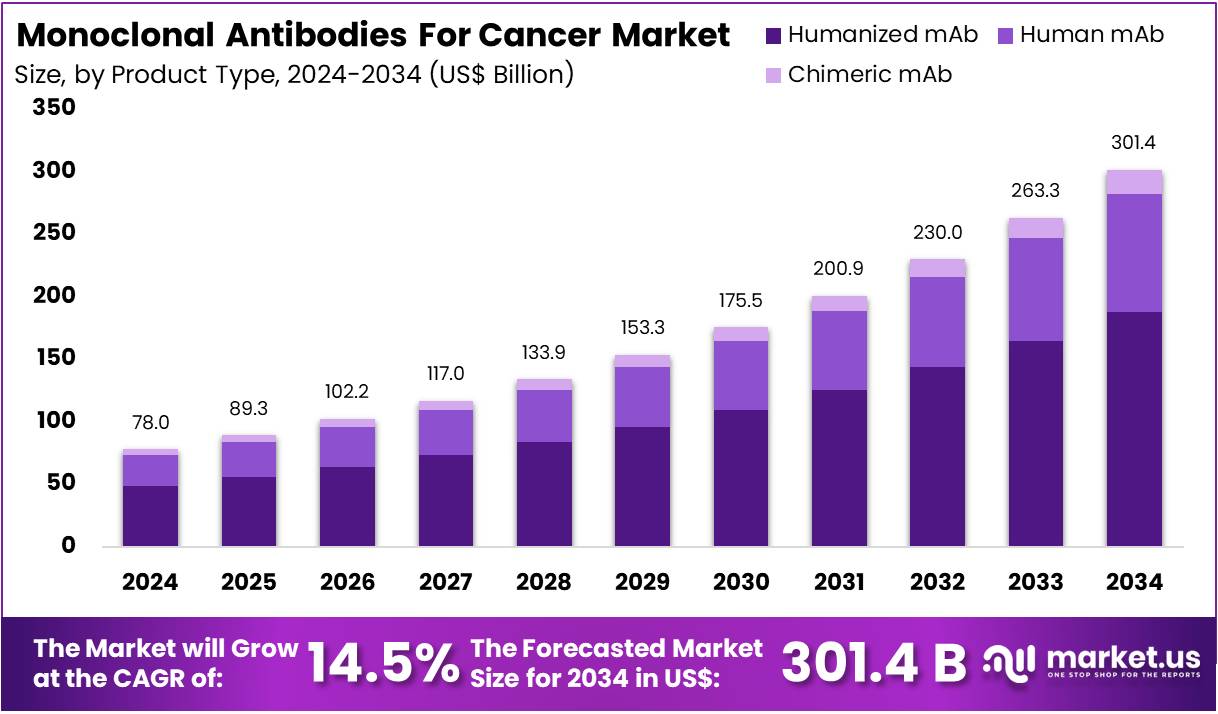
New York, NY – April 30, 2026 – The Global Monoclonal Antibodies for Cancer Market size is expected to be worth around US$ 301.4 Billion by 2034, from US$ 78 Billion in 2024, growing at a CAGR of 14.5% during the forecast period from 2025 to 2034. North America dominated the market, securing a 35.7% share. The market value for the region reached US$ 27.9 billion that year.
Monoclonal antibodies (mAbs) represent a targeted and rapidly advancing approach in cancer therapeutics, offering improved precision compared to conventional treatments such as chemotherapy and radiation. These laboratory-engineered molecules are designed to bind specifically to antigens expressed on the surface of cancer cells. By recognizing unique tumor-associated markers, monoclonal antibodies enable selective targeting, thereby minimizing damage to healthy tissues.
The mechanism of action varies depending on the antibody type. Certain monoclonal antibodies block critical signaling pathways required for tumor growth and survival, while others enhance the immune system’s ability to detect and destroy malignant cells. Additionally, some mAbs are conjugated with cytotoxic agents or radioactive substances, allowing direct delivery of therapeutic payloads to cancer cells.
The clinical adoption of monoclonal antibodies has expanded significantly over the past decade, driven by advancements in biotechnology and a growing understanding of tumor biology. These therapies are widely utilized in the treatment of various cancers, including breast cancer, lymphoma, and colorectal cancer. According to industry estimates, the global monoclonal antibody therapeutics market is projected to exhibit strong growth, supported by increasing cancer incidence and ongoing research investments.
Overall, monoclonal antibodies are positioned as a cornerstone of precision oncology, contributing to improved patient outcomes and reshaping the landscape of cancer care through targeted, personalized treatment strategies.
Key Takeaways
- The Monoclonal Antibodies for Cancer market was valued at approximately US$ 78.0 billion and is projected to reach US$ 301.4 billion, reflecting a compound annual growth rate (CAGR) of 14.5%.
- By product type, the Pembrolizumab segment accounted for the highest revenue share, contributing 38.2% to the overall market.
- In terms of cancer type, the breast cancer segment emerged as the leading contributor, capturing 24.2% of total market revenue.
- Based on source, humanized monoclonal antibodies dominated the market, representing 62.4% of the total share.
- From an end-user perspective, hospitals held the largest share, accounting for 72.1% of the market revenue.
- Regionally, North America led the global market, contributing 35.7% of the total revenue.
Regional Analysis
In 2024, North America maintained a leading position in the monoclonal antibodies for cancer market, accounting for over 35.7% of the global share and reaching a market value of US$ 27.9 billion. This dominance is supported by advanced healthcare infrastructure, a high prevalence of cancer, and strong capabilities in biopharmaceutical research.
The United States plays a central role, driven by significant adoption of targeted therapies, substantial R&D investments, and supportive government initiatives. Rising cancer incidence continues to drive demand for monoclonal antibody-based immunotherapies, including widely used treatments such as Pembrolizumab and Nivolumab.
The region benefits from the presence of major industry players, ongoing innovation in biologics, and a high number of regulatory approvals for oncology-focused monoclonal antibodies. Favorable reimbursement frameworks and broad insurance coverage further enhance patient access. Additionally, government-led programs and robust clinical trial activity continue to strengthen research and development, ensuring sustained market growth and leadership in the coming years.
Emerging Trends
- More Targeted Cancer Therapies: Monoclonal antibodies are increasingly engineered to precisely target cancer-specific proteins, minimizing damage to healthy cells. This enhances treatment safety, reduces adverse effects, and improves clinical outcomes across various oncology care settings globally.
- Combination Therapies on the Rise: The integration of monoclonal antibodies with chemotherapy, radiation, or immunotherapy is expanding. Such combinations improve tumor response rates, reduce resistance, and enhance survival outcomes, supported by growing clinical evidence and ongoing research advancements.
- Rise of Bispecific Antibodies: Bispecific antibodies are designed to bind two distinct targets simultaneously, often linking cancer cells with immune cells. This dual-action mechanism enhances immune-mediated destruction, representing a promising innovation in next-generation cancer therapeutics development.
- Personalized Treatment Approach: Precision medicine is enabling tailored monoclonal antibody therapies based on genetic profiling, tumor characteristics, and patient history. This approach improves efficacy, reduces unnecessary treatments, and supports optimized clinical decision-making across oncology treatment pathways globally.
- Increased Use in Early-Stage Cancers: Monoclonal antibodies are increasingly utilized in early-stage cancer treatment protocols. Early intervention improves survival rates, reduces recurrence risk, and enhances long-term patient outcomes, supporting their inclusion in first-line therapeutic strategies for aggressive cancers.
- Growing Interest in Subcutaneous Delivery: Subcutaneous administration of monoclonal antibodies is gaining adoption due to convenience and reduced treatment time. This approach lowers hospital dependency, enhances patient compliance, and enables potential home-based care, improving overall healthcare delivery efficiency.
- Expansion into Rare and Hard-to-Treat Cancers: Research efforts are increasingly focused on applying monoclonal antibodies to rare and aggressive cancers. These therapies target unique biomarkers, addressing unmet medical needs and expanding treatment options in previously underserved oncology segments globally.
Use Cases
- Breast Cancer Treatment: Monoclonal antibodies such as trastuzumab target HER2 receptors in breast cancer, inhibiting tumor growth. Their integration with chemotherapy has significantly improved survival rates, establishing them as a standard treatment for HER2-positive patients globally.
- Lung Cancer Management: Monoclonal antibodies targeting PD-1 or PD-L1 pathways enhance immune recognition of lung cancer cells. This immunotherapy approach improves outcomes, particularly in advanced stages, offering alternatives for patients unresponsive to conventional chemotherapy treatments.
- Blood Cancer (Lymphoma & Leukemia): Rituximab targets CD20 proteins on B-cells, facilitating immune-mediated destruction in blood cancers. Widely used in lymphoma and leukemia, it enhances treatment efficacy, particularly when combined with chemotherapy, forming a cornerstone of hematologic oncology care.
- Colorectal Cancer Support: Monoclonal antibodies targeting VEGF and EGFR pathways inhibit tumor growth and angiogenesis in colorectal cancer. Used alongside chemotherapy, they improve survival outcomes and are widely adopted in advanced-stage disease management strategies globally.
- Skin Cancer (Melanoma): Checkpoint inhibitor monoclonal antibodies such as nivolumab and ipilimumab enhance immune response against melanoma cells. These therapies significantly improve outcomes in advanced cases, becoming essential components in modern skin cancer treatment protocols.
- Post-Surgery and Maintenance Therapy: Monoclonal antibodies are used as maintenance therapy following tumor removal to eliminate residual cancer cells. This approach reduces recurrence risk, supports long-term remission, and is increasingly integrated into standard oncology care practices globally.
Frequently Asked Questions on Monoclonal Antibodies for Cancer
- How do monoclonal antibodies work against cancer cells?
These antibodies function by attaching to specific antigens on cancer cells, blocking growth signals or marking cells for immune destruction. Some also deliver toxins or radioactive substances directly to tumors, improving treatment precision and therapeutic outcomes. - What types of cancers can be treated with monoclonal antibodies?
Monoclonal antibodies are widely applied in cancers such as breast, lung, colorectal, and blood cancers. Their applicability depends on the presence of target antigens, making them suitable for personalized treatment approaches in oncology. - Are monoclonal antibodies considered safe for cancer patients?
Monoclonal antibody therapies are generally considered safe but may cause side effects such as infusion reactions, fatigue, or immune-related complications. Safety profiles vary depending on the specific drug and patient condition, requiring careful clinical monitoring. - How are monoclonal antibodies administered to patients?
These therapies are commonly administered through intravenous infusion in clinical settings. The dosing schedule varies based on the drug and cancer type, often requiring repeated cycles over weeks or months to achieve optimal therapeutic effectiveness. - Which regions dominate the monoclonal antibodies for cancer market?
North America leads the market due to advanced healthcare systems and strong research capabilities. Europe follows closely, while Asia-Pacific is witnessing rapid growth attributed to rising healthcare investments, improving access to advanced therapies, and increasing patient awareness. - How is innovation shaping the monoclonal antibodies market?
Innovation is focused on next-generation antibodies, including bispecific antibodies and antibody-drug conjugates. These advancements enhance therapeutic efficacy and broaden treatment applications, supporting continuous evolution and competitive differentiation within the market. - What is the future growth potential of this market?
The market is expected to witness sustained growth due to increasing clinical approvals and expanding indications. Continuous pipeline development and integration of advanced technologies are projected to drive long-term opportunities and strengthen market positioning globally.
Conclusion
Monoclonal antibodies are increasingly established as a critical component of modern oncology, driven by their targeted mechanism and improved safety profile compared to conventional therapies. The market is experiencing strong growth, supported by rising cancer prevalence, continuous innovation, and expanding clinical applications.
Advancements such as bispecific antibodies, combination therapies, and personalized treatment approaches are enhancing therapeutic effectiveness. Additionally, increasing adoption across early-stage and rare cancers is broadening market scope.
With robust investment, favorable regulatory support, and ongoing research, monoclonal antibodies are expected to play a central role in advancing precision medicine and improving long-term cancer treatment outcomes globally.
Discuss your needs with our analyst
Please share your requirements with more details so our analyst can check if they can solve your problem(s)




