


Overview
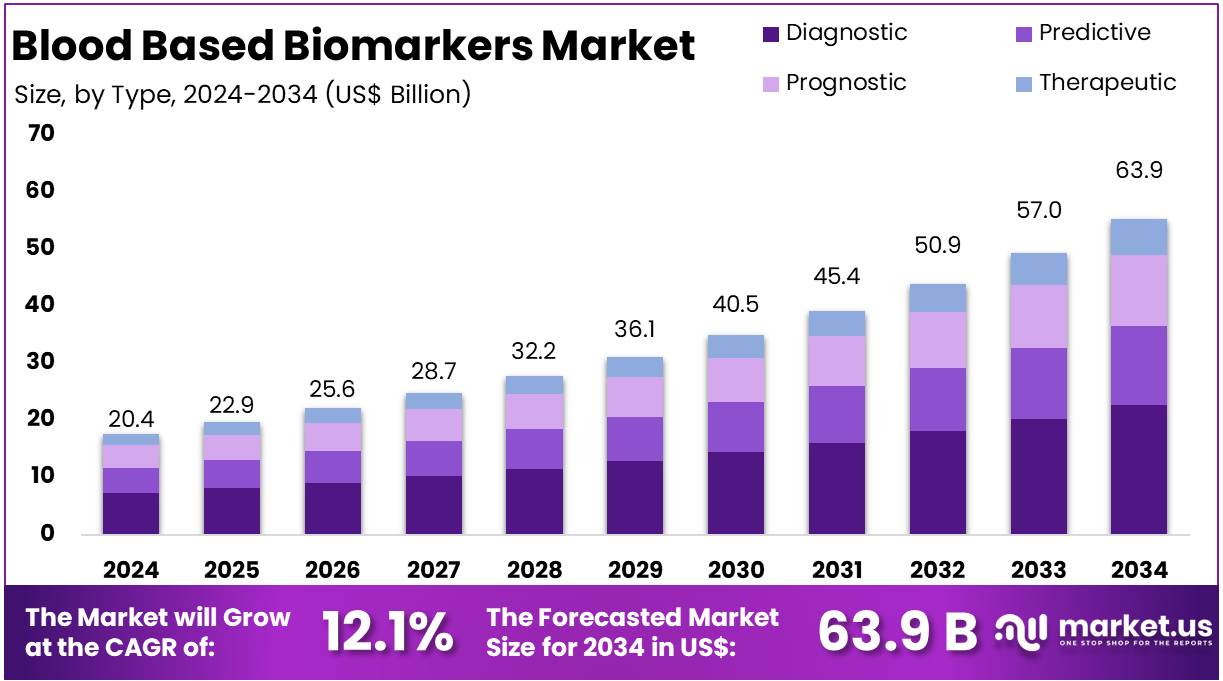
New York, NY – May 20, 2026 – The Global Blood Based Biomarkers Market size is expected to be worth around US$ 63.9 Billion by 2034, from US$ 20.4 Billion in 2024, growing at a CAGR of 12.1% during the forecast period from 2025 to 2034. North America held a dominant market position, capturing more than a 43.6% share and holds US$ 8.8 Billion market value for the year.
Blood-based biomarkers are measurable biological indicators found in blood that provide information about a person’s health condition, disease progression, or response to treatment. These biomarkers include proteins, genes, enzymes, hormones, metabolites, and circulating tumor DNA that can be detected through routine blood tests. They are increasingly being used in modern healthcare for the early diagnosis, monitoring, and management of various diseases, including cancer, cardiovascular disorders, neurological conditions, and infectious diseases.
The growing adoption of blood-based biomarkers is driven by the rising demand for non-invasive diagnostic solutions and personalized medicine approaches. Compared to traditional tissue biopsies and invasive diagnostic procedures, blood-based biomarker testing offers faster results, improved patient comfort, and reduced healthcare costs. Technological advancements in molecular diagnostics, genomics, and liquid biopsy technologies have further enhanced the accuracy and reliability of biomarker-based testing.
In oncology, blood-based biomarkers are widely used for detecting genetic mutations, monitoring treatment response, and identifying disease recurrence. In cardiovascular and neurological disorders, these biomarkers support risk assessment and early disease detection. Healthcare providers and pharmaceutical companies are also utilizing biomarker research to accelerate drug development and clinical trial efficiency.
With increasing investments in precision medicine and diagnostic innovation, blood-based biomarkers are expected to play a critical role in transforming disease diagnosis and improving patient outcomes globally.
Key Takeaways
- The global blood-based biomarkers market is anticipated to reach approximately US$ 63.9 billion by 2034, expanding at a CAGR of 12.1% during the forecast period from 2025 to 2034.
- The market was valued at nearly US$ 20.4 billion in 2024, indicating strong growth opportunities over the coming years.
- Diagnostic applications led the market in 2024, accounting for more than 35.5% share of the overall type segment.
- Hospitals and clinics represented the dominant end-use segment in 2024, capturing over 46.3% of the total market share due to increasing diagnostic testing volumes.
- North America held the largest regional share in 2024, contributing more than 43.6% of the global market and generating approximately US$ 8.8 billion in revenue.
Regional Analysis
In 2024, North America dominated the global blood-based biomarkers market, accounting for more than 43.6% of the total share and generating approximately US$ 8.8 billion in revenue. The region’s strong market position is supported by the widespread adoption of advanced diagnostic technologies and the growing focus on precision medicine and molecular diagnostics. Increasing demand for early disease detection, particularly for cancer and chronic disorders, has accelerated the use of non-invasive blood-based tests across healthcare settings.
The presence of well-established healthcare infrastructure in the U.S. and Canada further supports market growth. Hospitals, diagnostic laboratories, and research centers are equipped with advanced automated systems that improve testing efficiency and accuracy. Rising awareness regarding preventive healthcare and routine screening programs has also increased the adoption of biomarker-based diagnostics.
Favorable reimbursement frameworks and insurance coverage for several biomarker tests have improved patient access to advanced diagnostics. Government funding and research initiatives focused on cancer detection and neurological disease monitoring continue to encourage innovation in the market. In addition, strong collaboration between research institutions and biotechnology companies, along with supportive regulatory approvals, is expected to sustain North America’s leadership position over the forecast period.
Emerging Trends
- Shift Toward Early Detection of Diseases: Blood-based biomarkers are increasingly used for early disease detection, particularly in cancer, cardiovascular, and neurological disorders. These tests help identify diseases before symptoms appear, enabling timely treatment, improving survival rates, reducing complications, and supporting better long-term patient health outcomes globally.
- Personalized Medicine Is Gaining Ground: Blood-based biomarkers are supporting the growth of personalized medicine by helping physicians identify patient-specific treatment responses. Biomarker profiling enables targeted therapies, minimizes side effects, improves treatment success rates, and reduces healthcare costs through more accurate and individualized medical decision-making processes.
- Non-Invasive Testing Is in High Demand: Rising demand for non-invasive diagnostics is increasing the adoption of blood-based biomarker testing. Compared to tissue biopsies, blood tests are faster, safer, and more comfortable for patients, making them highly suitable for routine screenings, disease diagnosis, and long-term health monitoring applications.
- AI and Data Analytics Are Transforming Biomarker Research: Artificial intelligence and advanced data analytics are improving biomarker discovery and diagnostic accuracy. AI tools analyze large patient datasets efficiently, identify hidden disease patterns, predict health risks, and accelerate innovation in blood-based biomarker testing and precision healthcare solutions.
- Focus on Neurological Disorders and Mental Health: Researchers are increasingly exploring blood-based biomarkers for neurological and mental health disorders, including Alzheimer’s and Parkinson’s disease. These biomarkers may provide simpler, faster, and less invasive diagnostic alternatives, supporting earlier treatment interventions and improved monitoring of brain-related conditions.
- Integration With At-Home Testing Kits: Blood-based biomarker testing is becoming more accessible through at-home diagnostic kits. These solutions allow users to collect samples conveniently at home, supporting early disease detection, routine health monitoring, improved patient engagement, and greater flexibility in preventive healthcare management practices.
- Rising Use in Monitoring Disease Progression and Treatment Response: Healthcare providers increasingly use blood-based biomarkers to monitor disease progression and evaluate treatment effectiveness. Regular testing provides real-time patient insights, helps optimize therapies, reduces unnecessary treatments, and improves management of chronic diseases such as cancer and autoimmune disorders.
Use Cases
- Cancer Detection and Monitoring: Blood-based biomarkers are widely used for early cancer detection and treatment monitoring. These tests help identify cancer-related changes, evaluate therapy effectiveness, detect disease recurrence, and support faster medical decisions through minimally invasive and repeatable diagnostic procedures.
- Diagnosing Heart Conditions: Blood-based biomarkers play a critical role in diagnosing cardiovascular conditions, including heart attacks and heart failure. Biomarkers such as troponin provide rapid and accurate results, helping healthcare providers make timely treatment decisions and improve patient survival outcomes.
- Identifying Infections and Inflammatory Diseases: Blood biomarkers are commonly used to detect infections and inflammatory conditions by measuring markers such as C-reactive protein. These tests support early diagnosis, improve treatment planning, reduce unnecessary antibiotic usage, and help monitor chronic inflammatory disease progression effectively.
- Helping With Alzheimer’s and Brain Disease Diagnosis: Blood-based biomarkers are emerging as promising tools for detecting Alzheimer’s disease and other neurological disorders. These tests identify proteins associated with brain damage, potentially enabling earlier diagnosis, improved disease monitoring, and better evaluation of treatment effectiveness in patients.
- Monitoring Autoimmune Diseases: Blood-based biomarkers assist in monitoring autoimmune diseases such as lupus and rheumatoid arthritis. They help physicians assess disease activity, evaluate treatment response, prevent severe flare-ups, and improve long-term disease management through regular and accurate health monitoring practices.
- Tracking Diabetes and Metabolic Disorders: Blood biomarkers are extensively used in diagnosing and monitoring diabetes and metabolic disorders. These tests measure glucose levels, insulin activity, and metabolic changes, enabling early disease detection, improved treatment management, and better prevention of long-term health complications.
Frequently Asked Questions on Blood Based Biomarkers
- Why are blood-based biomarkers important in healthcare?
Blood-based biomarkers support faster and less invasive disease detection compared to traditional diagnostic methods. They help physicians monitor disease progression, evaluate treatment effectiveness, and improve patient outcomes through personalized medicine and precision-based healthcare approaches. - Which diseases can be detected using blood-based biomarkers?
Blood-based biomarkers are commonly used to detect and monitor cancer, diabetes, cardiovascular diseases, infectious diseases, and neurological disorders. They also assist in identifying genetic mutations, inflammation levels, and organ function abnormalities in patients. - Which region dominates the blood-based biomarkers market?
North America currently dominates the blood-based biomarkers market due to advanced healthcare infrastructure, high adoption of precision medicine, favorable reimbursement policies, and strong investments in diagnostic research and biotechnology innovation. - Who are the major end users of blood-based biomarkers?
Hospitals, diagnostic laboratories, research institutions, and pharmaceutical companies are the major end users of blood-based biomarkers. Hospitals and clinics account for a significant share due to increasing diagnostic testing volumes and patient screening programs. - How do blood-based biomarkers support cancer diagnosis?
Blood-based biomarkers help identify cancer-related genetic mutations and circulating tumor cells through minimally invasive blood tests. They support early cancer detection, treatment monitoring, recurrence identification, and personalized therapy selection for improved patient management. - What is the future outlook for the blood-based biomarkers market?
The blood-based biomarkers market is expected to witness strong growth due to increasing investments in precision medicine, expanding research activities, and rising awareness regarding early disease detection. Continued technological innovation is likely to enhance diagnostic accuracy and market adoption globally.
Conclusion
Blood-based biomarkers are transforming modern healthcare by enabling early disease detection, personalized treatment planning, and non-invasive diagnostic solutions. Growing adoption across oncology, cardiovascular, neurological, and metabolic disease management is significantly supporting market expansion. Technological advancements in molecular diagnostics, artificial intelligence, and liquid biopsy technologies continue to improve testing accuracy and clinical efficiency.
Rising healthcare awareness, increasing demand for preventive care, and expanding research investments are further driving market growth globally. With strong support from healthcare providers, research institutions, and biotechnology companies, the blood-based biomarkers market is expected to witness sustained growth and play a critical role in advancing precision medicine worldwide.
Discuss your needs with our analyst
Please share your requirements with more details so our analyst can check if they can solve your problem(s)




