


Table of Contents
Overview
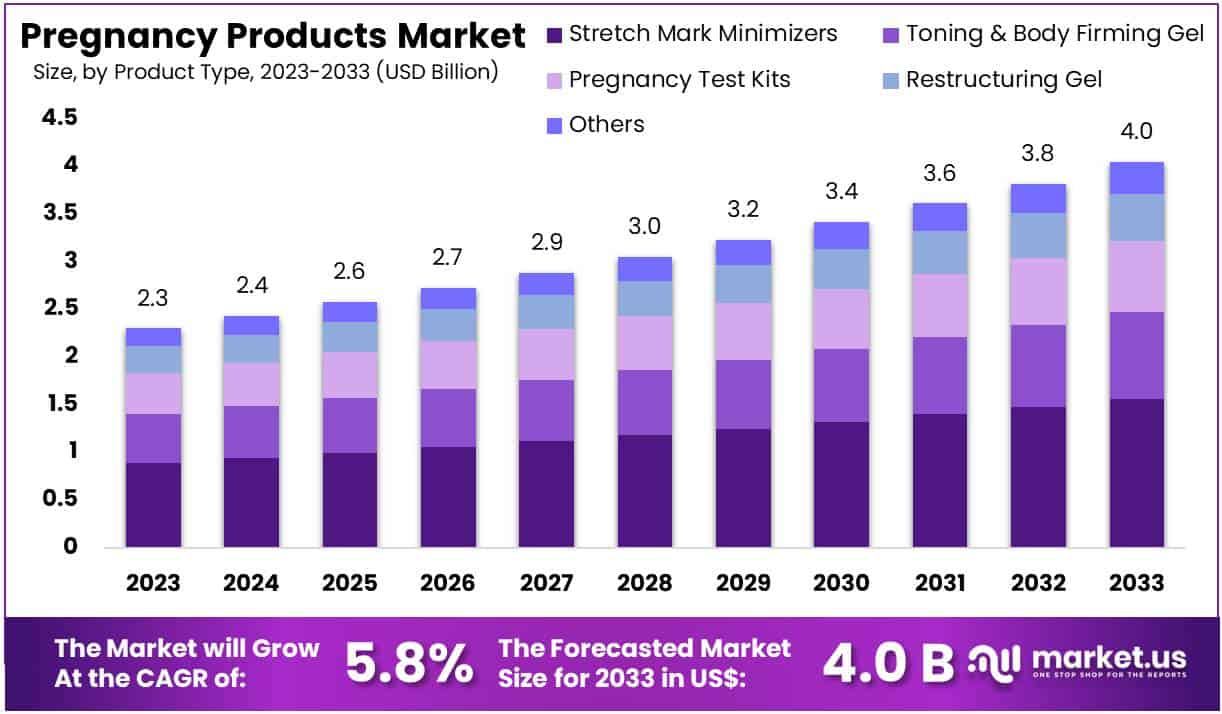
New York, NY – March 05, 2026 – The Global Pregnancy Products Market size is expected to be worth around US$ 4 Billion by 2033, from US$ 2.3 Billion in 2023, growing at a CAGR of 5.8% during the forecast period from 2024 to 2033. North America achieved the highest market share, accounting for 39.6% of the total.
The global pregnancy products market is witnessing steady expansion, driven by rising maternal health awareness, increasing disposable income, and continuous product innovation. The growth of the market can be attributed to a growing emphasis on prenatal care, improved healthcare infrastructure, and a higher rate of planned pregnancies across both developed and emerging economies.
Pregnancy products include maternity wear, stretch mark minimizers, nutritional supplements, fetal monitoring devices, and personal care products specifically formulated for expecting mothers. Demand for these products has increased significantly as consumers prioritize safety, comfort, and clinically tested formulations. The expansion of e-commerce platforms has further strengthened product accessibility, enabling manufacturers to reach a wider consumer base.
North America and Europe continue to account for a substantial market share due to established healthcare systems and high awareness levels. Meanwhile, the Asia-Pacific region is projected to register the fastest growth, supported by rising birth rates in select countries and expanding middle-class populations.
Innovation remains a key competitive factor, with companies focusing on organic ingredients, dermatologically tested formulations, and technologically advanced monitoring devices. Strategic partnerships, product launches, and investments in research and development are expected to further enhance market competitiveness.
Overall, the pregnancy products market is positioned for sustained growth, supported by evolving consumer preferences and ongoing advancements in maternal healthcare solutions worldwide.
Key Takeaways
- In 2023, the pregnancy products market generated revenue of US$ 2.3 billion and is projected to reach US$ 4.0 billion by 2033, expanding at a CAGR of 5.8% during the forecast period.
- Based on product type, the market is categorized into stretch mark minimizers, toning and body firming gels, pregnancy test kits, restructuring gels, and others. Stretch mark minimizers accounted for the largest share in 2023, contributing 38.7% of total revenue.
- By application, the market is segmented into urinary incontinence, orthopaedic care, breast cancer care, pelvic pain, and pregnancy and postpartum care. Orthopaedic care emerged as a key segment, holding a revenue share of 30.6% in 2023.
- In terms of distribution channel, the market is divided into hospital pharmacies, retail pharmacies, and online pharmacies. Hospital pharmacies represented the leading distribution channel, accounting for the highest revenue share of 44.5% in the overall market.
- Regionally, North America dominated the global pregnancy products market, securing a market share of 39.6% in 2023.
Regional Analysis
North America accounted for the largest share of the pregnancy products market in 2023, contributing 39.6% of total revenue. Market leadership has been supported by strong maternal health awareness and structured policy initiatives. The White House Blueprint for Addressing the Maternal Health Crisis highlighted that more than 2,000 facilities were designated as “Birthing Friendly,” reflecting improved standards in maternity care.
In addition, the introduction of the National Maternal Mental Health Hotline strengthened access to behavioral health support during pregnancy and childbirth. These initiatives have increased demand for prenatal vitamins, maternity wear, nursing accessories, and technologically advanced fetal monitoring devices.
Asia Pacific is projected to register the fastest CAGR over the forecast period. Growth is being driven by expanding healthcare infrastructure and rising maternal care investments. In China, over 18,000 medical consortia and 3,491 critical maternal care centers were established to enhance service accessibility. Increasing disposable income, growing health awareness, and expanding e-commerce penetration are expected to further accelerate regional market growth.
Emerging Trends
- Rising Demand for Natural and Organic Products: Pregnant women increasingly prefer natural and organic products formulated with plant-based ingredients. Demand is rising for skincare, body oils, and supplements free from harsh chemicals, as expecting mothers prioritize safe, gentle, and toxin-free formulations.
- Tech-Integrated Pregnancy Tools: Technology-driven pregnancy tools such as smart test kits and wearable monitoring devices are gaining popularity. These products track fetal movement, heart rate, and sleep patterns, providing real-time health insights and improving prenatal monitoring convenience.
- Customized Skincare for Pregnancy Needs: Brands are developing pregnancy-specific skincare products designed for hormonal and sensitive skin. Stretch mark creams, firming gels, and hydrating lotions are formulated to address dryness, itchiness, and skin elasticity changes during pregnancy.
- Mental Wellness and Stress Relief Products: Mental wellness products are gaining attention as emotional health during pregnancy becomes a priority. Calming teas, aromatherapy oils, and natural sleep aids are increasingly adopted to reduce stress and support emotional balance.
- Subscription Boxes for Expectant Mothers: Subscription-based maternity boxes are becoming popular among expecting mothers. These curated packages include vitamins, skincare items, snacks, and baby samples tailored to different pregnancy stages, offering convenience and discovery of new products.
- Growing Focus on Postpartum Recovery Products: Postpartum recovery products are gaining importance as maternal care extends beyond delivery. Products such as nipple creams, belly wraps, and recovery teas help support healing, comfort, and self-care during the postpartum phase.
- Increased Involvement of Dads in Product Choices: Partners are increasingly participating in pregnancy-related decisions, including selecting maternity products. This shift is influencing marketing strategies, with brands adopting inclusive messaging and gender-neutral branding to reflect modern parenting dynamics.
- Sustainable and Eco-Friendly Packaging: Sustainability is becoming a key consideration in pregnancy products. Brands are adopting recyclable, biodegradable, and refillable packaging solutions to reduce environmental impact and appeal to environmentally conscious expecting mothers.
Use Cases
- Managing Stretch Marks and Skin Changes: Stretch mark creams and nourishing body oils are widely used during pregnancy to maintain skin elasticity. Products containing shea butter, cocoa butter, and vitamin E help hydrate skin and reduce dryness.
- Confirming Pregnancy at Home: Home pregnancy test kits allow women to detect pregnancy quickly and privately. These products identify the hCG hormone in urine, providing accurate results within minutes and serving as the first step in prenatal care.
- Supporting Nutritional Needs: Prenatal vitamins and dietary supplements support maternal nutrition and fetal development. Products containing folic acid, iron, calcium, and DHA help address nutritional gaps and promote healthy growth throughout pregnancy.
- Comfort and Pain Relief: Maternity belts, back support bands, and compression socks are designed to reduce discomfort during pregnancy. These products help relieve back pressure, improve posture, and support circulation as the body changes.
- Monitoring Fetal Development and Movements: Fetal monitoring devices and pregnancy tracking applications help expectant parents monitor development milestones. These tools allow tracking of heartbeat, fetal movements, and health reminders between scheduled medical checkups.
- Postpartum Skin and Body Care: Postpartum care products support recovery after childbirth. Nipple creams, perineal sprays, and skin-tightening lotions help reduce soreness, promote healing, and restore comfort during breastfeeding and the recovery phase.
- Preparing for Hospital Delivery: Hospital delivery kits help expecting mothers organize essential items for childbirth. These kits often include maternity pads, nursing bras, toiletries, and newborn clothing, ensuring preparedness and convenience during hospital stays.
- Educational and Emotional Support: Pregnancy journals, meditation kits, and mindfulness guides provide emotional support during pregnancy. These products encourage stress management, self-reflection, and relaxation, helping mothers maintain emotional well-being throughout the prenatal journey.
Frequently Asked Questions on Pregnancy Products
- Why are pregnancy products important for maternal health?
Pregnancy products play a vital role in supporting physical comfort, nutritional balance, and early health monitoring. The use of clinically tested supplements, orthopedic supports, and personal care formulations contributes to improved maternal well-being and reduces risks associated with pregnancy-related complications. - What types of pregnancy products are most commonly used?
Commonly used pregnancy products include stretch mark minimizers, prenatal supplements, toning gels, maternity apparel, and pregnancy test kits. Increasing demand has also been observed for wearable fetal monitoring devices and postpartum recovery products designed for enhanced safety and convenience. - Are pregnancy products safe to use?
Most pregnancy products are developed with safety standards and dermatological testing to ensure suitability for expecting mothers. However, product selection is generally recommended under medical guidance to ensure compatibility with individual health conditions and pregnancy requirements. - What is driving the growth of the pregnancy products market?
Market growth is primarily driven by increasing awareness of maternal health, rising disposable income, improved healthcare infrastructure, and product innovation. Expanding e-commerce penetration and supportive government initiatives have further strengthened consumer access and overall demand globally. - Which region leads the pregnancy products market?
North America holds a leading market position due to advanced healthcare systems, high consumer awareness, and supportive maternal health policies. Strong retail distribution networks and the adoption of technologically advanced prenatal monitoring products contribute to sustained regional dominance. - Which product segment holds the largest market share?
Stretch mark minimizers account for a significant market share, driven by high consumer preference for preventive skincare during pregnancy. Continuous product innovation, natural ingredient formulations, and dermatologically tested solutions have strengthened demand within this segment. - How is e-commerce influencing the pregnancy products market?
E-commerce platforms have expanded product accessibility and improved price transparency for consumers. Online pharmacies and digital marketplaces enable wider product comparisons, promotional offerings, and doorstep delivery services, thereby accelerating overall market penetration and regional growth opportunities.
Conclusion
The global pregnancy products market is experiencing stable growth, supported by increasing awareness of maternal health, improved healthcare infrastructure, and rising consumer demand for safe and specialized maternity solutions. Expanding product innovation, including natural formulations, technology-integrated monitoring tools, and customized skincare, continues to strengthen market development.
North America remains the leading regional market, while Asia Pacific is expected to record the fastest growth due to expanding healthcare investments and rising disposable income. Additionally, the growing adoption of e-commerce platforms and postpartum care products is further enhancing market accessibility. Overall, sustained innovation and evolving consumer preferences are expected to support long-term market expansion.
Discuss your needs with our analyst
Please share your requirements with more details so our analyst can check if they can solve your problem(s)




