


Table of Contents
Overview
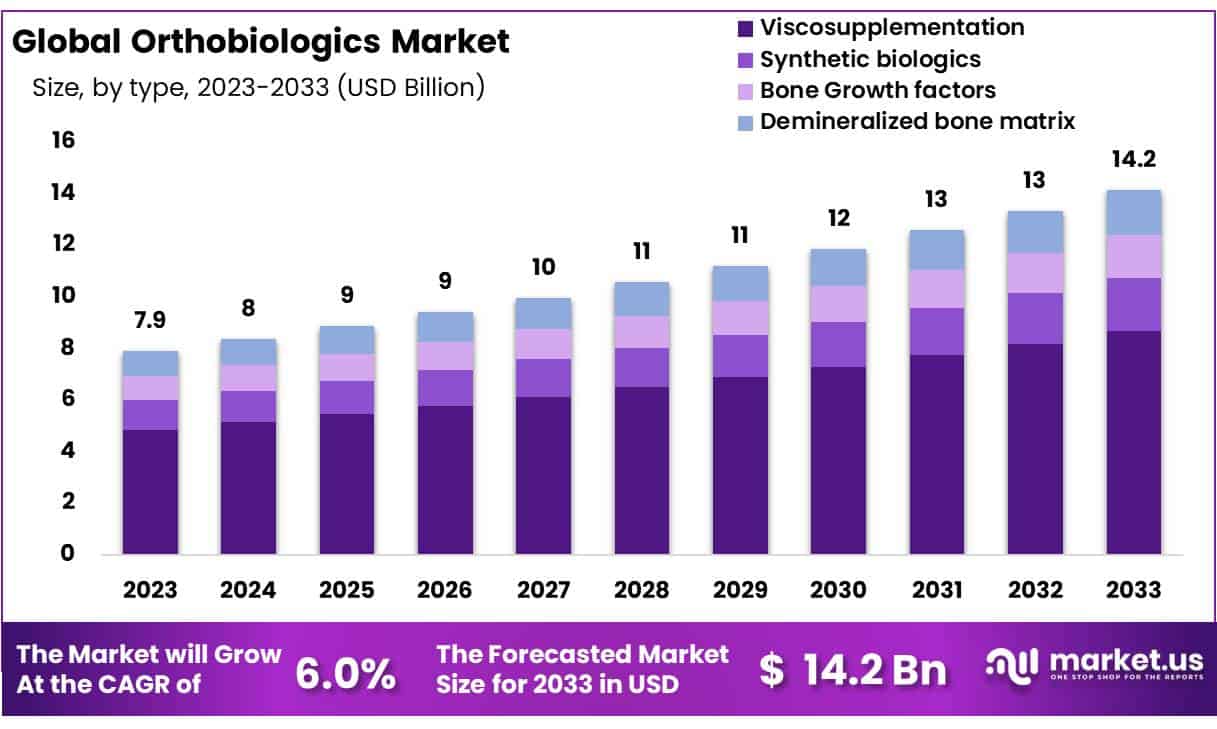
New York, NY – Jan 12, 2026 – The Global Orthobiologics Market size is expected to be worth around USD 14.2 Billion by 2033 from USD 7.9 Billion in 2023, growing at a CAGR of 6% during the forecast period from 2024 to 2033.
Orthobiologics refers to a class of biologically derived materials used to support the repair, regeneration, and healing of musculoskeletal tissues. These products are increasingly utilized in orthopedic, sports medicine, and trauma-related procedures to enhance the body’s natural healing response. The basic formation of orthobiologics is grounded in the use of natural biological substances that interact with bone, cartilage, ligaments, tendons, and muscles.
The formation of orthobiologics typically begins with the sourcing of biological materials, which may be autologous (derived from the patient), allogeneic (donor-derived), or recombinant in nature. Common sources include bone marrow, blood, adipose tissue, and processed bone or tissue matrices. These materials are carefully collected under controlled clinical or laboratory conditions to ensure safety, sterility, and biological integrity.
Following collection, the materials undergo processing steps such as centrifugation, filtration, concentration, or decellularization, depending on the product type. These processes are designed to isolate key biological components, including growth factors, cytokines, stem cells, or structural proteins, which are critical to tissue repair and regeneration. Quality control measures are applied throughout formation to maintain consistency, purity, and regulatory compliance.
Orthobiologics are formulated into various delivery forms, including injectables, scaffolds, grafts, or implants, to match specific clinical applications. Their formation is guided by advances in biotechnology, tissue engineering, and regenerative medicine. As demand for minimally invasive and biologically driven treatments increases, the structured formation of orthobiologics continues to play a significant role in modern orthopedic care.
Key Takeaways
- Market Growth Projection: The global orthobiologics market is expected to reach approximately USD 14.2 billion by 2033, expanding from USD 7.9 billion in 2023, and registering a compound annual growth rate (CAGR) of about 6% during the forecast period from 2024 to 2033.
- Type Analysis: The viscosupplement segment leads the market, accounting for 61.4% of the total market share within the type category.
- Application Analysis: Spinal fusion represents the dominant application area, contributing 72.9% of the global orthobiologics market share.
- End-user Analysis: Hospitals and ambulatory care centers collectively hold a 76.7% market share, driven by the high adoption of orthobiologics in reconstructive and spinal surgical procedures.
- Regional Analysis: North America accounts for 32.6% of the global market share and generated approximately USD 2.5 billion in revenue in 2023.
- Orthobiologics Definition: Orthobiologics, commonly referred to as regenerative cell therapies, include products formulated with growth factors that promote tissue repair, alleviate pain, and restore functional performance across multiple clinical applications.
- Driving Factors: Market growth is primarily supported by the expanding aging population, rising incidence of orthopedic injuries, and increasing demand for advanced therapeutic solutions, as orthobiologics help reduce reliance on pain medication and support faster recovery outcomes.
Orthobiologics: Key Statistics
- Application in Knee Osteoarthritis: Platelet-rich plasma (PRP) is increasingly utilized in the management of early-stage knee osteoarthritis. Clinical evidence suggests that surgical intervention can be delayed or avoided in up to 30% of patients through PRP-based therapies.
- Post-Surgical Healing Support: Orthobiologics are widely applied following tendon repair procedures, including rotator cuff surgeries. Enhanced healing and functional recovery have been reported in more than 50% of treated cases.
- Adoption of PRP in Orthopedics: PRP has achieved broad clinical acceptance, with approximately 86% of orthopedic surgeons reporting prior use for musculoskeletal injury management.
- Stem Cell Therapy Outcomes: Among patients with chronic orthopedic conditions, nearly 72% report measurable symptom improvement following stem cell–based treatments.
- Clinical Research Activity: More than 700 clinical trials related to orthobiologic therapies are currently registered worldwide, reflecting strong research momentum and expanding clinical validation.
- Bone Marrow Concentrate (BMC) Effectiveness: BMC therapies demonstrate an 80% success rate in improving joint function among patients with degenerative arthritis.
- Preference for Non-Surgical Care: Approximately 60% of patients with chronic joint pain express a preference for orthobiologic therapies over conventional surgical options.
- Safety Profile: Autologous orthobiologic treatments are widely regarded as safe, with reported complication rates of less than 1%.
- Insurance Coverage Limitations: Fewer than 20% of orthobiologic procedures receive insurance reimbursement, resulting in substantial out-of-pocket expenses for patients.
- Market Expansion: The global orthobiologics market is projected to grow at a compound annual growth rate (CAGR) of 5.5%, driven by increasing demand for minimally invasive and regenerative treatment options.
Regional Analysis
North America accounted for approximately 32.6% of the global market share, generating around USD 2.5 billion in revenue, primarily driven by the rising incidence of degenerative bone diseases and the growing adoption of outpatient orthopedic procedures. The region remains the dominant market due to the strong presence of major industry participants and a well-established healthcare infrastructure. In addition, the steadily aging population is expected to further support sustained market growth over the forecast period.
Europe represents the second-largest regional market in terms of revenue and continues to hold a significant share of the global market. Market development in the region is supported by favorable regulatory progress, including the recent granting of a new marketing authorization for Cingal, enabling the wider availability of viscosupplement solutions across European countries.
The Asia Pacific market is projected to witness notable expansion, supported by increasing research and development activities, continuous innovation, and rising awareness of orthobiologics among healthcare professionals. The growing prevalence of osteoarthritis, chronic arthritis, and other orthopedic disorders is further contributing to market growth across the region.
In addition, increasing healthcare expenditure and rising disposable incomes are expected to create favorable conditions for market expansion in the coming years. Asia Pacific growth is largely driven by India, where demand for viscosupplements is increasing alongside the rapid development of freestanding orthopedic clinics. As physician familiarity with orthobiologics improves, adoption rates are anticipated to rise steadily across the region.
Emerging Trends in Orthobiologics
- Expansion of Regenerative Medicine: Orthobiologics continues to advance regenerative medicine by leveraging biological materials such as cells, growth factors, and tissues to promote natural healing, with the objective of reducing reliance on invasive surgical procedures.
- Rising Utilization of PRP Therapies: PRP treatments are gaining traction for musculoskeletal disorders due to their minimally invasive nature and demonstrated ability to reduce inflammation and enhance tissue repair, particularly in chronic conditions such as osteoarthritis.
- Advancements in Bone Marrow Concentrate (BMC): BMC therapies utilize concentrated stem cells and growth factors derived from bone marrow to accelerate healing in bone and soft tissue injuries, supporting faster recovery timelines.
- Growth of Microfragmented Adipose Tissue (MFAT) Applications: MFAT therapies employ processed adipose tissue to mitigate inflammation and support tissue regeneration, offering a less invasive option for joint degeneration and soft tissue repair.
- Shift Toward Non-Surgical Treatment Pathways: Orthobiologics is broadening non-surgical care pathways by providing effective alternatives that deliver pain reduction, functional improvement, and shorter recovery periods compared to traditional surgery.
- Emphasis on Safety and Clinical Efficacy: Continuous clinical evaluation remains a priority to ensure safety and therapeutic effectiveness. Patient-derived treatments demonstrate favorable safety profiles, while ongoing research supports long-term outcome validation.
- Increasing Demand for Personalized Medicine: Orthobiologics aligns closely with personalized medicine trends by tailoring treatments using a patient’s own biological materials, improving precision and therapeutic relevance.
- Integration with Conventional Therapies: Orthobiologic interventions are increasingly combined with physical therapy, rehabilitation protocols, and surgical procedures to optimize clinical outcomes and deliver comprehensive orthopedic care.
- Persistent Insurance Coverage Challenges: Limited insurance reimbursement remains a significant barrier to adoption. Expanded payer support is considered essential to improve affordability, accessibility, and broader market penetration.
Frequently Asked Questions on Orthobiologics
- What conditions are treated using orthobiologics?
Orthobiologics are used to treat fractures, cartilage damage, tendon injuries, ligament tears, and degenerative joint disorders. Their application supports tissue regeneration, reduces inflammation, and improves functional recovery outcomes in orthopedic care. - What are the main types of orthobiologics?
Major orthobiologic types include bone grafts, bone graft substitutes, platelet-rich plasma, stem cell therapies, viscosupplements, and growth factors. These products vary in biological origin, mechanism of action, and clinical application. - How do orthobiologics work in orthopedic treatments?
Orthobiologics work by stimulating cellular activity, promoting tissue regeneration, and accelerating healing processes. They provide biological signals or scaffolds that enhance bone growth, cartilage repair, and soft tissue integration at injury sites. - Are orthobiologics considered safe and effective?
Orthobiologics are generally considered safe when used appropriately under clinical guidelines. Effectiveness depends on product type, patient condition, and procedural technique, with increasing clinical evidence supporting improved healing and reduced recovery time. - What factors are driving growth in the orthobiologics market?
Market growth is driven by rising orthopedic injuries, increasing aging population, higher sports participation, and growing preference for minimally invasive procedures. Advances in regenerative medicine and expanding clinical adoption further support market expansion. - Which end users dominate the orthobiologics market?
Hospitals represent the dominant end users due to high surgical volumes and advanced infrastructure. However, orthopedic clinics and ambulatory surgical centers are experiencing faster growth due to cost efficiency and increasing outpatient procedures. - What is the future outlook for the orthobiologics market?
The market outlook remains cautiously optimistic, supported by technological advancements and growing acceptance of regenerative therapies. Continued research, regulatory approvals, and improved reimbursement frameworks are expected to enhance market penetration and long-term growth.
Conclusion
Orthobiologics has emerged as a critical component of modern orthopedic and sports medicine, driven by its ability to support natural tissue repair and reduce dependence on invasive surgical interventions. Market expansion is being supported by an aging population, rising orthopedic disorders, and growing demand for minimally invasive therapies.
Strong clinical adoption of PRP, stem cell therapies, and viscosupplements highlights increasing confidence in regenerative approaches. Despite challenges related to reimbursement, continued clinical research, technological advancements, and personalized treatment strategies are expected to strengthen long-term adoption. Overall, orthobiologics is positioned for sustained growth, reinforcing its role in advancing regenerative and patient-centric orthopedic care.
Discuss your needs with our analyst
Please share your requirements with more details so our analyst can check if they can solve your problem(s)




