


Table of Contents
Overview
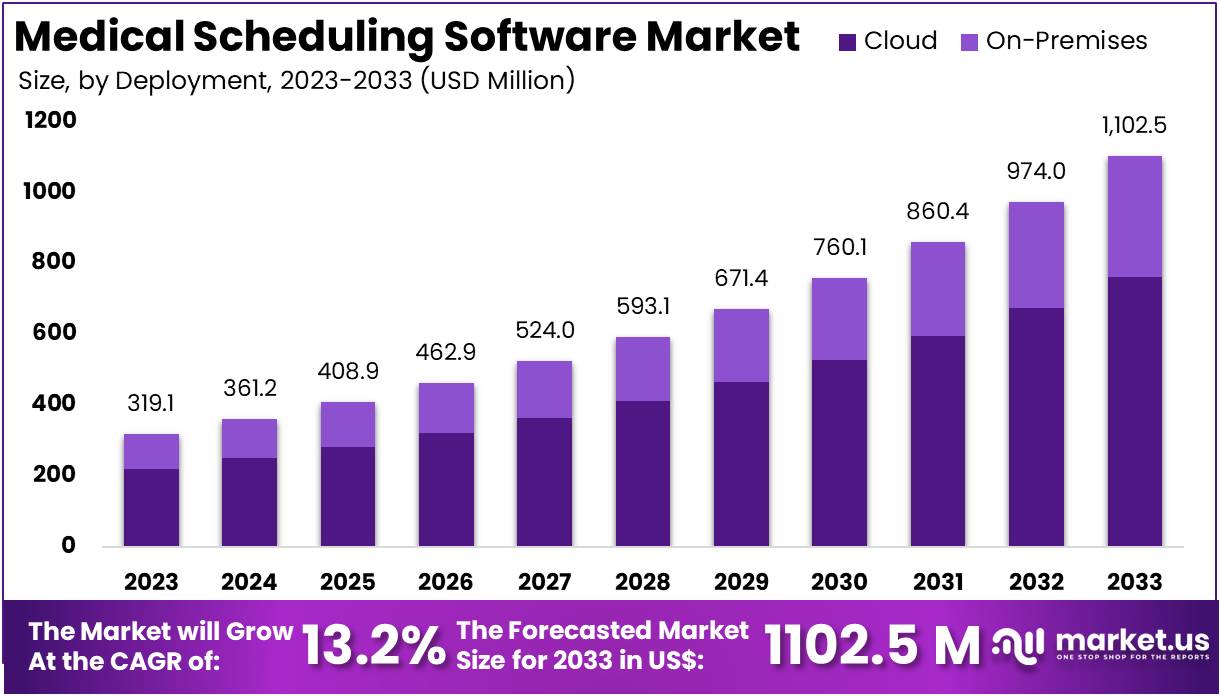
New York, NY – March 09, 2026 – The Global Medical Scheduling Software Market Size is expected to be worth around US$ 1102.5 Million by 2033, from US$ 319.1 Million in 2023, growing at a CAGR of 13.2% during the forecast period from 2024 to 2033. North America dominated the market, accounting for a 39.6% share and a market value of US$ 126.4 million.
Medical scheduling software has emerged as a critical digital solution designed to streamline appointment management within healthcare organizations. The software enables hospitals, clinics, and diagnostic centers to automate patient scheduling processes, reduce administrative workload, and improve operational efficiency. By replacing manual booking systems, healthcare providers are able to minimize scheduling conflicts, reduce patient waiting times, and optimize physician availability.
The increasing demand for digital healthcare solutions has accelerated the adoption of medical scheduling software across both small clinics and large hospital networks. The system typically integrates with electronic health records, billing platforms, and patient communication tools, creating a unified workflow environment. Automated reminders, online booking options, and real-time calendar updates are among the key functionalities that support better patient engagement and reduce missed appointments.
From an operational perspective, healthcare providers benefit from improved resource allocation and better staff productivity. Advanced analytics embedded within the software allow administrators to track appointment trends, monitor patient flow, and identify capacity gaps. These insights enable data-driven decision-making and more efficient healthcare delivery.
The adoption of medical scheduling software is also supported by the broader digital transformation occurring within the healthcare industry. Increasing patient expectations for convenient appointment booking, along with the need to reduce administrative inefficiencies, has strengthened the relevance of such solutions.
As healthcare systems continue to modernize, medical scheduling software is expected to remain a foundational component in improving patient experience, optimizing clinical workflows, and supporting efficient healthcare management.
Key Takeaways
- In 2023, the global medical scheduling software market generated revenue of US$ 319.1 million and is projected to reach US$ 1,102.5 million by 2033, expanding at a compound annual growth rate (CAGR) of 13.2% during the forecast period.
- Based on product type, the market is categorized into care provider scheduling, patient scheduling, and others. Among these segments, patient scheduling accounted for the largest share of 55.4% in 2023, reflecting increasing demand for automated patient appointment management systems.
- In terms of deployment model, the market is segmented into cloud-based and on-premises solutions. The cloud deployment segment dominated the market, capturing a 69.2% share in 2023, supported by its scalability, remote accessibility, and cost-efficiency.
- Considering the end-user segment, the market is divided into hospitals, clinics, and others. Hospitals emerged as the leading end users, accounting for the largest revenue share of 64.5% in 2023, driven by high patient volumes and the need for efficient scheduling systems.
- Regionally, North America led the global medical scheduling software market, securing a market share of 39.6% in 2023, supported by advanced healthcare infrastructure and rapid adoption of digital healthcare technologies.
Regional Analysis
North America accounted for the largest share of the medical scheduling software market, representing approximately 39.6% of total revenue. Market growth has been primarily supported by increasing demand for healthcare services and a growing shortage of healthcare professionals. According to the Association of American Medical Colleges, the United States may face a shortage of nearly 124,000 physicians by 2034.
This supply–demand gap has accelerated the adoption of medical scheduling software, which helps optimize physician and staff utilization, reduce patient waiting times, and streamline appointment management. In addition, the transition toward value-based care models and the expansion of telemedicine services have further strengthened the demand for advanced scheduling solutions.
The Asia Pacific region is projected to register the highest CAGR during the forecast period. Rapid healthcare infrastructure development, increasing digitalization, and supportive government initiatives are driving adoption. Large populations in countries such as India, China, and Japan are contributing to rising demand for efficient healthcare management systems.
Emerging Trends
- AI and Automation Are Gaining Momentum: Artificial intelligence and automation are increasingly being integrated into medical scheduling software. AI analyzes historical appointment data and patient behavior to recommend optimal booking slots, while automated reminders and confirmations reduce administrative workload, minimize scheduling errors, and improve operational efficiency.
- Shift Toward Cloud-Based Platforms: Healthcare organizations are rapidly adopting cloud-based scheduling platforms due to their flexibility and accessibility. These solutions enable staff and patients to access schedules remotely, simplify system updates, improve data security, and reduce IT infrastructure costs across healthcare facilities.
- Telehealth Integration: Medical scheduling systems are increasingly integrating telehealth capabilities. Patients can conveniently schedule virtual or in-person consultations within the same platform. This integration improves appointment management, enhances access to healthcare services, and supports the growing adoption of remote medical care.
- Mobile-Friendly Interfaces: Modern scheduling platforms are being designed with mobile-friendly interfaces to support smartphone-based access. Patients and healthcare staff can easily book, modify, or cancel appointments through mobile applications, improving convenience, increasing engagement, and reducing missed appointments.
- Focus on Patient Self-Scheduling: Patient self-scheduling features are becoming a core component of medical scheduling software. These systems allow patients to independently select physicians, appointment types, and available time slots, reducing front-desk workload while improving convenience and overall patient satisfaction.
- Integration With Electronic Health Records (EHR): Medical scheduling software is increasingly integrated with electronic health record systems. This integration allows appointment information to synchronize automatically with patient records, improving coordination of tests, procedures, and follow-up visits while enhancing administrative efficiency.
Use Cases
- Managing Patient Appointments Efficiently: Medical scheduling software helps healthcare facilities manage patient appointments accurately by preventing overlapping bookings and improving calendar visibility. This ensures efficient time utilization for physicians and staff while supporting smoother workflow and improved patient service delivery.
- Reducing No-Shows With Automated Reminders: Automated reminder systems integrated within scheduling software notify patients through text messages, emails, or calls. These reminders significantly reduce missed appointments, improve attendance rates, and allow healthcare providers to maximize appointment utilization and operational efficiency.
- Booking for Telehealth Visits: Scheduling platforms enable patients to easily book telehealth consultations alongside traditional visits. Automated video links and reminders are provided before the appointment, enabling healthcare providers to manage both virtual and physical consultations efficiently within one system.
- Staff and Resource Scheduling: Healthcare facilities use scheduling software to manage staff shifts, room allocations, and medical equipment availability. This centralized system improves workforce planning, prevents scheduling conflicts, and ensures that clinical resources are efficiently utilized across departments.
- Walk-In and Urgent Care Management: Scheduling systems assist clinics in managing walk-in and urgent care visits by monitoring real-time availability. Staff can assign patients quickly to available physicians, prioritize urgent cases, and maintain organized patient flow in high-demand healthcare environments.
- Multi-Location Coordination: Large healthcare networks utilize scheduling software to coordinate appointments across multiple facilities. Real-time visibility of available time slots across locations helps optimize resource utilization, reduce patient waiting times, and improve service accessibility.
- Improving Patient Experience: Medical scheduling software enhances patient experience by offering convenient online booking, automated confirmations, and flexible appointment management. These digital tools provide patients with greater control over their healthcare interactions while reducing administrative burdens on clinical staff.
Frequently Asked Questions on Medical Scheduling Software
- What factors are driving the growth of the medical scheduling software market?
The growth of the medical scheduling software market is driven by increasing patient volumes, rising demand for efficient healthcare administration, and growing adoption of digital health technologies. Healthcare providers are increasingly implementing scheduling solutions to reduce operational costs and improve patient management efficiency. - How does medical scheduling software improve healthcare operations?
Medical scheduling software improves healthcare operations by automating appointment management, reducing manual errors, and optimizing physician and staff utilization. It enables healthcare providers to manage patient flow effectively, minimize waiting times, and ensure efficient coordination of clinical resources across departments. - Which healthcare facilities commonly use medical scheduling software?
Medical scheduling software is widely used in hospitals, specialty clinics, diagnostic centers, and outpatient care facilities. These organizations adopt scheduling platforms to manage large patient volumes, coordinate medical staff availability, and ensure smooth and efficient appointment management processes. - What role does digital health transformation play in the medical scheduling software market?
Digital health transformation significantly influences the medical scheduling software market by encouraging healthcare providers to adopt advanced IT solutions. Integration with electronic health records, telehealth platforms, and patient management systems improves operational efficiency and enhances the overall healthcare delivery experience. - Which regions are leading the medical scheduling software market?
North America currently leads the medical scheduling software market due to strong healthcare infrastructure and widespread adoption of healthcare IT solutions. Meanwhile, the Asia Pacific region is expected to witness rapid growth driven by healthcare digitalization and expanding medical infrastructure. - How does medical scheduling software enhance patient experience?
Medical scheduling software enhances patient experience by simplifying appointment booking, sending automated reminders, and reducing waiting times. These features improve communication between healthcare providers and patients, ensuring timely care access and increasing overall patient satisfaction levels. - What is the future outlook for the medical scheduling software market?
The future outlook for the medical scheduling software market remains positive, supported by increasing healthcare digitalization, rising patient demand, and growing adoption of telemedicine services. Continuous technological advancements are expected to further strengthen the role of scheduling solutions in healthcare management.
Conclusion
In conclusion, medical scheduling software has become an essential component of modern healthcare management by improving appointment coordination, reducing administrative workload, and enhancing operational efficiency. The market is experiencing steady expansion, supported by rising patient volumes, increasing healthcare digitalization, and growing adoption of cloud-based solutions.
Integration with electronic health records, telehealth platforms, and automated communication tools is further strengthening its value within healthcare systems. North America continues to lead market adoption, while Asia Pacific is expected to witness the fastest growth due to expanding healthcare infrastructure. Overall, continued technological advancements and the demand for efficient patient management are expected to sustain long-term market growth.
Discuss your needs with our analyst
Please share your requirements with more details so our analyst can check if they can solve your problem(s)




