


Table of Contents
Overview
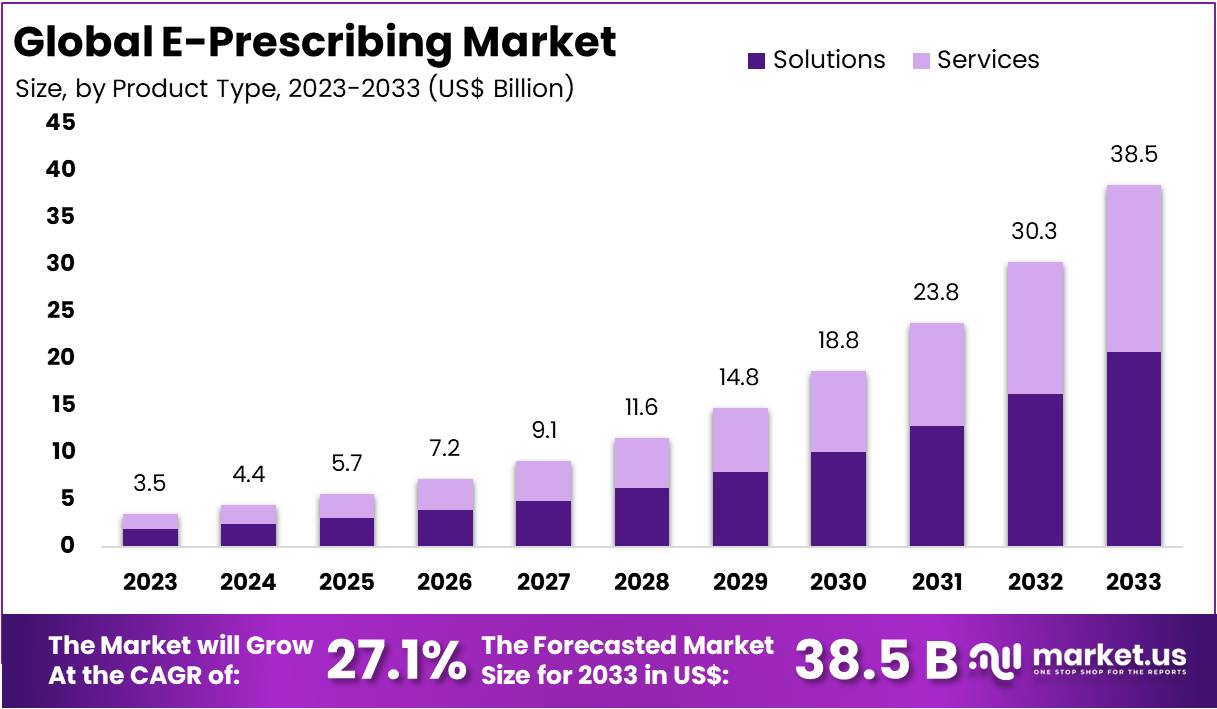
New York, NY – Feb 13, 2026 – The Global E-Prescribing Market size is expected to be worth around US$ 38.5 Billion by 2033, from US$ 3.5 Billion in 2023, growing at a CAGR of 27.1% during the forecast period from 2024 to 2033. North America was predominant, securing over 43.1% of the market share and achieving a valuation of US$ 1.5 billion.
Electronic prescribing (e-prescribing) refers to the digital generation, transmission, and processing of medical prescriptions through secure health information systems. It enables healthcare providers to send prescriptions directly to pharmacies using electronic platforms, eliminating the need for handwritten or paper-based scripts. This technology forms a critical component of broader healthcare digitization initiatives.
The basic formation of e-prescribing involves four key components. First, a certified e-prescribing software system is integrated into the provider’s electronic health record (EHR) platform. Second, prescribers access patient records, review medication history, allergies, and potential drug interactions. Third, prescriptions are generated electronically and transmitted securely through established networks to the selected pharmacy. Finally, pharmacies receive, verify, and dispense medications while maintaining digital records for compliance and monitoring purposes.
E-prescribing systems are designed to improve prescription accuracy, reduce medication errors, and enhance workflow efficiency. Automated checks for drug interactions, dosage accuracy, and formulary compliance contribute to improved patient safety. In addition, real-time insurance eligibility verification and formulary information support cost-effective prescribing decisions.
The adoption of e-prescribing has been accelerated by regulatory mandates and government-led digital health initiatives across developed and emerging markets. Increased healthcare IT investments and growing emphasis on patient safety are further supporting market expansion. As healthcare systems continue to prioritize efficiency and interoperability, e-prescribing is positioned as a foundational element of modern, connected care delivery infrastructure.
Key Takeaways
- The global e-prescribing market is expected to attain a valuation of US$ 38.5 billion by 2033, rising from US$ 3.5 billion in 2023, reflecting a compound annual growth rate (CAGR) of 27.1% during the forecast period.
- In 2023, the solutions category held the dominant position within the product type segment, contributing more than 53.8% of total market revenue.
- The web/cloud-based deployment model accounted for the largest share in the delivery segment in 2023, representing over 74.9% of the market.
- Hospitals emerged as the primary end-user segment in 2023, capturing above 40.2% of the overall e-prescribing market.
- Handheld devices constituted the leading usage category in 2023, securing more than 56.9% share within the segment.
- The controlled substances category dominated the market by prescription type in 2023, accounting for 67.3% of total revenue.
- North America led the global market in 2023, holding a 43.1% share, with a total market value estimated at US$ 1.5 billion.
Regional Analysis
In 2023, North America accounted for over 43.1% of the global e-prescribing market, valued at US$ 1.5 billion. Market leadership was supported by advanced healthcare infrastructure and widespread integration of digital health technologies. Strong IT networks and high internet penetration enabled efficient data exchange between providers and pharmacies.
Regulatory mandates, including requirements for electronic prescribing of controlled substances, strengthened system adoption and improved medication safety standards. The presence of leading healthcare IT companies fostered continuous innovation and solution enhancement. Additionally, efforts to reduce prescription errors and improve operational efficiency significantly contributed to sustained market expansion across the region.
Emerging Trends
- Near-Universal Adoption Across Healthcare Settings
Electronic prescribing adoption has reached saturation levels among community pharmacies and healthcare providers. More than 92% of prescribers now utilize e-prescribing systems, compared to only 7% in 2008. This expansion has been supported by federal digital health initiatives and national efforts to reduce medication errors. - Rising Utilization of Electronic Prescribing for Controlled Substances (EPCS)
The adoption of EPCS has increased significantly, driven by regulatory mandates and opioid safety initiatives. The proportion of physicians frequently using EPCS rose from 37% in 2019 to 62% in 2021, while infrequent usage declined substantially during the same period. - Integration with Prescription Drug Monitoring Programs (PDMPs)
The incorporation of PDMP access within electronic health record systems has accelerated. By 2021, approximately one-third of prescribers accessed PDMP data directly through EHR interfaces, enhancing workflow efficiency and supporting safer prescribing decisions for controlled medications. - Focus on Medication Adherence and Patient Convenience
E-prescribing platforms are being enhanced to minimize unfilled prescriptions and streamline renewals. Given that nearly 20% of paper-based prescriptions historically went unfilled, electronic transmission has improved adherence rates and strengthened continuity of care.
Use Cases
- Routine Medication Prescribing: Electronic prescribing has become the standard method for routine medication orders across healthcare settings. With widespread provider adoption, prescriptions are transmitted instantly to pharmacies, reducing processing delays and eliminating errors associated with handwritten scripts.
- Controlled Substance Prescription Management: EPCS supports accurate documentation and monitoring of controlled medications. In 2021, 71% of physician prescribers reported using EPCS, reinforcing compliance requirements and contributing to improved opioid prescribing oversight.
- Automated Renewal Processing: Electronic renewal requests reduce administrative inefficiencies associated with phone and fax communications. Automation has significantly lowered pharmacy callbacks, which historically affected nearly 30% of paper prescriptions, thereby improving operational productivity.
- Clinical Decision Support Integration: Modern e-prescribing systems incorporate real-time alerts for drug interactions, allergies, and formulary restrictions. These embedded decision-support tools enhance prescribing accuracy and promote safer, cost-effective therapeutic choices at the point of care.
- Public Health Monitoring and Analytics: Aggregated e-prescribing data enables healthcare authorities to track prescribing trends and identify anomalies. Such analytics support regulatory oversight, facilitate drug recall management, and inform broader public health policy development.
Frequently Asked Questions on E-Prescribing
- What is E-Prescribing?
E-prescribing refers to the electronic generation and transmission of prescriptions from healthcare providers to pharmacies through secure digital platforms. It eliminates handwritten prescriptions, improves accuracy, reduces medication errors, and enhances workflow efficiency within healthcare systems. - How does an E-Prescribing system work?
E-prescribing systems are integrated with electronic health records, enabling providers to review patient history, check drug interactions, and transmit prescriptions electronically to pharmacies. Automated validation tools ensure dosage accuracy, formulary compliance, and secure communication. - What are the key benefits of E-Prescribing?
Key benefits include reduced prescription errors, improved patient safety, faster prescription processing, and enhanced transparency. Real-time access to medication history and insurance data supports informed decision-making and cost-effective treatment planning. - Is E-Prescribing secure?
E-prescribing platforms operate through encrypted networks and comply with strict healthcare data protection regulations. Security protocols safeguard patient information, prevent unauthorized access, and ensure secure transmission of prescription data between providers and pharmacies. - Which regions lead the E-Prescribing market?
North America holds a leading market position due to advanced healthcare infrastructure, supportive regulatory frameworks, and strong presence of healthcare IT companies. Europe follows closely, supported by expanding digital health initiatives and government incentives. - Which segments dominate the E-Prescribing market?
Solutions account for the largest product share, while web/cloud-based delivery models dominate deployment. Hospitals represent the leading end-user segment, and controlled substances prescriptions contribute significantly to overall market revenue.
Conclusion
The e-prescribing market has evolved into a critical pillar of modern healthcare infrastructure, supported by rapid digital transformation and strong regulatory backing. Significant market expansion, projected robust CAGR, and high adoption rates among prescribers and pharmacies indicate sustained momentum. Dominance of cloud-based solutions, hospital end-users, and controlled substance prescriptions highlights structural shifts toward secure, integrated prescribing ecosystems.
North America continues to lead due to advanced infrastructure and regulatory mandates. Emerging trends, including EPCS growth, PDMP integration, and decision-support enhancements, are strengthening safety, efficiency, and adherence. Overall, e-prescribing is positioned for continued long-term growth within global healthcare systems.
Discuss your needs with our analyst
Please share your requirements with more details so our analyst can check if they can solve your problem(s)




