


Table of Contents
Overview
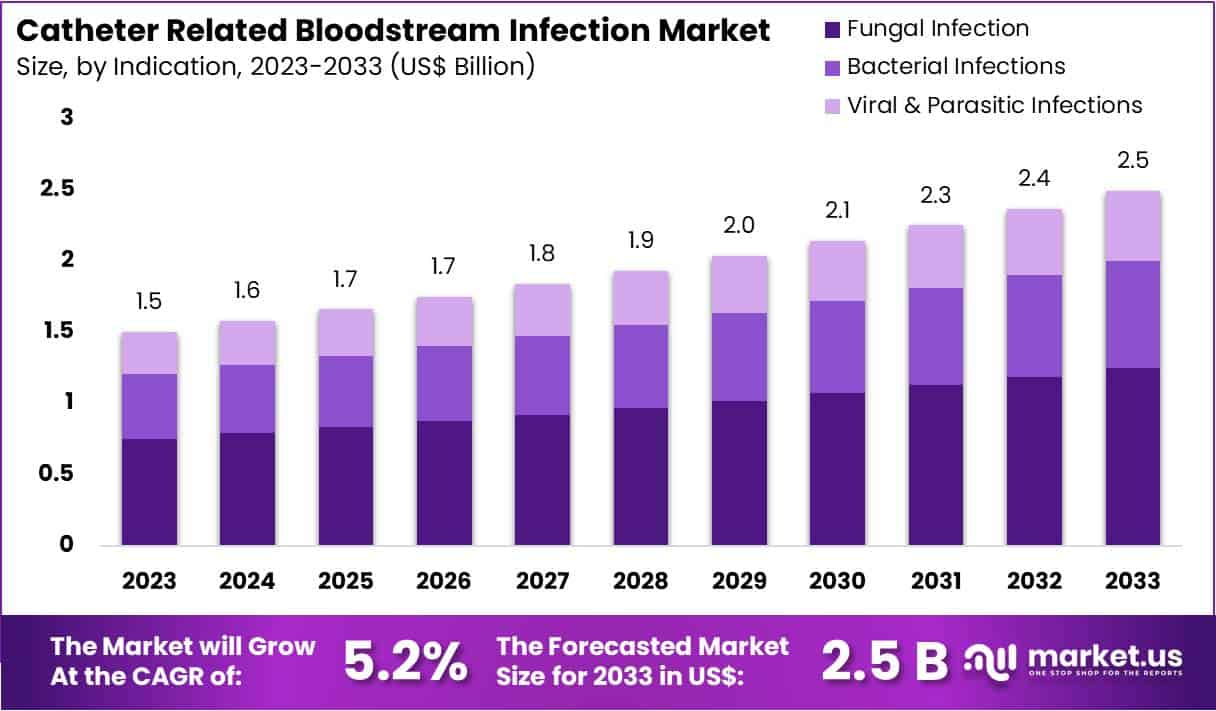
New York, NY – March 05, 2026 – The Catheter Related Bloodstream Infection Market size is expected to be worth around US$ 2.5 billion by 2033 from US$ 1.5 billion in 2023, growing at a CAGR of 5.2% during the forecast period 2024 to 2033.
Catheter-related bloodstream infection (CRBSI) is recognized as a significant healthcare-associated infection that occurs when microorganisms enter the bloodstream through an intravascular catheter. These infections are commonly associated with central venous catheters, which are widely used in hospitals for administering medications, fluids, blood products, and parenteral nutrition. The increasing utilization of catheters in critical care units, oncology treatments, and long-term therapies has contributed to the rising incidence of catheter-related infections globally.
The formation of CRBSI typically occurs when bacteria or fungi colonize the catheter surface or enter the bloodstream through the catheter insertion site. Microorganisms may originate from the patient’s skin, contaminated medical devices, or healthcare personnel during catheter insertion or maintenance. Biofilm formation on catheter surfaces further increases the risk, as it protects pathogens from antimicrobial agents and the immune system, making infections more difficult to treat.
Healthcare systems worldwide are increasingly focusing on infection prevention strategies to reduce the burden of CRBSI. The implementation of strict sterilization protocols, improved catheter care guidelines, and the adoption of antimicrobial-coated catheters have been identified as effective approaches to minimize infection risk. In addition, rising awareness among healthcare professionals regarding early diagnosis and timely treatment has supported improved patient outcomes.
The growing emphasis on patient safety, hospital infection control programs, and advancements in catheter technologies are expected to support the development of improved solutions aimed at reducing catheter-related bloodstream infections across healthcare settings.
Key Takeaways
- In 2023, the catheter related bloodstream infection market generated revenue of US$ 1.5 billion and is projected to reach US$ 2.5 billion by 2033, expanding at a CAGR of 5.2% during the forecast period.
- Based on drug class, the market is categorized into cloxacillin, echinocandin, ceftazidime, cefazoline, daptomycin, and others. Among these, echinocandin emerged as the leading segment in 2023, accounting for a 45.5% market share.
- By route of administration, the market is segmented into oral and injectable. The oral segment dominated the market in 2023, capturing a 55.8% revenue share.
- In terms of indication, the market is divided into bacterial infections, fungal infections, and viral & parasitic infections. The fungal infection segment held the largest share, contributing 50.1% of the total market revenue.
- Based on distribution channel, the market is segmented into hospital pharmacies, retail pharmacies, and online pharmacies. Among these, hospital pharmacies led the market with a 50.6% revenue share in 2023.
- North America accounted for the largest regional share in the catheter related bloodstream infection market, securing 37.5% of the total market share in 2023.
Regional Analysis
North America Leads the Catheter Related Bloodstream Infection Market
North America accounted for the largest share of the catheter related bloodstream infection (CRBSI) market in 2023, capturing 37.5% of total revenue. Market leadership has been supported by advanced infection prevention technologies, strong healthcare infrastructure, and increasing awareness regarding healthcare-associated infections. CRBSIs frequently occur in patients using central venous catheters for treatments such as dialysis and intravenous drug administration.
In September 2023, a Phase 3 clinical study conducted by the University of California evaluated a taurolidine and heparin combination therapy, which demonstrated a significant reduction in infection rates compared with standard heparin treatment. Continuous investment in healthcare facilities and strict infection control protocols are expected to sustain regional market growth.
Asia Pacific to Register the Highest Growth
The Asia Pacific region is projected to witness the fastest CAGR during the forecast period, driven by expanding healthcare infrastructure and rising infection prevention initiatives. Rapid healthcare development in countries such as India and China, along with increasing healthcare expenditure, is expected to strengthen diagnostic capabilities and accelerate the adoption of advanced infection control technologies.
Emerging Trends
- Focus on Infection-Resistant Catheters: Medical device manufacturers are developing infection-resistant catheters with antimicrobial or antibiotic coatings. These technologies help prevent bacterial adhesion on catheter surfaces, reducing infection risks and supporting safer long-term catheter use in healthcare settings.
- Increased Adoption of Preventive Protocols: Hospitals are increasingly implementing preventive infection control protocols. Healthcare staff are trained in proper catheter insertion, sterilization techniques, and hygiene practices, helping reduce infection risks, improve patient outcomes, and minimize treatment costs.
- Rising Use of Central Line Bundles: Healthcare providers are adopting central line bundles consisting of standardized infection prevention practices such as strict hand hygiene, sterile barrier precautions, and routine catheter assessment to reduce catheter-related bloodstream infection rates.
- Integration of Smart Monitoring Tools: Advanced monitoring technologies are being integrated into healthcare systems to track catheter usage and detect early infection signs. These tools support timely clinical intervention, reduce medical errors, and improve overall patient safety.
- Shifting Toward Outpatient and Home-Based Care: The growing preference for outpatient and home healthcare services has increased demand for user-friendly catheter solutions. Manufacturers are focusing on portable, easy-to-use, and infection-resistant catheter systems designed for non-hospital care environments.
- Growing Regulatory Focus on Hospital-Acquired Infections: Government authorities and healthcare regulators are strengthening policies to control hospital-acquired infections. Strict compliance requirements, infection monitoring, and reporting frameworks are encouraging healthcare institutions to adopt advanced infection prevention technologies.
Use Cases
- Intensive Care Units (ICUs): Intensive care units frequently utilize central venous catheters for medication delivery, nutrition, and fluid therapy. Advanced antimicrobial catheter technologies and strict hygiene protocols are essential to reduce infection risks in critical care settings.
- Cancer Treatment Centers: Cancer treatment centers rely on long-term catheter access for chemotherapy and intravenous therapies. Infection-resistant catheter products and specialized maintenance kits help reduce infection risks among immunocompromised oncology patients.
- Dialysis Centers: Dialysis facilities require frequent vascular access for kidney treatment procedures. Antimicrobial catheters, antiseptic dressings, and catheter lock solutions are widely adopted to minimize infection risks and improve safety for long-term dialysis patients.
- Home Healthcare Services: Home healthcare services support patients receiving intravenous therapies outside hospitals. Simplified catheter kits, disinfectant products, and remote monitoring tools assist patients and caregivers in maintaining proper catheter hygiene and preventing infections.
- Emergency and Surgical Departments: Emergency and surgical departments require rapid catheter placement during critical procedures. Pre-packaged sterile catheter kits, antimicrobial dressings, and fast-acting disinfectants help reduce infection risks in high-pressure clinical environments.
- Pediatric and Neonatal Care: Pediatric and neonatal care units use specialized catheters designed for infants and young children. These devices feature gentle materials and antimicrobial protection, reducing infection risks while supporting safe treatment in sensitive patient populations.
Frequently Asked Questions on Catheter Related Bloodstream Infection
- What are the major causes of catheter related bloodstream infections?
CRBSIs are mainly caused by microbial contamination during catheter insertion, improper catheter maintenance, or colonization of microorganisms on catheter surfaces. Pathogens may originate from the patient’s skin, contaminated medical equipment, or healthcare personnel during catheter handling procedures. - What symptoms are associated with catheter related bloodstream infections?
Common symptoms of CRBSI include fever, chills, redness or swelling at the catheter insertion site, and signs of systemic infection. In severe cases, patients may experience sepsis, low blood pressure, and organ dysfunction if the infection spreads rapidly. - How are catheter related bloodstream infections treated?
Treatment generally involves the administration of targeted antimicrobial therapy such as antibiotics or antifungal drugs, along with catheter removal or replacement when necessary. Early diagnosis and appropriate treatment strategies are essential to prevent severe complications and improve patient outcomes. - What factors are driving the growth of the Catheter Related Bloodstream Infection Market?
The growth of the catheter related bloodstream infection market is driven by increasing hospital-acquired infections, rising usage of central venous catheters, advancements in infection prevention technologies, and growing awareness regarding patient safety and healthcare quality across hospitals and clinical settings. - Which drug class dominates the catheter related bloodstream infection market?
Among the drug classes used for CRBSI treatment, echinocandin holds the dominant position due to its effectiveness in treating fungal infections associated with bloodstream infections. The segment accounted for the largest market share, reflecting growing demand for antifungal therapies. - Which region leads the Catheter Related Bloodstream Infection Market?
North America leads the catheter related bloodstream infection market due to strong healthcare infrastructure, high adoption of infection prevention technologies, and increased clinical research. The region accounted for the largest share of the global market in recent years.
Conclusion
In conclusion, catheter related bloodstream infections remain a major healthcare concern due to the widespread use of intravascular catheters in critical care, dialysis, and long-term treatment settings. The increasing focus on infection prevention, improved clinical protocols, and advancements in catheter technologies are supporting better patient outcomes.
Market growth is being driven by the rising prevalence of hospital-acquired infections, growing demand for effective antimicrobial therapies, and expanding healthcare infrastructure. With North America leading the market and Asia Pacific expected to witness the fastest growth, continuous investment in infection control strategies and innovative treatment approaches is expected to strengthen the global catheter related bloodstream infection market over the coming years.
Discuss your needs with our analyst
Please share your requirements with more details so our analyst can check if they can solve your problem(s)




