


Table of Contents
Overview
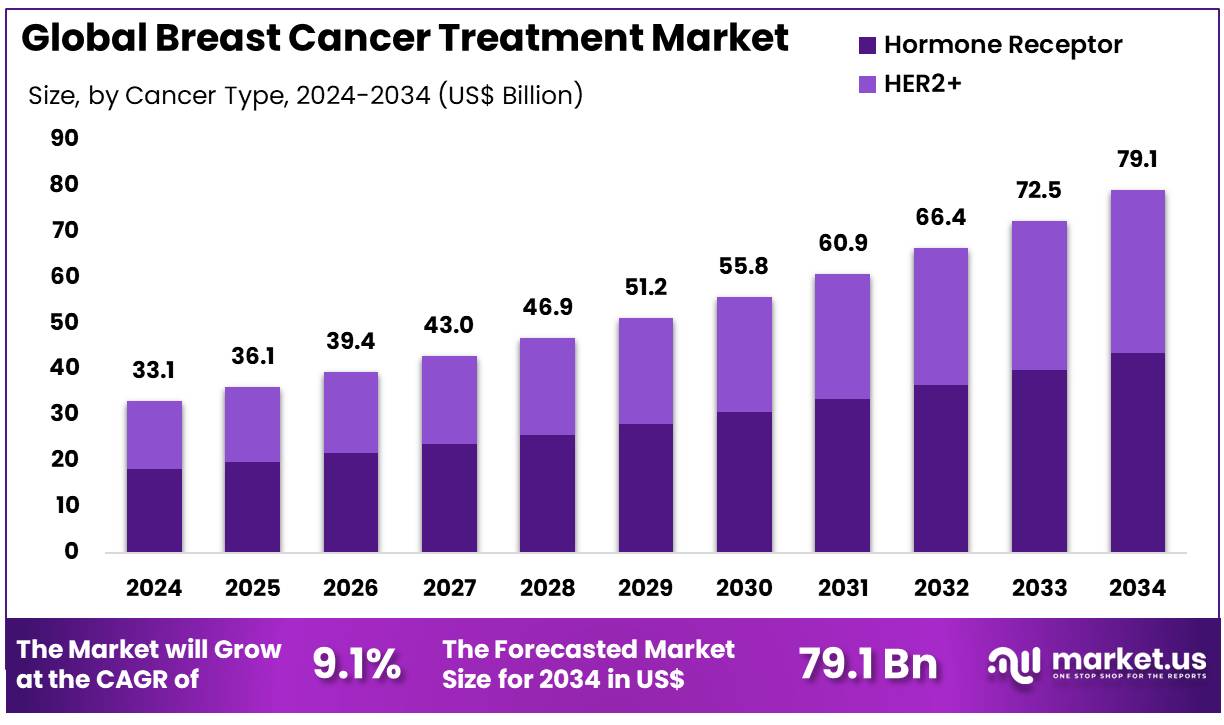
New York, NY – Dec 15, 2025 – Global Breast Cancer Treatment Market size is expected to be worth around US$ 79.1 Billion by 2034 from US$ 33.1 Billion in 2024, growing at a CAGR of 9.1% during the forecast period 2025 to 2034. In 2024, North America led the market, achieving over 38.4% share with a revenue of US$ 12.7 Billion.
Breast cancer remains one of the most commonly diagnosed cancers worldwide, with continued advancements in treatment significantly improving patient outcomes. Modern breast cancer treatment is based on a personalized approach, guided by cancer type, stage, and individual patient factors.
Treatment options generally include surgery, radiation therapy, chemotherapy, hormone therapy, targeted therapy, and immunotherapy. Surgical procedures, such as lumpectomy or mastectomy, are often used to remove cancerous tissue and are frequently combined with additional therapies to reduce the risk of recurrence. Radiation therapy is commonly administered after surgery to eliminate remaining cancer cells.
Chemotherapy continues to play a critical role, particularly in aggressive or advanced-stage breast cancers, by destroying rapidly dividing cancer cells. Hormone therapy is widely used for hormone receptor–positive breast cancers and works by blocking or lowering estrogen levels that promote tumor growth. Targeted therapies and immunotherapies have gained increasing attention due to their ability to attack cancer cells more precisely, often resulting in improved effectiveness and reduced side effects.
Early detection and timely access to appropriate treatment remain key factors in improving survival rates. Ongoing research and clinical trials continue to expand available treatment options, supporting the development of more effective and less invasive therapies. As awareness increases and healthcare systems invest in advanced treatment solutions, breast cancer management is expected to become more patient-centered, improving both survival outcomes and quality of life for patients globally.
Key Takeaways
- In 2024, the global breast cancer treatment market generated revenue of US$ 33.1 billion and is projected to expand at a CAGR of 9.1%, reaching US$ 79.1 billion by 2034.
- Based on therapy type, the market is segmented into targeted therapy, hormonal therapy, chemotherapy, and immunotherapy, with targeted therapy emerging as the leading segment, accounting for 39.5% of the market share in 2024.
- By cancer type, the market is categorized into hormone receptor and HER2+, with the hormone receptor segment holding a dominant share of 55.0%.
- In terms of distribution channels, the market comprises hospital pharmacies, retail pharmacies, and others, where hospital pharmacies dominated the market, capturing a revenue share of 56.8%.
- North America remained the leading regional market, accounting for 38.4% of the global market share in 2024.
Regional Analysis
North America accounted for the largest share of the breast cancer treatment market in 2024, capturing 38.4% of total revenue. This dominance can be attributed to the consistently high incidence of breast cancer, rapid progress in targeted and immunotherapy-based treatments, and the presence of well-established screening and diagnostic programs. In the United States, breast cancer continues to represent a major public health concern, with an estimated 316,950 new cases of invasive breast cancer and 59,080 cases of non-invasive breast cancer reported in 2025. These figures underscore the sustained demand for innovative and effective treatment options.
Canada also contributes significantly to regional market growth. In 2024, approximately 30,500 women were projected to be diagnosed with breast cancer, accounting for 25.4% of all new female cancer diagnoses, excluding non-melanotic skin cancers. Regulatory support has further strengthened the market, as the U.S. Food and Drug Administration (FDA) continues to approve novel therapies and expanded indications. Notably, in 2024, approvals for treatments such as Kisqali (ribociclib) and inavolisib-based combination regimens reinforced the region’s leadership in therapeutic innovation. Strong commercial performance by key pharmaceutical players, including Roche and Pfizer, further reflects the maturity and growth potential of the North American market.
Meanwhile, the Asia Pacific region is expected to register the fastest CAGR over the forecast period. This growth is driven by rising disease incidence, expanding healthcare infrastructure, improved access to advanced therapies, and increasing awareness of early detection. The region faces a substantial disease burden, with nearly 1 million new breast cancer cases reported in Asia in recent years. Government-led screening initiatives in countries such as Japan and India, combined with growing investments by global pharmaceutical companies, are expected to significantly enhance treatment uptake and outcomes.
Emerging Trends
- Shift Toward Personalized Treatment Approaches: Breast cancer treatment is increasingly guided by personalized medicine. Genetic and protein-based tumor testing is being widely used to identify the specific characteristics of each patient’s cancer. This enables clinicians to select therapies that are better aligned with individual disease profiles. As a result, treatment effectiveness is improved while unnecessary side effects are reduced. The adoption of advanced diagnostic technologies across hospitals is accelerating this shift. Personalized treatment strategies are improving patient outcomes and represent a significant advancement in precision oncology.
- Expanding Role of Immunotherapy: Immunotherapy is emerging as a key component of breast cancer treatment. This approach strengthens the body’s immune system to identify and destroy cancer cells more effectively. New immunotherapeutic drugs are showing strong results, particularly for patients who respond poorly to conventional therapies such as chemotherapy. Reduced toxicity and improved tolerability are supporting wider clinical adoption. As positive outcomes from ongoing clinical trials continue to emerge, immunotherapy is increasingly being combined with other treatment modalities. Its role in breast cancer care is expected to expand steadily over the forecast period.
- Advancements in Targeted Therapies: Targeted therapy continues to gain momentum in breast cancer management. These treatments are designed to act specifically on cancer cells, minimizing damage to healthy tissue. This selectivity leads to fewer side effects and improved patient recovery. Novel drug combinations are demonstrating strong efficacy, particularly in advanced and treatment-resistant cases. Ongoing research is focused on blocking cancer cell growth pathways to slow disease progression. With increasing regulatory approvals, targeted therapies are becoming a preferred treatment option among healthcare providers.
- Growth of Minimally Invasive Surgical Techniques: Surgical treatment for breast cancer is increasingly shifting toward minimally invasive procedures. Advanced surgical tools allow for smaller incisions, leading to reduced pain, faster recovery, and shorter hospital stays. Patients benefit from lower complication risks and improved cosmetic outcomes. These techniques are particularly effective for early-stage breast cancer, where extensive surgery is not required. As surgical expertise and technology continue to improve, minimally invasive approaches are becoming standard practice in breast cancer surgery.
- Integration of Digital Health Solutions: Digital health technologies are transforming patient monitoring and follow-up care in breast cancer treatment. Mobile applications and wearable devices enable real-time tracking of symptoms, treatment side effects, and recovery progress. This continuous data flow allows healthcare providers to adjust treatment plans promptly. Digital tools also support patient engagement through reminders and educational content. Early detection of complications reduces the need for emergency interventions. As digital infrastructure advances, these tools are expected to become an integral part of routine cancer care.
- Increased Emphasis on Early Detection: Early detection remains a critical focus area in breast cancer management. AI-enabled imaging systems are improving the accuracy and speed of tumor identification at earlier stages. Early diagnosis often leads to less aggressive treatment and higher survival rates. Screening programs are becoming more accessible, encouraging broader participation. These advancements are reducing late-stage diagnoses and improving overall outcomes. Continued investment in early detection technologies is strengthening global breast cancer control strategies.
Use Cases
- Treatment of Early-Stage Breast Cancer: In early-stage breast cancer, treatment is primarily aimed at complete tumor removal and recurrence prevention. Surgical intervention is typically followed by radiation therapy to eliminate remaining cancer cells. Targeted therapies may also be used to reduce the likelihood of relapse. This multi-modal approach improves long-term outcomes and supports faster recovery. Patients treated at early stages generally experience higher success rates and fewer long-term complications.
- Management of Advanced and Metastatic Breast Cancer: For advanced or metastatic breast cancer, treatment focuses on controlling disease progression and maintaining quality of life. Targeted therapies address specific cancer cell vulnerabilities, while immunotherapy enhances immune response against tumor cells. These approaches are often used together to extend survival and reduce symptom burden. Supportive care is provided alongside treatment to manage side effects. The overall objective is long-term disease control with improved patient comfort.
- Prevention of Cancer Recurrence: Hormone receptor–positive breast cancers are commonly treated with hormonal therapies following initial treatment. These therapies reduce or block hormone activity, limiting the ability of cancer cells to regrow. Long-term administration significantly lowers recurrence risk. Patients are monitored regularly to manage side effects and assess treatment effectiveness. This preventive strategy plays a vital role in long-term breast cancer management.
- Symptom Management in Late-Stage Disease: In late-stage breast cancer, care is centered on symptom relief and patient well-being. Palliative care services address pain, fatigue, and other physical symptoms. Emotional and psychological support is also provided through counseling and supportive therapies. Nutritional guidance and gentle physical activity help maintain strength and comfort. Although curative treatment is no longer the goal, quality of life is significantly improved through comprehensive palliative care.
- Preventive Care for High-Risk Populations: Individuals with a strong genetic or family history of breast cancer are increasingly adopting preventive strategies. Risk-reducing surgeries, hormone-based preventive therapies, and enhanced screening programs are commonly used. Genetic counseling plays a key role in guiding decision-making, particularly for individuals with BRCA mutations. Early intervention significantly lowers lifetime breast cancer risk. Preventive care is becoming an important component of personalized risk management.
- Post-Treatment Rehabilitation and Recovery: Post-treatment rehabilitation is essential for restoring physical and emotional health after breast cancer therapy. Physical therapy supports mobility and strength recovery, especially following surgery. Psychological counseling helps patients manage anxiety and emotional stress. Nutritional support and guided exercise programs improve energy levels and overall well-being. Effective rehabilitation enables patients to resume daily activities with greater confidence and resilience.
Frequently Asked Questions on Breast Cancer Treatment
- How is breast cancer treatment decided for a patient?
Treatment decisions are based on tumor size, lymph node involvement, hormone receptor status, HER2 expression, genetic factors, and patient preferences. Multidisciplinary care teams are commonly involved to ensure evidence-based, personalized treatment planning. - What role does surgery play in breast cancer treatment?
Surgery is a primary treatment modality aimed at removing cancerous tissue. Procedures include lumpectomy and mastectomy, often combined with lymph node evaluation. Surgical intervention is frequently followed by systemic or radiation therapies. - Are targeted therapies effective in breast cancer management?
Targeted therapies have shown significant effectiveness, particularly in HER2-positive and hormone receptor-positive breast cancers. These therapies act on specific molecular pathways, improving treatment precision, reducing systemic toxicity, and enhancing patient survival outcomes. - What are the common side effects of breast cancer treatments?
Common side effects include fatigue, nausea, hair loss, hormonal changes, and immune suppression. The severity varies by treatment type and duration. Supportive care and treatment advancements have improved side-effect management and patient quality of life. - What factors are driving growth in the breast cancer treatment market?
Market growth is driven by rising breast cancer prevalence, increasing awareness, advancements in targeted and immunotherapies, expanding healthcare access, and strong investment in oncology research and pharmaceutical innovation across developed and emerging economies. - Which treatment segments dominate the breast cancer treatment market?
Targeted therapy and hormone therapy segments hold a significant market share due to high adoption rates and improved clinical outcomes. Chemotherapy remains widely used, while immunotherapy is experiencing rapid growth due to ongoing clinical advancements. - How does technological advancement impact the market?
Technological advancements improve early diagnosis, precision medicine, and treatment efficacy. Innovations such as biomarker testing, companion diagnostics, and novel drug delivery systems are enhancing therapeutic outcomes and supporting sustained market expansion. - What role do emerging markets play in market expansion?
Emerging markets contribute to growth through improving healthcare infrastructure, rising cancer awareness, expanding insurance coverage, and increasing government initiatives. These regions present significant opportunities for pharmaceutical companies and treatment service providers.
Conclusion
Breast cancer treatment continues to advance through a combination of early detection, personalized therapies, and sustained investment in innovation. The growing adoption of targeted therapies, hormone treatments, and immunotherapies has significantly improved clinical outcomes while reducing treatment-related toxicity.
Market expansion is strongly supported by rising disease prevalence, favorable regulatory frameworks, and expanding healthcare access, particularly in emerging regions. North America remains a key contributor due to strong R&D activity, while Asia Pacific is positioned for rapid growth. Overall, the breast cancer treatment landscape is evolving toward more precise, patient-centered care, supporting improved survival rates and long-term quality of life globally.
Discuss your needs with our analyst
Please share your requirements with more details so our analyst can check if they can solve your problem(s)




