


Table of Contents
Overview
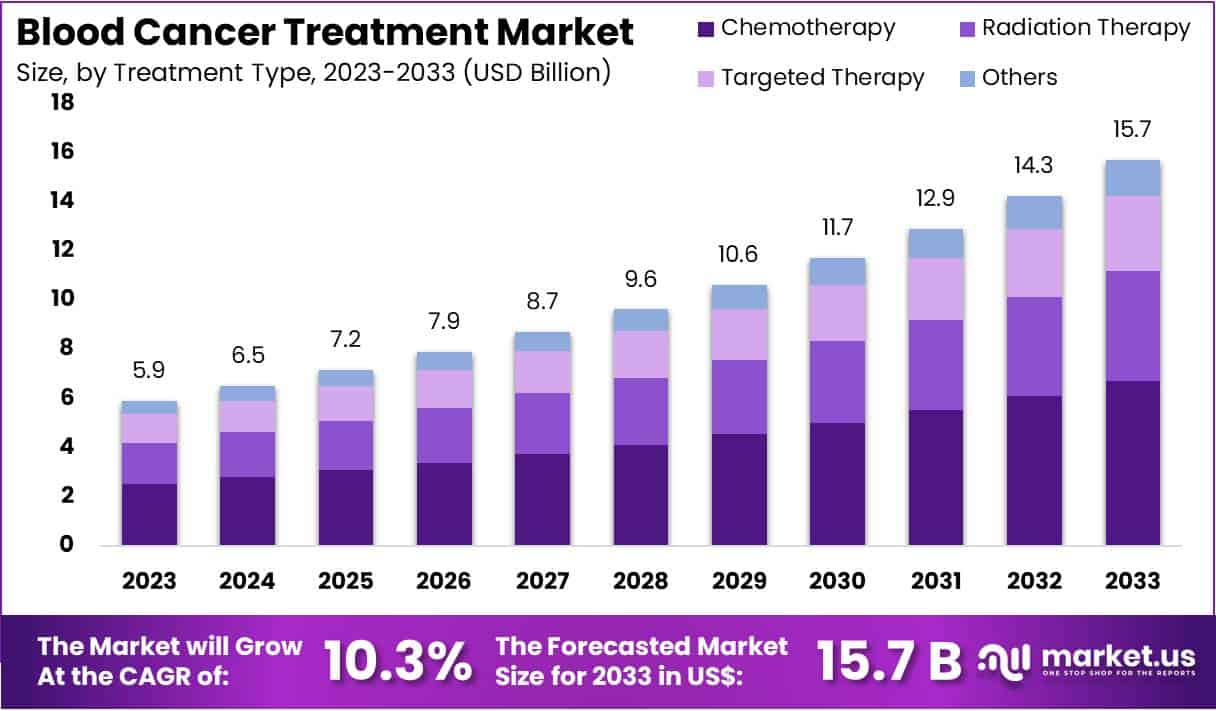
New York, NY – March 05, 2026 – The Global Blood Cancer Treatment Market size is expected to be worth around US$ 15.7 Billion by 2033, from US$ 5.9 Billion in 2023, growing at a CAGR of 10.3% during the forecast period from 2024 to 2033.
Blood cancer, including leukemia, lymphoma, and myeloma, remains a major global health concern. Continuous advancements in medical science are improving the diagnosis and treatment landscape for patients affected by these conditions. Recent developments in targeted therapies, immunotherapy, and precision medicine are contributing to improved survival rates and better patient outcomes.
Modern treatment approaches for blood cancer focus on identifying abnormal blood cells and preventing their uncontrolled growth. Standard treatment options include chemotherapy, radiation therapy, stem cell transplantation, and emerging immunotherapies. Targeted therapies are designed to attack specific cancer cells while minimizing damage to healthy tissues, which is expected to enhance treatment effectiveness and reduce side effects.
The adoption of advanced diagnostic technologies has also strengthened early detection capabilities. Early diagnosis plays a critical role in increasing treatment success rates and enabling physicians to design personalized treatment plans for patients. Hospitals and research institutions across the world are continuing to invest in clinical research to develop innovative therapies.
Growing awareness programs, improved healthcare infrastructure, and increasing investments in oncology research are supporting progress in blood cancer treatment. Collaborative efforts among healthcare providers, pharmaceutical companies, and research organizations are accelerating the development of next-generation therapies.
As medical innovation continues to advance, the outlook for blood cancer patients is gradually improving, with a strong focus on precision medicine, patient-centered care, and long-term disease management.
Key Takeaways
- In 2023, the blood cancer treatment market generated revenue of approximately US$ 5.9 billion and is projected to grow at a CAGR of 10.3%, reaching US$ 15.7 billion by 2033.
- Based on treatment type, the market is segmented into chemotherapy, radiation therapy, targeted therapy, and others, with chemotherapy leading the segment in 2023, accounting for a 42.8% market share.
- By end-user, the market is categorized into hospitals, clinics, cancer rehabilitation centers, and others, where hospitals dominated the segment with a 49.7% share.
- North America emerged as the leading regional market, capturing 42.1% of the global market share in 2023.
Regional Analysis
North America accounted for the largest share of the blood cancer treatment market, representing approximately 42.1% of global revenue. Market dominance is largely attributed to significant advancements in targeted therapies, immunotherapies, and increasing healthcare expenditure across the region. The rising incidence of blood cancers, including leukemia, lymphoma, and myeloma, has intensified the demand for advanced treatment solutions.
According to the Leukemia and Lymphoma Society, nearly 59,610 new leukemia cases were projected to be diagnosed in the United States in 2023, while about 437,337 individuals were living with or in remission from the disease. The expanding patient population and growing adoption of CAR-T cell therapies, monoclonal antibodies, and kinase inhibitors have strengthened treatment outcomes and supported market growth.
Asia Pacific is projected to register the fastest growth rate during the forecast period. Rising cancer prevalence, improving healthcare infrastructure, and increased adoption of advanced therapies are key growth drivers. Rapidly developing healthcare systems in countries such as China and India, along with increasing awareness and pharmaceutical investments, are expected to accelerate regional market expansion.
Emerging Trends
- Shift Toward Targeted Therapies: Targeted therapies are increasingly adopted in blood cancer treatment due to their ability to specifically attack cancer cells while sparing healthy tissues. This precision improves treatment effectiveness, reduces side effects, and supports higher patient acceptance.
- Growing Role of Immunotherapy: Immunotherapy is gaining significant importance in blood cancer care. Treatments such as CAR-T cell therapy enhance the immune system’s ability to identify and destroy cancer cells, improving outcomes for patients with resistant or relapsed cancers.
- Personalized Treatment Plans: Personalized medicine is transforming blood cancer treatment through genetic testing and molecular diagnostics. These approaches enable physicians to select therapies tailored to individual genetic profiles, improving treatment effectiveness, minimizing side effects, and enhancing patient outcomes.
- Rise of Combination Treatments: Combination therapies are becoming more common in blood cancer management. Integrating chemotherapy, immunotherapy, or targeted therapy allows physicians to attack cancer through multiple pathways, improving treatment success rates and reducing the risk of relapse.
- Increased Use of Oral Cancer Drugs: Oral cancer medications are gaining popularity due to their convenience and effectiveness. These treatments allow patients to receive therapy at home, reduce hospital visits, improve treatment adherence, and support long-term management of chronic blood cancers.
- Focus on Minimal Residual Disease Monitoring: Minimal Residual Disease monitoring is becoming an important tool in blood cancer treatment. Advanced diagnostic tests detect small traces of remaining cancer cells, enabling early intervention and improving long-term disease control and patient survival.
Use Cases
- Early Targeted Therapy for Chronic Myeloid Leukemia: Targeted oral therapies are widely used for patients diagnosed with chronic myeloid leukemia. These medications directly inhibit cancer cell growth, slow disease progression, reduce hospital visits, and allow patients to maintain daily activities.
- Immunotherapy After Chemotherapy for Non-Hodgkin Lymphoma: For patients who do not respond effectively to chemotherapy, CAR-T cell immunotherapy is often recommended. This treatment modifies the patient’s immune cells to target cancer, offering improved remission rates in difficult-to-treat lymphoma cases.
- Genetic Testing to Guide Leukemia Treatment: Genetic testing is commonly performed before initiating leukemia treatment. Identifying specific mutations allows physicians to select targeted drugs, improving treatment accuracy, reducing unnecessary therapies, and increasing the probability of successful patient outcomes.
- Intensive Hospital Care for Aggressive Blood Cancers: Patients diagnosed with aggressive blood cancers such as acute myeloid leukemia often require immediate hospital treatment. Intensive chemotherapy, infection management, and continuous monitoring are essential to stabilize patients and improve survival rates.
- Home-Based Maintenance Therapy for Multiple Myeloma: Many multiple myeloma patients continue long-term maintenance therapy after hospital treatment. Oral medications taken at home help prevent relapse, extend remission periods, reduce hospital visits, and support improved quality of life.
- Telehealth Monitoring for Treatment Side Effects: Telehealth platforms are increasingly used to monitor blood cancer patients after treatment. These digital tools enable remote symptom tracking, consultation with physicians, early complication detection, and improved access to care for patients in remote regions.
Frequently Asked Questions on Blood Cancer Treatment
- What are the main types of blood cancers treated through medical therapies?
The primary blood cancers treated with specialized therapies include leukemia, lymphoma, and myeloma. These diseases affect the production and function of blood cells. Treatment strategies are selected based on cancer type, stage of progression, and overall patient health condition. - What are the major treatment options available for blood cancer?
Common blood cancer treatment options include chemotherapy, radiation therapy, targeted therapy, stem cell transplantation, and immunotherapy. These therapies are designed to eliminate cancerous cells, strengthen the immune response, and prevent the spread of abnormal blood cell production. - What factors are driving growth in the blood cancer treatment market?
Market growth is primarily driven by the increasing prevalence of blood cancers, advancements in targeted therapies, rising healthcare investments, and expanding research activities. Improvements in diagnostic technologies and the development of innovative therapies are also contributing to market expansion. - Which region currently dominates the blood cancer treatment market?
North America currently dominates the blood cancer treatment market due to strong healthcare infrastructure, high adoption of advanced therapies, and significant investment in oncology research. The presence of major pharmaceutical companies also supports innovation and treatment accessibility. - Why is the Asia Pacific blood cancer treatment market growing rapidly?
The Asia Pacific market is experiencing rapid growth due to increasing cancer incidence, improving healthcare infrastructure, and rising awareness of advanced treatment options. Expanding access to healthcare services and growing pharmaceutical investments are further supporting regional market development. - What role does targeted therapy play in blood cancer treatment?
Targeted therapy plays a significant role by focusing on specific genetic mutations or proteins responsible for cancer growth. This approach allows treatments to attack cancer cells more precisely while minimizing damage to healthy tissues, improving treatment outcomes and reducing side effects. - How is innovation influencing the blood cancer treatment market?
Innovation in biotechnology and pharmaceutical research is transforming the treatment landscape. Developments such as CAR-T cell therapy, monoclonal antibodies, and precision medicine are improving therapeutic effectiveness and creating new growth opportunities within the global blood cancer treatment market.
Conclusion
The blood cancer treatment market is experiencing steady growth driven by rising disease prevalence, continuous advancements in medical technologies, and increasing investment in oncology research. The development of targeted therapies, immunotherapies, and personalized treatment approaches has significantly improved treatment effectiveness and patient survival rates.
Strong healthcare infrastructure and high adoption of innovative therapies continue to support market expansion, particularly in North America. Meanwhile, the Asia Pacific region is expected to witness rapid growth due to improving healthcare systems and increasing awareness. Overall, ongoing clinical research, technological innovation, and collaborative efforts across the healthcare sector are expected to further strengthen the global blood cancer treatment landscape.
Discuss your needs with our analyst
Please share your requirements with more details so our analyst can check if they can solve your problem(s)




