


Table of Contents
Overview
New York, NY – March 05, 2026 – The Global Antipruritic Market size is expected to be worth around US$ 4.5 Billion by 2033, from US$ 2.6 Billion in 2023, growing at a CAGR of 5.6% during the forecast period from 2024 to 2033. North America dominated the market with a share exceeding 39.1% and a market value of USD 1 billion.
An antipruritic formulation is developed to relieve itching associated with dermatological conditions such as eczema, dermatitis, allergic reactions, insect bites, and dry skin. These formulations are typically designed to provide rapid soothing effects while reducing inflammation and irritation on the skin. The basic composition generally includes active pharmaceutical ingredients, soothing agents, and a suitable base that supports effective topical delivery.
Common active ingredients in antipruritic formulations include agents such as Hydrocortisone, Calamine, Menthol, and Diphenhydramine. These compounds are widely utilized due to their anti-inflammatory, cooling, and antihistamine properties. Hydrocortisone helps reduce inflammation and redness, while calamine and menthol provide a cooling sensation that alleviates itching. Diphenhydramine functions as an antihistamine, helping to minimize allergic skin responses.
The formulation base commonly consists of emollients, humectants, and stabilizing agents. Ingredients such as glycerin, aloe vera extract, and light mineral oils are often incorporated to maintain skin hydration and enhance the soothing effect. In addition, preservatives, emulsifiers, and pH-balancing agents are included to ensure product stability, safety, and extended shelf life.
From a formulation perspective, antipruritic products are frequently available in creams, lotions, gels, and ointments, allowing flexible application depending on skin type and severity of symptoms. Increasing consumer demand for dermatologically safe and non-irritating topical treatments has contributed to the continuous development of advanced antipruritic formulations. These products are widely used in clinical dermatology as well as over-the-counter skincare applications for effective itch management.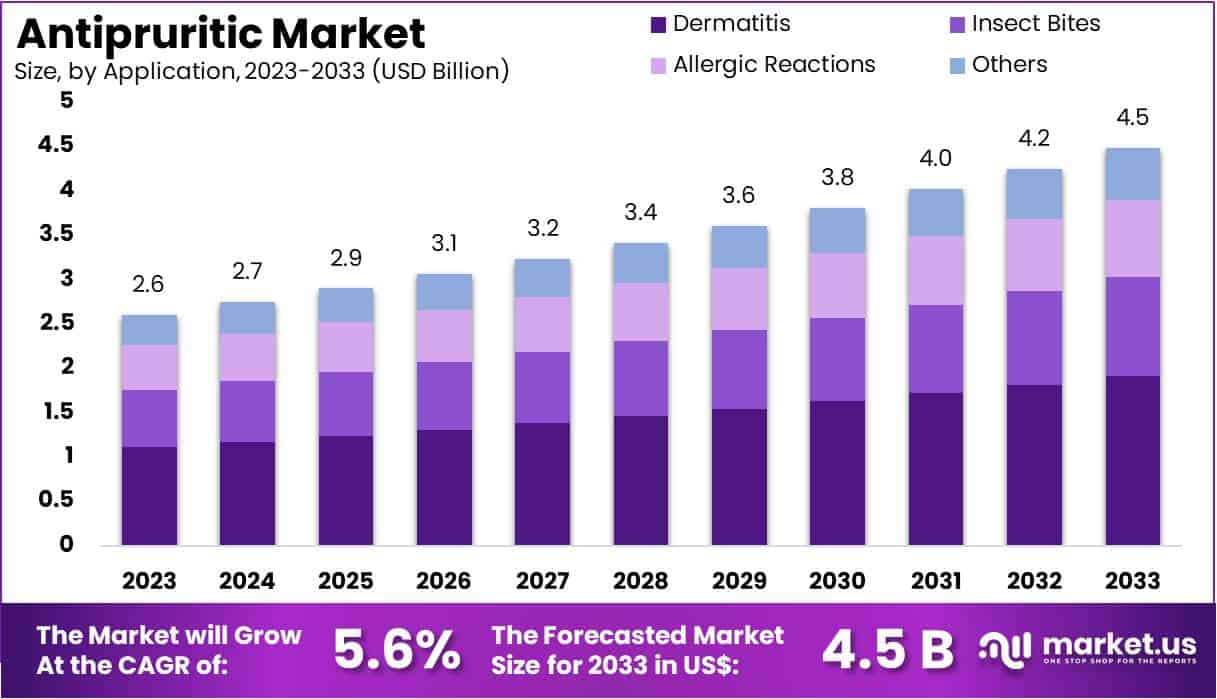
Key Takeaways
- In 2023, the global antipruritic market generated revenue of approximately US$ 2.6 billion and is projected to expand at a CAGR of 5.6%, reaching nearly US$ 4.5 billion by 2033.
- Based on product type, the market is categorized into topical corticosteroids, counterirritants, antihistamines, immunomodulators, and others. Among these segments, topical corticosteroids accounted for the largest share, representing 37.5% of the market in 2023.
- By route of administration, the market is segmented into topical, oral, and parenteral formulations. The topical segment dominated the market in 2023, capturing a 52.6% revenue share.
- In terms of application, the antipruritic market is divided into dermatitis, insect bites, allergic reactions, and others. The dermatitis segment emerged as the leading application area, accounting for the highest revenue share of 42.7%.
- With respect to distribution channels, the market includes pharmacies, supermarkets/hypermarkets, online stores, and others. Among these channels, pharmacies held the dominant position with a 48.3% market share in 2023.
- From a regional perspective, North America led the global antipruritic market in 2023, securing a 39.1% share of total revenue.
Regional Analysis
North America Leading the Antipruritic Market
North America accounted for the largest revenue share of 39.1% in the antipruritic market, primarily driven by the rising prevalence of dermatological conditions such as eczema, psoriasis, and other skin disorders associated with pruritus. According to data reported by the American Academy of Dermatology Association, nearly 85 million individuals in the United States are affected by skin diseases annually, many of which involve persistent itching.
Increased awareness regarding the impact of pruritus on quality of life has strengthened demand for effective treatments, including topical and oral therapies. The availability of advanced treatment options, such as biologic therapies, along with higher healthcare expenditure and improved access to dermatology services, has further supported regional market growth.
Asia Pacific Expected to Register the Fastest Growth
The Asia Pacific region is anticipated to witness the highest CAGR during the forecast period, supported by rising incidences of skin disorders and expanding healthcare infrastructure. Growing cases of atopic dermatitis and eczema in countries such as Japan, China, and India, combined with new product launches like Moizerto ointment by Otsuka Pharmaceutical Co., Ltd., are expected to accelerate market expansion. Increasing healthcare awareness and improving access to dermatological treatments are also contributing to the region’s market growth.
Emerging Trends
- Shift Toward Natural and Herbal Products: Consumers increasingly prefer antipruritic products formulated with natural ingredients such as aloe vera, chamomile, and calendula. Concerns regarding chemical side effects are encouraging demand for plant-based, skin-friendly formulations with clean labels and organic certifications.
- Growing Demand for Over-the-Counter Treatments: The demand for over-the-counter antipruritic treatments is rising as consumers increasingly manage mild itching at home. Easy availability in pharmacies and online platforms, along with affordability and convenience, supports growing adoption globally.
- Development of Targeted Treatments: Manufacturers are introducing targeted antipruritic therapies designed for specific medical conditions such as eczema, diabetes-related itching, or kidney disorders. These focused solutions enhance treatment effectiveness and improve patient outcomes for chronic pruritus management.
- Innovation in Topical Delivery Methods: Advanced topical delivery formats including sprays, foams, patches, and roll-ons are gaining traction. These alternatives provide convenient application, faster absorption, and improved user experience, particularly for difficult-to-reach areas or sensitive skin conditions.
- Rise in Personalized Skincare: Personalized antipruritic skincare solutions are emerging through digital diagnostics and consumer profiling. Customized products based on skin sensitivity, health history, and environmental factors help improve treatment effectiveness while reducing irritation and adverse reactions.
- E-commerce and Direct-to-Consumer Growth: Online retail channels are expanding the reach of antipruritic products. Direct-to-consumer models allow brands to offer wider product choices, subscription services, and personalized guidance, strengthening consumer engagement and improving accessibility.
- Focus on Pediatric and Geriatric Needs: Growing attention is being directed toward pediatric and geriatric skincare segments. Mild, fragrance-free, and hypoallergenic antipruritic products are increasingly developed to address the sensitive skin needs of children and elderly populations.
Use Cases
- Relief from Skin Allergies: Antipruritic creams and lotions are widely used to relieve itching caused by allergic reactions triggered by soaps, detergents, plants, or insect bites. These formulations reduce inflammation and provide quick soothing relief.
- Eczema and Psoriasis Management: Antipruritic formulations play an important role in managing itching related to eczema and psoriasis. Regular use reduces irritation, redness, and swelling while supporting skin barrier protection and improving patient comfort.
- Soothing Dry and Sensitive Skin: Individuals with dry or sensitive skin frequently experience itching due to environmental factors or aging. Antipruritic moisturizers help restore hydration, reduce irritation, and maintain healthy skin balance through gentle daily care.
- Post-Surgical or Wound Healing Support: After surgery or skin injuries, itching often occurs during the healing process. Antipruritic ointments provide localized relief, helping prevent scratching and reducing the risk of infection or delayed wound recovery.
- Support for Dialysis and Liver Patients: Patients undergoing dialysis or experiencing liver disorders often suffer from chronic pruritus. Specialized antipruritic products are used to soothe persistent itching and improve overall comfort and quality of life.
- Bug Bites and Stings: Antipruritic gels, sprays, and roll-ons are commonly applied to insect bites and stings. These products reduce swelling, cool the skin, and minimize itching, making them useful for outdoor activities.
- Sunburn or Rash Relief: Antipruritic solutions are widely used to relieve itching and irritation caused by sunburn or skin rashes. Cooling ingredients help reduce redness and inflammation while supporting skin recovery after excessive sun exposure.
- Daily Skincare for Itch-Prone Individuals: Individuals prone to frequent itching often incorporate antipruritic creams into daily skincare routines. Regular application helps maintain skin hydration, prevent irritation, and reduce flare-ups triggered by environmental or lifestyle factors.
Frequently Asked Questions on Antipruritic
- What are the common types of antipruritic medications?
Common antipruritic medications include topical corticosteroids, antihistamines, counterirritants, and immunomodulators. Products containing ingredients such as Hydrocortisone or Calamine are widely used to reduce itching, inflammation, and skin irritation in both prescription and over-the-counter treatments. - What conditions are treated using antipruritic products?
Antipruritic products are primarily used to manage itching associated with dermatological conditions such as eczema, allergic reactions, dermatitis, insect bites, and psoriasis. These treatments help reduce discomfort while improving overall skin health and patient quality of life. - What factors are driving the growth of the antipruritic market?
Growth of the antipruritic market is largely driven by the increasing prevalence of chronic skin diseases, rising awareness of dermatological health, and expanding demand for effective itch-relief therapies across both prescription and over-the-counter product segments globally. - Which region leads the global antipruritic market?
North America currently holds the leading position in the antipruritic market due to high healthcare spending, strong dermatology treatment adoption, and increasing cases of eczema, psoriasis, and other pruritus-related skin disorders. - What distribution channels are commonly used for antipruritic products?
Antipruritic products are widely distributed through pharmacies, supermarkets or hypermarkets, online stores, and hospital outlets. Pharmacies remain the dominant channel as they provide access to both prescription medications and over-the-counter itch-relief treatments. - What future trends are expected in the antipruritic market?
Future market growth is expected to be supported by increasing research and development activities, introduction of biologic therapies, rising demand for targeted dermatological treatments, and the growing preference for effective and dermatologically tested antipruritic formulations.
Conclusion
The antipruritic market is experiencing steady expansion due to the increasing prevalence of skin conditions such as eczema, dermatitis, and allergic reactions. The growing demand for effective itch-relief therapies, along with rising awareness of dermatological health, is supporting market development.
Product innovations, including targeted treatments, advanced topical delivery systems, and natural formulations, are enhancing treatment effectiveness and consumer adoption. Regional growth is strongly supported by the leadership of North America and the rapid expansion expected in Asia Pacific. Overall, continuous research, expanding healthcare access, and increasing availability of over-the-counter treatments are expected to sustain long-term market growth.
Discuss your needs with our analyst
Please share your requirements with more details so our analyst can check if they can solve your problem(s)




