


Table of Contents
Overview
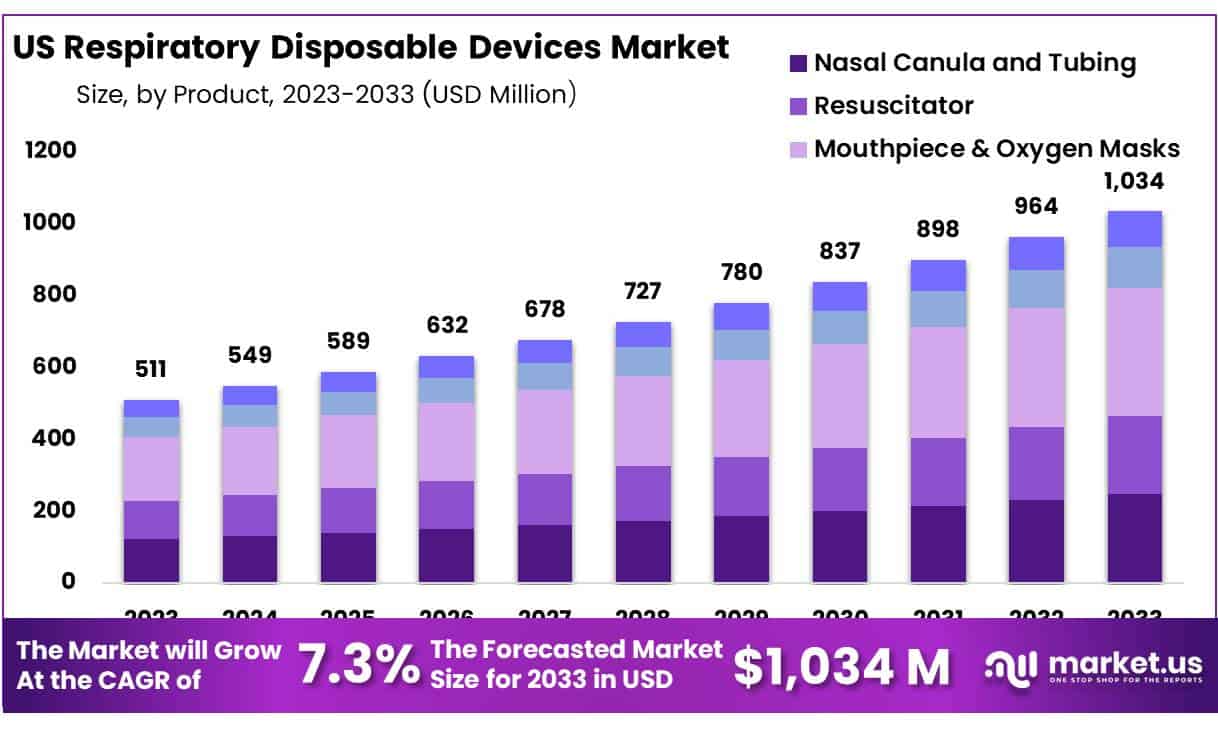
New York, NY – Jan 30, 2026 – The Global US Respiratory Disposable Devices Market size is expected to be worth around USD 1,034 Million by 2033 from USD 511 Million in 2023, growing at a CAGR of 7.3% during the forecast period from 2024 to 2033.
The US respiratory disposable devices market is witnessing steady expansion, supported by rising respiratory disease prevalence and increased adoption of infection control practices across healthcare settings. Respiratory disposable devices include products such as disposable breathing circuits, masks, filters, and nebulizers, which are designed for single-use to reduce cross-contamination risks and improve patient safety.
Market growth is primarily driven by the increasing incidence of chronic respiratory disorders, including asthma, chronic obstructive pulmonary disease (COPD), and sleep apnea. In addition, a growing geriatric population and higher hospitalization rates have contributed to sustained demand for disposable respiratory solutions. The shift toward home healthcare and outpatient care models has further supported market expansion, as disposable devices are preferred for their convenience, hygiene benefits, and cost efficiency.
Technological improvements in materials, such as lightweight polymers and enhanced filtration media, have improved product performance while maintaining affordability. Regulatory emphasis on infection prevention and hospital-acquired infection reduction has also reinforced the adoption of disposable respiratory devices in critical care, emergency care, and long-term care facilities.
From a competitive perspective, the market is characterized by the presence of established medical device manufacturers focusing on product innovation, supply chain efficiency, and compliance with stringent regulatory standards. Strategic partnerships, capacity expansions, and portfolio diversification are commonly observed to strengthen market positioning.
Overall, the US respiratory disposable devices market is expected to maintain a positive growth trajectory in the coming years. Market development is anticipated to be supported by ongoing healthcare infrastructure investments, rising awareness of respiratory health, and continued emphasis on patient safety and infection control protocols.
Key Takeaways
- Market Size: The US respiratory disposable devices market is projected to reach approximately USD 1,034 million by 2033, increasing from USD 511 million in 2023, registering a compound annual growth rate (CAGR) of 7.3% over the forecast period.
- Product Analysis: Mouthpieces and oxygen masks represent the leading product category, collectively accounting for 34.5% of the total market share, driven by their widespread clinical and homecare usage.
- Patient Group Analysis: Adult patients constitute the largest patient segment, holding 42.1% of the market share for respiratory disposable devices in the United States, reflecting higher disease incidence within this group.
- End-Use Analysis: Hospitals remain the dominant end-use segment, capturing 43.6% of the overall market share, supported by high patient inflow and strict infection control protocols.
- Rising Respiratory Diseases: The growing elderly population, coupled with the increasing prevalence of chronic respiratory conditions such as asthma and chronic obstructive pulmonary disease (COPD), is generating sustained long-term demand for respiratory disposable devices used in disease management and treatment.
- Technological Advancements: Continuous product innovation, including the development of lightweight masks and more efficient nebulizers, is expected to enhance patient comfort and clinical efficiency, thereby supporting market growth.
- Focus on Convenience: The preference for disposable respiratory devices is being reinforced by their ease of use and convenience compared to reusable alternatives, particularly in home healthcare and outpatient care settings.
Market Segmentation Analysis
- Product Analysis: The U.S. respiratory disposable devices market is primarily driven by oxygen masks and mouthpieces, accounting for 34.5% share due to their essential role in oxygen therapy. Nasal cannulas, tubing, resuscitators, and disposable suction components support less invasive delivery, emergency ventilation, and infection prevention across care settings.
- Patient Group Analysis: Adults represent the largest patient group with 42.1% market share, supported by the high prevalence of COPD, asthma, and chronic respiratory disorders. Regular use of oxygen masks, nebulizers, and tubing sustains demand, while pediatric, neonatal, and geriatric populations drive additional growth through specialized care needs.
- End-Use Analysis: Hospitals lead the end-use segment with a 43.6% share, reflecting intensive use of disposable respiratory devices in surgeries, ICUs, and emergency care. Clinics and nursing homes follow, supported by chronic disease management and strict infection control protocols that necessitate consistent adoption of single-use respiratory equipment.
Regional Analysis
The Northeast region demonstrates strong demand for respiratory disposable devices, supported by high population density and well-established healthcare infrastructure. States such as New York, Massachusetts, and Pennsylvania contribute significantly to regional market value due to advanced hospital networks and a relatively high prevalence of respiratory disorders.
In the Midwest, steady market growth is driven by states including Illinois, Michigan, and Ohio, where a sizable aging population and robust healthcare systems sustain demand for respiratory disposables. Continued emphasis on healthcare accessibility and quality further supports market expansion across the region.
The South accounts for a substantial share of the US market, largely due to its large and diverse population base and rising healthcare spending. States such as Texas, Florida, and Georgia experience high rates of chronic respiratory conditions, increasing the utilization of disposable respiratory devices in both hospital and home care settings.
The West region, led by California, Washington, and Colorado, is experiencing growing adoption, supported by progressive healthcare policies, heightened respiratory health awareness, and strong investment in healthcare technology and infrastructure.
Emerging Trends
- Rising Adoption of Disposable Respiratory Protective Devices (RPDs): The COVID-19 pandemic underscored the importance of single-use respiratory protection to minimize cross-contamination risks. As a result, healthcare institutions have increasingly relied on disposable devices such as N95 respirators and surgical masks as a core component of infection prevention and control protocols.
- Focus on Stockpiling and Supply Chain Strengthening: In response to supply disruptions observed during public health emergencies, significant emphasis has been placed on improving preparedness through stockpiling. National initiatives, including the Strategic National Stockpile, have played a critical role in ensuring the timely distribution of large volumes of disposable N95 respirators to healthcare providers during crisis situations.
- Enhanced Regulatory Oversight and Standardization: Regulatory authorities such as the Food and Drug Administration and the Centers for Disease Control and Prevention have issued comprehensive guidance governing the use, performance, and approval of disposable respiratory devices. These frameworks are designed to ensure that products used in healthcare settings meet defined safety, quality, and efficacy requirements.
Use Cases
- Healthcare Environments: Disposable RPDs are widely utilized across hospitals and clinical settings to protect healthcare personnel from airborne infectious agents. N95 respirators are particularly critical during aerosol-generating procedures, as they offer high filtration efficiency and a secure facial seal.
- Emergency and Pandemic Preparedness: Disposable respiratory devices form a central element of emergency readiness strategies. During a severe respiratory pandemic, it is estimated that the U.S. healthcare system may require approximately 1.7 to 7.3 billion respirators to maintain adequate protection for frontline workers.
- Home Healthcare Applications: In home-based care settings, disposable masks and respirators are commonly used by visiting healthcare professionals to safeguard both caregivers and patients, especially those with chronic respiratory illnesses. Evidence indicates that N95 respirators deliver substantially higher levels of protection than standard surgical masks in these environments.
- Public Use During Health Emergencies: During large-scale health crises, disposable face masks are recommended for public use to help limit the spread of respiratory infections. Public health guidance emphasizes correct usage and proper disposal practices to preserve protective effectiveness and reduce secondary contamination risks.
Frequently Asked Questions on US Respiratory Disposable Devices
- What factors are driving the growth of the respiratory disposable devices market?
Market growth is being driven by rising prevalence of chronic respiratory diseases, increasing hospital admissions, an expanding elderly population, and stricter infection control standards across healthcare facilities, which collectively support higher adoption of disposable respiratory products. - Which product segments hold the largest market share?
Mouthpieces and oxygen masks represent the leading product segments due to their frequent use in hospitals, emergency care, and home healthcare settings, where cost-effectiveness, hygiene, and ease of replacement are critical considerations. - Which patient group contributes most to market demand?
Adult patients account for the largest share of demand, primarily due to higher incidence rates of asthma, chronic obstructive pulmonary disease, and other long-term respiratory conditions requiring ongoing therapeutic and diagnostic support. - Which end-use sector dominates the market?
Hospitals dominate the market as the primary end-users, supported by high patient volumes, advanced respiratory care infrastructure, and strong emphasis on preventing hospital-acquired infections through single-use medical devices. - How do technological advancements influence the market?
Ongoing innovations, such as lighter materials, improved filtration efficiency, and enhanced patient comfort, are improving device performance and usability, thereby increasing acceptance of disposable respiratory devices across clinical and home care environments. - What role does home healthcare play in market expansion?
Home healthcare is emerging as a key growth area, as disposable respiratory devices offer convenience, minimal maintenance, and reduced contamination risks, making them well-suited for long-term respiratory management outside hospital settings.
Conclusion
The U.S. respiratory disposable devices market is positioned for sustained growth, supported by rising respiratory disease prevalence, an aging population, and heightened focus on infection prevention. Strong demand from hospitals, coupled with expanding home healthcare adoption, continues to reinforce market stability.
Technological advancements in lightweight materials and filtration efficiency have improved product performance while maintaining cost effectiveness. Regulatory emphasis on patient safety and preparedness further strengthens adoption across care settings.
Overall, consistent healthcare investments, growing respiratory health awareness, and preference for single-use solutions are expected to support a positive and resilient market outlook through the forecast period.
Discuss your needs with our analyst
Please share your requirements with more details so our analyst can check if they can solve your problem(s)




