


Table of Contents
Overview
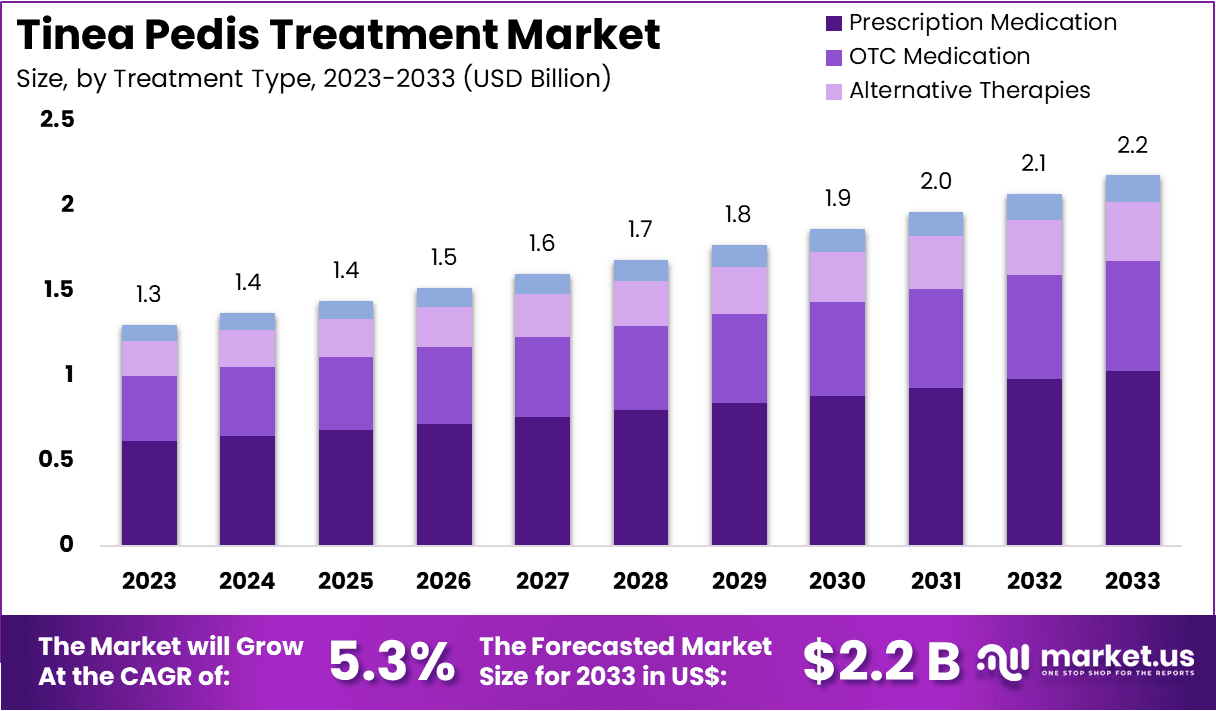
New York, NY – March 06, 2026 – The Global Tinea Pedis Treatment Market Size is expected to be worth around US$ 2.2 Billion by 2033, from US$ 1.3 Billion in 2023, growing at a CAGR of 5.3% during the forecast period from 2024 to 2033. North America dominated the market, securing a 39.1% share and reaching a market value of US$ 0.5 billion for the year.
Tinea pedis, commonly referred to as athlete’s foot, is a contagious fungal infection that affects the skin of the feet, particularly the areas between the toes. The condition is primarily caused by dermatophyte fungi that thrive in warm and moist environments. Increasing participation in sports activities, the frequent use of closed footwear, and high humidity levels have contributed to the rising prevalence of this infection worldwide.
The basic treatment approach for tinea pedis focuses on eliminating the fungal infection, reducing symptoms, and preventing recurrence. In most cases, topical antifungal medications are considered the first-line treatment. These formulations typically include active ingredients such as azoles and allylamines, which inhibit fungal growth and promote skin healing. Topical treatments are commonly available in the form of creams, sprays, powders, and gels, and are applied directly to the affected area for a prescribed duration.
For moderate to severe infections, oral antifungal medications may be recommended under medical supervision. These systemic therapies are designed to address persistent infections that do not respond adequately to topical treatments.
Preventive care plays a critical role in effective management. Maintaining proper foot hygiene, keeping feet dry, wearing breathable footwear, and avoiding shared personal items are widely recommended strategies to reduce the risk of reinfection.
Continuous awareness, early diagnosis, and adherence to recommended treatment protocols are expected to support improved clinical outcomes in the management of tinea pedis.
Key Takeaways
- In 2023, the tinea pedis treatment market generated revenue of US$ 1.3 billion and is projected to reach US$ 2.2 billion by 2033, registering a compound annual growth rate (CAGR) of 5.3% during the forecast period.
- Based on treatment type, the market is categorized into OTC medication, prescription medication, alternative therapies, and others. Among these, prescription medication accounted for the largest share, contributing 47.3% of the total market revenue in 2023.
- By route of administration, the market is segmented into oral, topical, and others. The oral segment held a significant position, capturing 48.1% of the overall market share in 2023.
- In terms of distribution channels, the market is divided into hospital pharmacies, retail pharmacies, online pharmacies, and others. The hospital pharmacy segment emerged as the leading distribution channel, accounting for the highest revenue share of 42.5% in the market.
- From a regional perspective, North America dominated the global market, securing a 39.1% market share in 2023.
Regional Analysis
North America Leads the Tinea Pedis Treatment Market
North America accounted for the largest share of the tinea pedis treatment market in 2023, holding 39.1% of total revenue. Market dominance is supported by the rising prevalence of fungal infections, strong healthcare awareness, and the wide availability of effective antifungal therapies. Increased adoption of topical antifungal medications has significantly contributed to treatment demand.
According to The College of Family Physicians of Canada, topical antifungal therapies successfully treat 70%–75% of patients, compared with 20%–30% efficacy in placebo cases, encouraging the use of over-the-counter creams and sprays. Higher sports participation and improved product availability through retail and online pharmacies have further strengthened regional growth.
Asia Pacific Expected to Register the Fastest Growth
The Asia Pacific region is projected to record the highest CAGR during the forecast period, driven by rapid urbanization, growing disposable income, and improving healthcare infrastructure. In June 2024, Glenmark Pharmaceuticals received approval from the U.S. Food and Drug Administration for an antifungal ointment, supporting wider treatment accessibility and market expansion across the region.
Emerging Trends
- Shift Toward Natural and Herbal Remedies: Consumers are increasingly choosing natural remedies such as tea tree oil, coconut oil, and aloe vera for tinea pedis treatment. These plant-based products are perceived as safer, with lower side-effect risks, supporting growing demand for herbal antifungal formulations.
- Growth in E-commerce and Online Pharmacies: Online pharmacies and e-commerce platforms are becoming major distribution channels for antifungal treatments. Consumers benefit from convenience, product comparisons, and discounts, while discreet purchasing options further encourage digital sales of tinea pedis treatment products.
- Innovation in Prescription Formulations: Pharmaceutical companies are developing advanced prescription formulations for faster symptom relief and improved treatment outcomes. New antifungal combinations and longer-lasting formulations help reduce recurrence rates while enhancing patient adherence and overall treatment effectiveness.
- Increased Awareness and Preventive Care: Public awareness campaigns and digital health platforms are improving knowledge about tinea pedis prevention. Consumers increasingly adopt preventive measures such as antifungal powders, moisture-wicking socks, and daily hygiene practices to reduce infection risks.
- Combination Products: Combination antifungal products are gaining popularity as they treat multiple fungal infections with a single formulation. These broad-spectrum solutions provide convenience, reduce product switching, and are widely preferred by households and retail pharmacies.
- Focus on Pediatric and Diabetic Foot Care: The demand for specialized tinea pedis treatments for children and diabetic patients is increasing. Manufacturers are introducing gentle formulations with mild ingredients to ensure safety while effectively managing infections in sensitive and high-risk patient groups.
Use Cases
- Everyday Athletes and Gym-Goers: Athletes and gym users frequently experience tinea pedis due to sweaty feet and shared locker rooms. Over-the-counter antifungal sprays, creams, and powders are widely used to treat infections and prevent recurrence.
- Elderly People with Poor Circulation: Older adults face a higher risk of tinea pedis because of reduced circulation and prolonged footwear use. Prescription antifungal creams and consistent foot hygiene are commonly recommended to manage persistent infections.
- Diabetic Patients: Individuals with diabetes require careful management of foot infections due to potential complications. Gentle antifungal treatments, doctor-recommended creams, and regular foot inspections help prevent infection progression and protect overall foot health.
- Frequent Travelers: Frequent travelers encounter higher exposure to fungal infections in public showers, gyms, and hotel facilities. Portable antifungal sprays, creams, and powders are commonly carried to provide quick treatment and preventive protection.
- Workers in Wet or Humid Environments: Workers in humid or wet environments often develop fungal infections due to prolonged moisture exposure. Daily application of antifungal powders, breathable socks, and proper hygiene practices helps minimize infection risks.
- Children at Summer Camps: Children attending summer camps may develop athlete’s foot through barefoot exposure in shared areas. Parents often include antifungal creams or powders in travel kits to ensure quick treatment and prevent infection spread.
- Beauty and Salon Professionals: Salon professionals, particularly pedicurists, face exposure to fungal infections due to frequent contact with feet and shared tools. Preventive antifungal products, proper sanitation practices, and protective measures help maintain hygiene and reduce infection risks.
Frequently Asked Questions on Tinea Pedis Treatment
- What are the common treatment options for Tinea Pedis?
Treatment of Tinea Pedis generally includes topical antifungal medications such as creams, sprays, powders, and gels. In severe or persistent cases, oral antifungal drugs may be prescribed. Maintaining foot hygiene and dryness is also essential for effective treatment outcomes. - Which antifungal medications are widely used for treating Tinea Pedis?
Common antifungal medications used in Tinea Pedis treatment include terbinafine, clotrimazole, miconazole, and ketoconazole. These medications work by inhibiting fungal growth and are available in various formulations, including creams, sprays, and oral tablets for advanced infections. - What factors are driving the growth of the Tinea Pedis Treatment Market?
Growth of the Tinea Pedis treatment market is driven by increasing prevalence of fungal infections, rising awareness regarding foot hygiene, and growing demand for over-the-counter antifungal medications. Expansion of healthcare access and product innovations are also supporting market development. - How large is the global Tinea Pedis Treatment Market?
The global Tinea Pedis treatment market represents a segment of the broader antifungal therapeutics market and is experiencing steady growth. Market expansion is supported by increasing fungal infection cases, rising pharmaceutical research activities, and growing consumer demand for effective treatments. - What are the key distribution channels for Tinea Pedis treatment products?
Tinea Pedis treatment products are primarily distributed through hospital pharmacies, retail pharmacies, drug stores, and online pharmacies. Increasing adoption of e-commerce platforms for healthcare products is further enhancing product accessibility and supporting broader market penetration. - Which regions dominate the Tinea Pedis Treatment Market?
North America and Europe hold significant shares in the Tinea Pedis treatment market due to advanced healthcare infrastructure, strong pharmaceutical presence, and high awareness of fungal infections. Meanwhile, Asia-Pacific is expected to witness notable growth during the forecast period. - How are pharmaceutical companies innovating in Tinea Pedis treatment?
Pharmaceutical companies are focusing on the development of improved topical formulations, combination therapies, and long-acting antifungal drugs. Increased research investments are being directed toward enhancing treatment efficacy, reducing recurrence rates, and improving patient compliance.
Conclusion
The tinea pedis treatment market is experiencing steady expansion, supported by the increasing prevalence of fungal infections, growing healthcare awareness, and improved access to antifungal therapies. Rising adoption of topical and oral medications, along with the availability of products through hospital, retail, and online pharmacies, is strengthening market growth.
In addition, continuous pharmaceutical innovation, the emergence of natural treatment alternatives, and expanding preventive care practices are shaping treatment trends. Regional growth is led by North America, while Asia Pacific is expected to witness rapid expansion due to improving healthcare infrastructure. Overall, increasing awareness, early diagnosis, and advanced treatment options are expected to support sustained market development.
Discuss your needs with our analyst
Please share your requirements with more details so our analyst can check if they can solve your problem(s)




