


Table of Contents
Overview
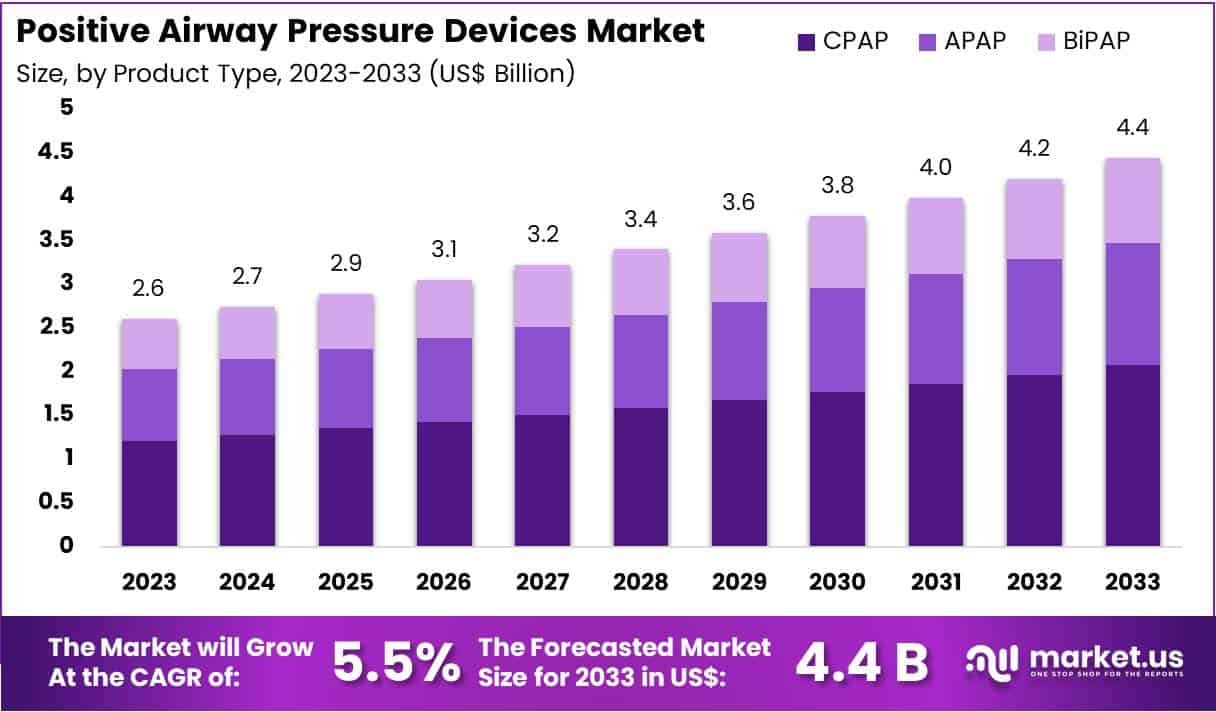
New York, NY – Feb 24, 2026 – The Positive Airway Pressure Devices Market Size is expected to be worth around US$ 4.4 Billion by 2033 from US$ 2.6 Billion in 2023, growing at a CAGR of 5.5% during the forecast period 2024 to 2033.
Positive Airway Pressure (PAP) devices are medical systems designed to maintain continuous airflow into the respiratory tract, primarily used in the management of sleep apnea and other breathing disorders. The basic configuration of these devices consists of a flow generator, air filter, pressure control mechanism, tubing, and a patient interface such as a nasal or full-face mask. Air is drawn through the filter and delivered at a prescribed pressure level to keep airways open during sleep, thereby improving oxygenation and reducing apnea events.
Modern PAP devices are equipped with integrated sensors, humidification units, and digital monitoring features that enable real-time tracking of therapy adherence and effectiveness. Automatic pressure adjustment capabilities have enhanced patient comfort and clinical outcomes, while quieter motors and compact designs support improved user experience.
The adoption of PAP devices has been driven by increasing awareness of sleep health, rising prevalence of obesity-related respiratory conditions, and advancements in home healthcare technologies. Healthcare providers continue to emphasize early diagnosis and long-term therapy compliance, contributing to steady demand across hospitals, sleep clinics, and homecare settings.
Ongoing innovation is expected to focus on connectivity, remote monitoring, and personalized therapy algorithms. As healthcare systems prioritize preventive care and chronic disease management, PAP devices remain a critical component in respiratory therapy solutions, supporting improved quality of life and reduced healthcare burden.
Key Takeaways
- In 2023, the positive airway pressure devices market recorded revenue of approximately US$ 2.6 billion and is projected to expand at a CAGR of 5.5%, reaching around US$ 4.4 billion by 2033.
- By product category, the market is segmented into APAP, CPAP, and BiPAP, with CPAP emerging as the leading segment in 2023, accounting for a 46.7% share.
- Based on application, segments include respiratory failure, obstructive sleep apnea, and COPD, with obstructive sleep apnea representing the largest portion at 54.2%.
- In terms of end users, the market comprises hospitals, sleep laboratories, and home care settings, with hospitals holding the highest revenue contribution of 47.6%.
- Regionally, North America dominated the market in 2023, capturing a 41.1% share.
Regional Analysis
North America leads the positive airway pressure devices market, accounting for a 41.1% revenue share, supported by the rising prevalence of sleep-related breathing disorders and continuous advancements in treatment technologies. Obstructive sleep apnea remains widespread, with data reported by UpToDate indicating notable prevalence among adults. Increased awareness of untreated sleep apnea risks, improved diagnostic capabilities, strong insurance coverage, and the expansion of sleep centers have strengthened device adoption across the region.
Meanwhile, Asia Pacific is projected to register the fastest growth rate, driven by a high burden of sleep apnea and improving healthcare infrastructure. Findings from the Asian Pacific Society of Respirology highlight significant prevalence variations across markets such as Hong Kong and Malaysia. Economic development and rising healthcare access in China and India are expected to further support regional market expansion.
Emerging Trends
- Cloud-Connected Devices and Smart Apps: PAP devices increasingly feature Wi-Fi or Bluetooth connectivity, enabling automatic transmission of sleep data to cloud platforms. Mobile applications provide progress tracking, reminders, and personalized feedback, while allowing clinicians to monitor therapy remotely, improving adherence, patient engagement, and overall treatment outcomes.
- Easy Home Setup with Smartphone Support: Modern PAP systems are designed for convenient home initiation through smartphone connectivity and guided setup tools. Users can follow video instructions and digital tutorials, reducing dependence on clinic visits, accelerating therapy start times, enhancing comfort, and expanding access to treatment for broader patient groups.
- Portable and Travel-Friendly Models: Compact PAP machines with lightweight designs and rechargeable battery options support uninterrupted therapy during travel or power disruptions. USB charging and portability features promote consistent use, helping patients maintain treatment routines, improve adherence rates, and manage sleep conditions effectively across different environments.
- Custom-Fitted Masks with 3D Printing: Advancements in 3D printing enable the production of personalized PAP masks based on facial scans, ensuring improved fit and reduced air leakage. Enhanced comfort contributes to better sleep quality, higher patient satisfaction, and increased therapy effectiveness across clinical and home care settings.
Use Cases
- Treating Sleep Apnea at Home: PAP devices are widely used for home management of sleep apnea by maintaining airway openness during sleep. Regular use improves sleep quality, reduces daytime fatigue, lowers cardiovascular risks, and supports long-term health outcomes, contributing to improved daily functioning and patient well-being.
- Helping Newborns Breathe in Hospitals: In neonatal care units, PAP therapy provides gentle respiratory support for newborns experiencing breathing difficulties. This non-invasive approach is cost-effective and especially valuable in resource-limited settings, improving survival rates, stabilizing breathing, and supporting recovery among premature or vulnerable infants.
- Assisting People with Lung Conditions: Patients with chronic respiratory diseases such as COPD benefit from PAP therapy through improved nighttime breathing and reduced respiratory strain. Consistent use enhances sleep quality, supports symptom management, complements medical treatments, and contributes to improved daily functioning and overall respiratory health.
- Supporting Recovery During Health Emergencies: During respiratory outbreaks and emergencies, PAP devices provide non-invasive breathing support for patients with moderate symptoms. Their use helps reduce pressure on intensive care resources, supports patient stabilization, and enables healthcare systems to manage increased demand more effectively during crisis situations.
Frequently Asked Questions on Positive Airway Pressure Devices
- What are Positive Airway Pressure (PAP) devices?
Positive Airway Pressure devices are medical systems designed to deliver pressurized air through a mask to keep airways open during sleep. They are widely used to manage sleep apnea and other respiratory disorders, improving breathing stability and sleep quality. - How do PAP devices work?
PAP devices function by generating a continuous or variable stream of air that prevents airway collapse during inhalation and exhalation. This mechanism supports uninterrupted airflow, reduces apnea events, and enhances oxygen saturation levels throughout the sleep cycle. - What conditions are treated using PAP devices?
These devices are primarily prescribed for obstructive sleep apnea, central sleep apnea, and certain chronic respiratory insufficiencies. Their use helps reduce daytime fatigue, lowers cardiovascular risks, and improves overall patient health outcomes when therapy adherence is maintained. - What are the main types of PAP devices available?
The main categories include Continuous Positive Airway Pressure (CPAP), Bi-level Positive Airway Pressure (BiPAP), and Automatic Positive Airway Pressure (APAP). Each type offers different pressure delivery modes tailored to patient comfort and clinical requirements. - Are there any side effects associated with PAP therapy?
Common side effects may include nasal dryness, skin irritation from masks, or mild discomfort due to airflow pressure. These issues are generally manageable through humidification, proper mask fitting, and gradual acclimatization to therapy settings. - Which regions dominate the PAP devices market?
North America holds a significant market share due to advanced healthcare infrastructure and high diagnosis rates, while Asia-Pacific is witnessing rapid growth supported by expanding healthcare access, rising disposable incomes, and increasing screening initiatives for sleep disorders. - What technological trends are shaping the PAP devices market?
Integration of digital connectivity, remote monitoring, cloud-based compliance tracking, and quieter, more compact designs are shaping product innovation. These advancements enhance patient adherence and enable healthcare providers to monitor therapy effectiveness more efficiently. - Who are the key end users in the PAP devices market?
Primary end users include hospitals, sleep laboratories, home healthcare settings, and specialty clinics. Increasing preference for home-based therapy is being observed, driven by convenience, cost efficiency, and advancements in user-friendly device designs.
Conclusion
The positive airway pressure devices market is expected to maintain steady growth, supported by rising prevalence of sleep-related breathing disorders, increasing awareness of sleep health, and ongoing technological advancements. Continuous innovation in connectivity, remote monitoring, and personalized therapy is enhancing treatment effectiveness and patient adherence.
Expanding adoption across homecare settings and improving healthcare infrastructure in emerging economies are further strengthening market prospects. As preventive care and chronic disease management remain priorities for healthcare systems, sustained demand is anticipated. Overall, PAP devices are positioned as essential respiratory therapy solutions that contribute to improved clinical outcomes, reduced healthcare burden, and enhanced patient quality of life globally.
Discuss your needs with our analyst
Please share your requirements with more details so our analyst can check if they can solve your problem(s)




