


Table of Contents
Overview
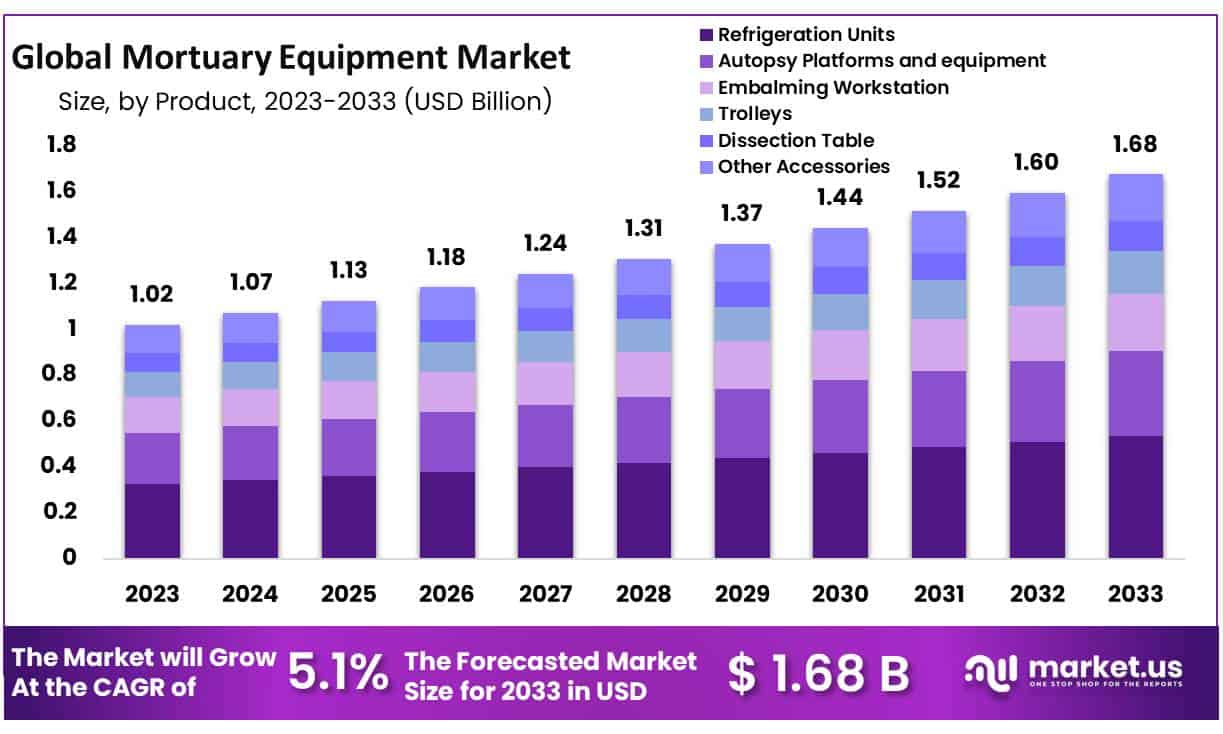
New York, NY – Jan 29, 2026 – The Global Mortuary Equipment Market size is expected to be worth around USD 1.68 Billion by 2033 from USD 1.02 Billion in 2023, growing at a CAGR of 5.1% during the forecast period from 2024 to 2033.
The mortuary equipment market represents a critical segment of the global healthcare and funeral services ecosystem. Mortuary equipment refers to specialized tools and systems used for the storage, preservation, handling, and examination of deceased bodies in hospitals, forensic laboratories, funeral homes, and research institutions. These products are designed to ensure hygiene, operational efficiency, and compliance with regulatory standards.
The basic formation of mortuary equipment includes refrigeration units, body storage racks, autopsy tables, embalming workstations, cadaver trolleys, and lifting devices. Mortuary refrigeration systems are widely used to slow biological decomposition and maintain bodies at controlled temperatures. Autopsy tables and embalming stations are engineered to support post-mortem examinations and preservation procedures, often incorporating stainless steel construction for durability and ease of sanitation. Body handling equipment, such as trolleys and lifts, is utilized to reduce manual handling risks and improve workplace safety.
The growth of the mortuary equipment market can be attributed to increasing mortality rates, expansion of hospital infrastructure, and rising demand for advanced forensic and pathological services. In addition, strict health and safety regulations governing body handling and storage have encouraged the adoption of standardized and technologically advanced mortuary solutions.
Technological advancements, including automated body storage systems and energy-efficient refrigeration units, are further supporting market development. Emerging economies are witnessing gradual investments in healthcare and funeral infrastructure, which is expected to create new opportunities for market participants.
Key Takeaways
- Market Size: The mortuary equipment market is projected to reach approximately USD 1.68 billion by 2033, increasing from an estimated USD 1.02 billion in 2023.
- Market Growth: Market expansion is expected to occur at a compound annual growth rate (CAGR) of 5.1% over the forecast period from 2024 to 2033.
- Product Analysis: Refrigeration units represent the leading product segment, capturing nearly 32% of the total mortuary equipment market share.
- Application Analysis: Manual mortuary equipment remains predominant, accounting for about 56% of overall market demand.
- End-Use Analysis: Hospitals emerge as the primary end users, contributing approximately 43% of the total market share.
- Regional Analysis: North America leads the global market, holding around 40% of the total share and generating close to USD 0.4 billion in market revenue.
Regional Analysis
North America held the largest share of the mortuary equipment market, accounting for approximately 40% of the total market and generating around USD 0.4 billion in revenue. This dominance can be attributed to the strong presence of private mortuaries and hospital-based morgues, along with a high level of adoption of technologically advanced mortuary solutions across the region.
A significant proportion of the population in this region follows Christianity, where burial remains a common practice for final rites. As a result, deceased bodies must be preserved in appropriate conditions until funeral arrangements are completed. This practice has led to sustained demand for embalming equipment and cadaver storage systems, further supporting regional market growth.
Asia Pacific is identified as the fastest-growing region over the forecast period. Market expansion in this region is driven by the rapid increase in private hospitals and medical colleges, growing replacement of conventional equipment with advanced mortuary devices, and the rising presence of local manufacturers. These regional players are increasingly exporting cost-effective mortuary equipment to developed markets, contributing to accelerated growth and improving global market penetration.
Emerging Trends
- Eco-Friendly Practices: A stronger focus is being placed on sustainable and environmentally responsible practices across the funeral industry. This trend is reflected in the increasing adoption of green burial methods, which support natural decomposition processes while reducing environmental impact through minimal use of chemicals and non-biodegradable materials.
- Technological Advancements: The integration of advanced technologies into mortuary equipment is improving operational efficiency, safety, and staff well-being. Equipment innovations, including automated body handling systems and ergonomically designed autopsy workstations, are being implemented to reduce physical strain, enhance precision, and streamline workflows within mortuary facilities.
- Health and Safety Standards: Heightened global health awareness has reinforced the importance of strict hygiene and safety protocols. Mortuary facilities are increasingly investing in equipment designed to maintain high sanitation standards, thereby safeguarding staff, visitors, and regulatory compliance.
Use Cases
- Hospitals and Healthcare Facilities: Hospitals rely on mortuary equipment such as body refrigeration units, storage systems, and autopsy tables to preserve remains and conduct post-mortem examinations. Dependable and hygienic equipment is essential to ensure regulatory compliance and maintain sanitary conditions.
- Funeral Homes: Funeral homes utilize embalming tables, body lifts, mortuary cots, and preparation equipment to manage and prepare the deceased for viewings and funeral services. Specialized equipment supports dignified handling, enhances staff safety, and contributes to a respectful environment for bereaved families.
- Forensic Laboratories: Forensic laboratories depend on precision mortuary equipment for autopsy procedures and the examination of human remains in criminal investigations. Advanced dissection tables, imaging tools, and analytical equipment are critical for accurate forensic assessments, supporting effective legal and judicial outcomes.
Frequently Asked Questions on Mortuary Equipment
- What are the key types of mortuary equipment available?
Major mortuary equipment includes body storage refrigerators, autopsy tables, embalming workstations, cadaver lifts, and transportation trolleys. These systems are designed to ensure hygiene, operational efficiency, and regulatory compliance across medical and forensic environments. - Why is temperature-controlled storage important in mortuary equipment?
Temperature-controlled storage is essential to slow biological decomposition, preserve tissue integrity, and maintain forensic accuracy. Mortuary refrigeration systems help ensure safe preservation until post-mortem procedures or final rites are completed. - What materials are commonly used in manufacturing mortuary equipment?
Mortuary equipment is commonly manufactured using stainless steel due to its corrosion resistance, durability, and ease of cleaning. These material properties support strict hygiene standards and long-term operational reliability in clinical and forensic settings. - How does mortuary equipment support infection control?
Mortuary equipment is designed with smooth surfaces, drainage systems, and sealed components to minimize contamination risks. Proper equipment usage supports infection control protocols, protecting healthcare workers and maintaining compliance with occupational health regulations. - How does the aging population impact the mortuary equipment market?
An aging global population has increased death rates, particularly in developed economies. This demographic trend has elevated demand for efficient body storage and handling solutions, thereby supporting sustained growth in the mortuary equipment market. - Which end users contribute most to market demand?
Hospitals and forensic laboratories account for the largest share of market demand due to high case volumes and regulatory requirements. Funeral homes and academic institutions also contribute steadily through consistent equipment replacement and upgrades. - What role does technology play in market development?
Technological advancements such as automated cadaver handling, energy-efficient refrigeration, and ergonomic designs have enhanced operational efficiency. These innovations improve worker safety and drive replacement demand across healthcare and forensic facilities.
Conclusion
The mortuary equipment market forms an essential component of the global healthcare, forensic, and funeral services landscape, supported by rising mortality rates, expanding hospital infrastructure, and stricter regulatory standards. Continuous advancements in refrigeration systems, automation, and ergonomic design have improved operational efficiency, safety, and hygiene across end-use settings.
Strong demand from hospitals and forensic laboratories, coupled with technological adoption in developed regions, sustains market growth. Meanwhile, emerging economies present new opportunities through infrastructure development and cost-effective manufacturing. Overall, the market is expected to witness steady expansion, driven by demographic trends, regulatory compliance needs, and ongoing technological innovation.
Discuss your needs with our analyst
Please share your requirements with more details so our analyst can check if they can solve your problem(s)




