


Table of Contents
Overview
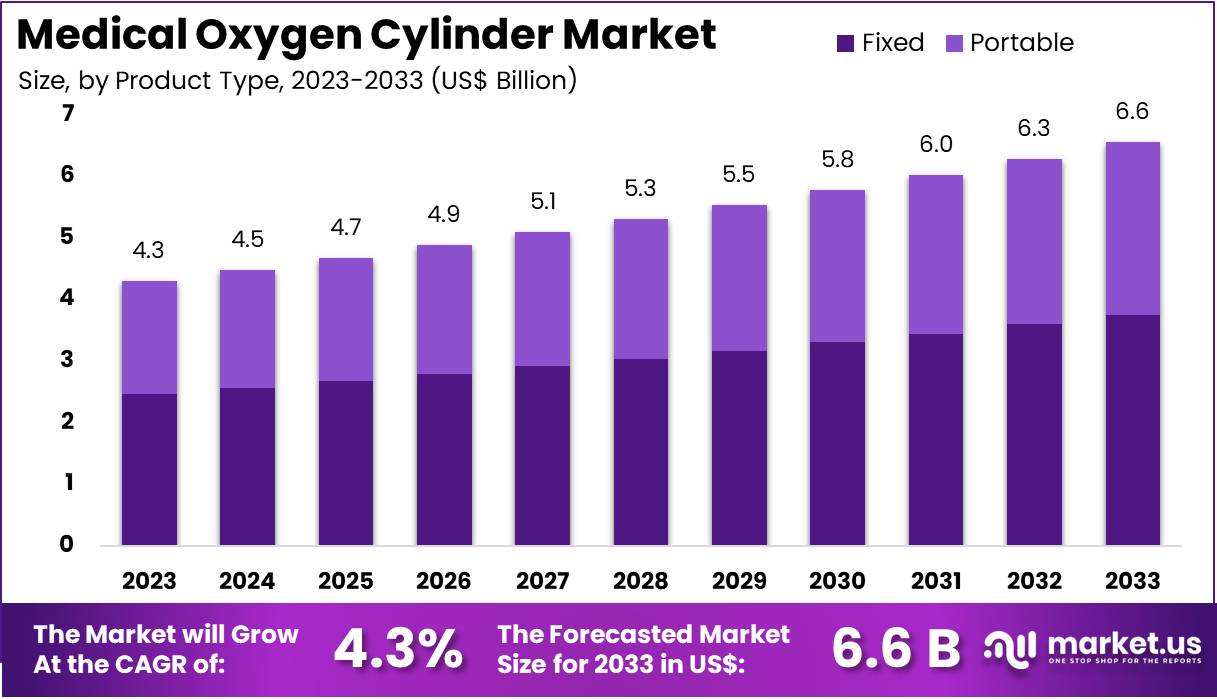
New York, NY – March 12, 2026 – The Global Medical Oxygen Cylinder Market size is expected to be worth around US$ 6.6 Billion by 2033, from US$ 4.3 Billion in 2023, growing at a CAGR of 4.3% during the forecast period from 2024 to 2033. North America held a dominant market position, capturing more than a 39.7% share and holds US$ 1.7 Billion market value for the year.
The Medical Oxygen Cylinder market continues to play a critical role in modern healthcare systems by ensuring a reliable supply of medical-grade oxygen for patients experiencing respiratory conditions. Medical oxygen cylinders are designed to store and transport compressed oxygen safely, enabling hospitals, clinics, and emergency medical services to provide immediate respiratory support when required.
These cylinders are widely used in the treatment of conditions such as chronic obstructive pulmonary disease (COPD), asthma, pneumonia, and other respiratory disorders. In critical care settings, oxygen cylinders serve as a dependable backup supply during power failures or when centralized oxygen pipeline systems are unavailable. The portability and durability of these cylinders make them particularly valuable in ambulances, home healthcare services, and remote medical facilities.
The increasing prevalence of respiratory diseases, combined with a growing aging population, has contributed significantly to the rising demand for medical oxygen cylinders worldwide. Furthermore, the experience gained during global health emergencies, including respiratory disease outbreaks, has highlighted the importance of maintaining adequate oxygen supply infrastructure within healthcare facilities.
Technological improvements in cylinder materials, pressure regulation systems, and safety mechanisms have further enhanced reliability and ease of use. As healthcare systems continue to strengthen emergency preparedness and respiratory care capabilities, medical oxygen cylinders are expected to remain an essential component of medical oxygen delivery systems globally.
Key Takeaways
- In 2023, the global medical oxygen cylinder market generated revenue of US$ 4.3 billion and is projected to grow at a CAGR of 4.3%, reaching approximately US$ 6.6 billion by 2033.
- By product type, the market is segmented into fixed and portable oxygen cylinders. The fixed segment dominated the market in 2023, accounting for 57.2% of the total market share.
- Based on application, the market is categorized into home-care and non home-care settings. The non home-care segment held the largest share in 2023, representing 62.5% of the overall market.
- In terms of technology, the market is divided into continuous flow and pulse flow systems. The continuous flow segment emerged as the leading category, capturing 55.3% of the total revenue share.
- North America remained the dominant regional market in 2023, securing 39.7% of the global medical oxygen cylinder market share.
Regional Analysis
North America held the leading position in the Medical Oxygen Cylinder Market, accounting for 39.7% of the total revenue share in 2023. Market dominance in the region is primarily supported by the growing prevalence of respiratory diseases and a rapidly aging population. According to Asthma Canada’s 2021 report, more than 3.8 million people in Canada are affected by asthma, which has significantly increased the demand for oxygen therapy solutions.
Additionally, the rising number of patients suffering from chronic obstructive pulmonary disease (COPD) and other respiratory conditions has further strengthened the adoption of medical oxygen cylinders. The COVID-19 pandemic also highlighted the critical need for reliable oxygen supply systems across hospitals and homecare settings. Furthermore, technological advancements such as lightweight and portable oxygen cylinders have improved patient convenience and accessibility, supporting market growth.
The Asia Pacific region is projected to register the fastest CAGR during the forecast period, driven by increasing respiratory disease cases, improving healthcare infrastructure, and rising government investments in healthcare development.
Emerging Trends
- Portable Cylinders Gaining Popularity: Portable medical oxygen cylinders are gaining demand as patients prefer home and travel use. Lightweight designs improve mobility, reduce hospital visits, support independence, and enhance comfort for individuals requiring long-term respiratory therapy.
- Smart Monitoring Features: Modern oxygen cylinders include digital displays, pressure indicators, and real-time oxygen monitoring. These smart features help track oxygen levels, alert users when supply drops, and improve safety and management of therapy.
- Eco-Friendly Materials and Refills: Manufacturers increasingly use recyclable materials and refillable designs in oxygen cylinders. These eco-friendly solutions reduce waste, lower long-term costs, and support sustainability goals while ensuring reliable oxygen supply for healthcare systems.
- Customization for Different Health Needs: Oxygen cylinders are now available in different sizes and flow settings. Customization enables healthcare providers to match oxygen delivery with patient needs, improving treatment effectiveness, comfort, and flexibility across hospitals and homecare.
- Integration With Home Healthcare: Oxygen cylinders are widely integrated into home healthcare services. Compact designs allow patients with chronic diseases to receive therapy at home, reducing hospital stays, lowering costs, and improving overall patient comfort.
Use Cases
- Support in Hospitals and ICUs: Hospitals depend heavily on oxygen cylinders in ICUs and critical care units. They support ventilators and treat respiratory conditions like pneumonia or COPD, ensuring continuous oxygen supply during surgeries and emergencies.
- Emergency Response and Ambulances: Ambulances carry portable oxygen cylinders to treat patients during emergencies such as accidents or heart attacks. Paramedics use them to stabilize breathing while transporting patients, improving survival chances before hospital treatment.
- Home-Based Oxygen Therapy: Patients with chronic respiratory conditions often rely on oxygen cylinders at home. Portable units allow regular therapy, reduce hospital visits, support symptom management, and improve independence and daily living comfort.
- Support in Rural or Disaster Areas: Oxygen cylinders provide essential respiratory support in rural locations and disaster-affected areas where electricity or hospitals may be unavailable. Their portability enables quick deployment in field clinics and emergency medical relief.
- Elderly and Palliative Care: Oxygen cylinders are widely used in elderly and palliative care. They help manage chronic respiratory conditions, ease breathing discomfort, and allow patients to receive supportive care in nursing homes or familiar environments.
Frequently Asked Questions on Medical Oxygen Cylinder
- How does a medical oxygen cylinder work?
A medical oxygen cylinder stores compressed oxygen gas that is released through a regulator and flow meter system. The regulator controls pressure levels, while the flow meter ensures a precise oxygen supply to patients through masks, nasal cannulas, or ventilators. - What are the common types of medical oxygen cylinders?
Medical oxygen cylinders are generally categorized into portable cylinders and large stationary cylinders. Portable cylinders are used in ambulances or home care environments, while larger cylinders are typically installed in hospitals and healthcare facilities for continuous oxygen supply. - What materials are used to manufacture medical oxygen cylinders?
Medical oxygen cylinders are primarily manufactured using high-strength steel or lightweight aluminum alloys. These materials are selected for their durability, corrosion resistance, and ability to withstand high internal pressure, ensuring safe storage and transportation of medical-grade oxygen. - What factors are driving the growth of the medical oxygen cylinder market?
The growth of the medical oxygen cylinder market is largely driven by the increasing prevalence of respiratory diseases, expanding healthcare infrastructure, rising elderly population, and growing demand for home-based oxygen therapy and emergency medical services across developing and developed regions. - How did the COVID-19 pandemic impact the medical oxygen cylinder market?
During the COVID-19 pandemic, the demand for oxygen therapy increased significantly due to severe respiratory complications among infected patients. This resulted in a rapid surge in the production, procurement, and distribution of medical oxygen cylinders worldwide. - Which regions dominate the medical oxygen cylinder market?
North America and Europe currently dominate the medical oxygen cylinder market due to advanced healthcare systems and high healthcare spending. However, significant growth is also being observed in Asia-Pacific due to increasing healthcare investments and expanding patient populations. - Who are the major participants in the medical oxygen cylinder market?
The market includes manufacturers of medical gas equipment, healthcare device companies, and industrial gas suppliers. These organizations focus on product innovation, regulatory compliance, and distribution network expansion to strengthen their market presence.
Conclusion
The medical oxygen cylinder market remains a fundamental component of global respiratory care infrastructure. Market expansion is being supported by the rising prevalence of respiratory diseases, increasing geriatric population, and the growing adoption of home-based healthcare services. Continuous technological improvements in cylinder materials, safety systems, and monitoring capabilities are enhancing product reliability and patient convenience.
In addition, lessons learned from recent global health emergencies have reinforced the need for robust oxygen supply systems across healthcare facilities. With increasing healthcare investments, particularly in emerging regions, the demand for medical oxygen cylinders is expected to remain steady, supporting consistent market growth and improved respiratory care delivery worldwide.
Discuss your needs with our analyst
Please share your requirements with more details so our analyst can check if they can solve your problem(s)




