


Table of Contents
Overview
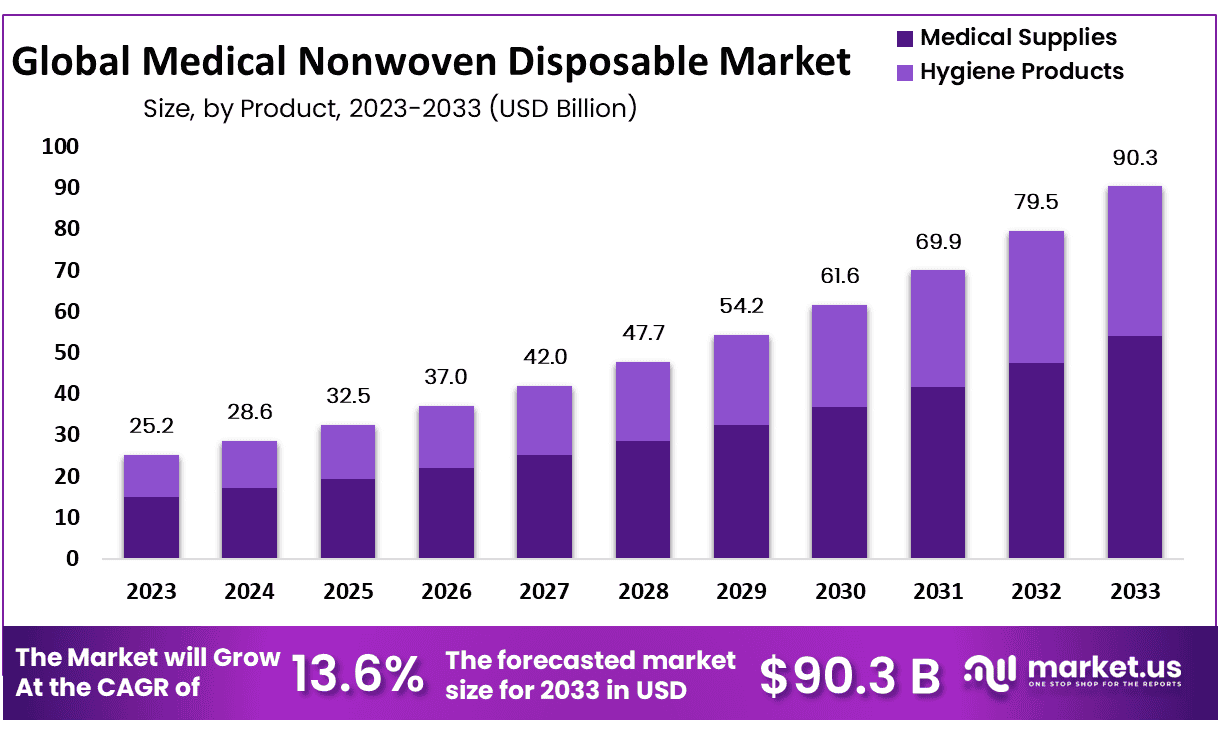
New York, NY – Jan 22, 2026 – The Global Medical Nonwoven Disposable Market size is expected to be worth around USD 90.3 Billion by 2033 from USD 25.2 Billion in 2023, growing at a CAGR of 13.6% during the forecast period from 2023 to 2033.
The medical nonwoven disposable segment represents a critical component of modern healthcare delivery, driven by rising hygiene standards, infection control requirements, and the increasing volume of medical procedures worldwide. Medical nonwoven disposables are engineered textile materials produced directly from fibers or filaments, bonded together through mechanical, thermal, or chemical processes, without the need for traditional weaving or knitting.
The basic formation of medical nonwoven disposables begins with carefully selected raw materials, primarily polypropylene, polyester, and viscose fibers. These materials are processed using advanced technologies such as spunbond, meltblown, and spunbond–meltblown–spunbond (SMS) methods. The spunbond process provides strength and durability, while the meltblown layer contributes fine fiber structure and superior filtration efficiency. When combined, these layers deliver optimal performance for medical-grade applications.
Medical nonwoven disposables are widely used in products such as surgical masks, gowns, drapes, caps, shoe covers, wound dressings, and hygiene products. Their lightweight structure, breathability, fluid resistance, and cost-effectiveness make them suitable for single-use applications, supporting strict infection prevention protocols in hospitals and clinical settings.
Market growth is being supported by increased healthcare expenditure, heightened awareness of hospital-acquired infections, and regulatory emphasis on patient and staff safety. In addition, the demand for disposable medical products has been further reinforced by global public health challenges and preparedness initiatives.
Key Takeaways
- Market Size: The Medical Nonwoven Disposable Market is projected to reach approximately USD 90.3 billion by 2033, rising from USD 25.2 billion in 2023.
- Market Growth: The market is anticipated to expand at a compound annual growth rate (CAGR) of 13.6% over the forecast period from 2023 to 2033.
- Product Analysis: Strong growth is being observed in the market, with medical supplies accounting for a dominant 59.7% share of total revenue.
- Application Analysis: Surgical procedures represent a significant application segment, contributing 41.5% of the overall market share.
- End-Use Analysis: Hospitals and clinics remain the primary end users, collectively capturing 68.1% of the market share.
- Distribution Channel Analysis: Hospital pharmacies lead the distribution landscape, holding a substantial 72.6% share of the market.
- Regional Analysis: North America emerged as the leading region, accounting for 37.7% of the global market share and generating approximately USD 9.3 billion in revenue in 2023.
Regional Analysis
North America emerged as the leading regional market, accounting for 37.7% of the total market share and generating approximately USD 9.3 billion in revenue in 2023. This strong position can be attributed to the widespread presence of advanced healthcare systems and facilities across the region, supported by higher disposable income levels and an increased focus on public health awareness. In addition, the growing emphasis on infection prevention and control practices within healthcare settings has further reinforced regional demand.
Medical nonwoven disposable products, including surgical masks, gowns, and drapes, play a critical role in minimizing exposure to infectious agents and reducing the risk of disease transmission. The sustained prioritization of these preventive solutions reflects North America’s continued commitment to improving healthcare safety standards and supporting overall population health.
Emerging Trends
- Increasing Adoption of Infection Control Products: Greater awareness of infection prevention has resulted in higher consumption of nonwoven healthcare products such as surgical masks, gowns, and drapes. These products are designed to act as effective barriers against pathogens, thereby improving safety standards in clinical environments.
- Expansion of Home Healthcare Driven by an Aging Population: The rising elderly population has increased the demand for incontinence and home care solutions. Disposable nonwoven products, including adult diapers and bed pads, are widely used to ensure hygiene, comfort, and ease of care in home-based settings.
- Advancements in Nonwoven Material Technologies: Continuous innovation in nonwoven fabrics has led to enhanced properties such as improved breathability, higher absorbency, and better moisture management. These advancements contribute to improved patient comfort and increased product performance.
- Growing Focus on Environmental Sustainability: Environmental concerns are influencing manufacturers to develop eco-friendly nonwoven disposable products. Emphasis is being placed on biodegradable and recyclable materials to minimize environmental impact and support sustainable healthcare practices.
Key Use Cases
- Surgical Applications
- Surgical Gowns and Drapes: Utilized to maintain sterile conditions during surgical procedures, thereby reducing the risk of hospital-acquired infections.
- Face Masks: Employed to protect patients and healthcare professionals from airborne particles and microbial contamination.
- Incontinence Management
- Adult Diapers: Designed to provide effective moisture absorption, comfort, and dignity for individuals experiencing urinary or fecal incontinence.
- Underpads: Used to safeguard bedding and furniture from fluid exposure, supporting cleanliness and infection control.
- Wound Care
- Dressings and Bandages: Nonwoven materials are preferred due to their softness and absorbent properties, which support wound healing and patient comfort.
- Sterile Swabs: Commonly applied for wound cleansing and medication application in clinical and home care settings.
- Patient and Staff Apparel
- Disposable Scrubs and Caps: Widely used to maintain hygiene standards in hospitals and surgical centers.
- Shoe Covers: Help limit the spread of contaminants across different areas within healthcare facilities.
- Personal Protective Equipment (PPE)
- Isolation Gowns: Used during patient handling to prevent cross-contamination between patients and healthcare workers.
- Protective Sleeves and Aprons: Provide additional protection against exposure to bodily fluids and infectious agents.
Frequently Asked Questions on Medical Nonwoven Disposable
- What factors are driving the growth of the medical nonwoven disposable market?
The market growth is driven by rising surgical procedures, increasing hospital-acquired infection concerns, strict regulatory standards, and growing awareness of hygiene and infection control across healthcare facilities globally. - Which products dominate the medical nonwoven disposable market?
Medical supplies such as surgical masks, gowns, drapes, and covers dominate the market due to their extensive use in hospitals and clinics, high consumption rates, and mandatory usage in surgical and diagnostic procedures. - What are the key applications of medical nonwoven disposables?
Surgical procedures represent the primary application, as nonwoven disposables provide barrier protection against fluids and pathogens, reduce cross-contamination risks, and support sterile environments during complex medical interventions. - Which end users contribute most to market demand?
Hospitals and clinics contribute the highest demand due to large patient volumes, frequent surgical activities, and strict infection prevention protocols that require continuous use of disposable nonwoven medical products. - Why do hospital pharmacies dominate the distribution channel?
Hospital pharmacies dominate distribution as they ensure reliable product availability, centralized procurement, quality compliance, and timely access to essential medical disposables required for daily clinical and surgical operations. - Which region leads the medical nonwoven disposable market and why?
North America leads the market due to advanced healthcare infrastructure, high healthcare spending, strong regulatory enforcement, and widespread adoption of disposable medical products to control infections and improve patient safety.
Conclusion
The medical nonwoven disposable market has emerged as an essential pillar of modern healthcare systems, supported by rising hygiene standards, infection control requirements, and expanding medical procedures globally. Strong market growth is being driven by increased healthcare spending, regulatory emphasis on patient and staff safety, and sustained demand for single-use medical products.
Technological advancements in nonwoven materials have further enhanced product performance, comfort, and filtration efficiency. Hospitals and clinics continue to dominate end use, while North America leads regional demand due to advanced infrastructure. Overall, the market outlook remains positive, with steady expansion expected over the forecast period.
Discuss your needs with our analyst
Please share your requirements with more details so our analyst can check if they can solve your problem(s)




