


Table of Contents
Overview
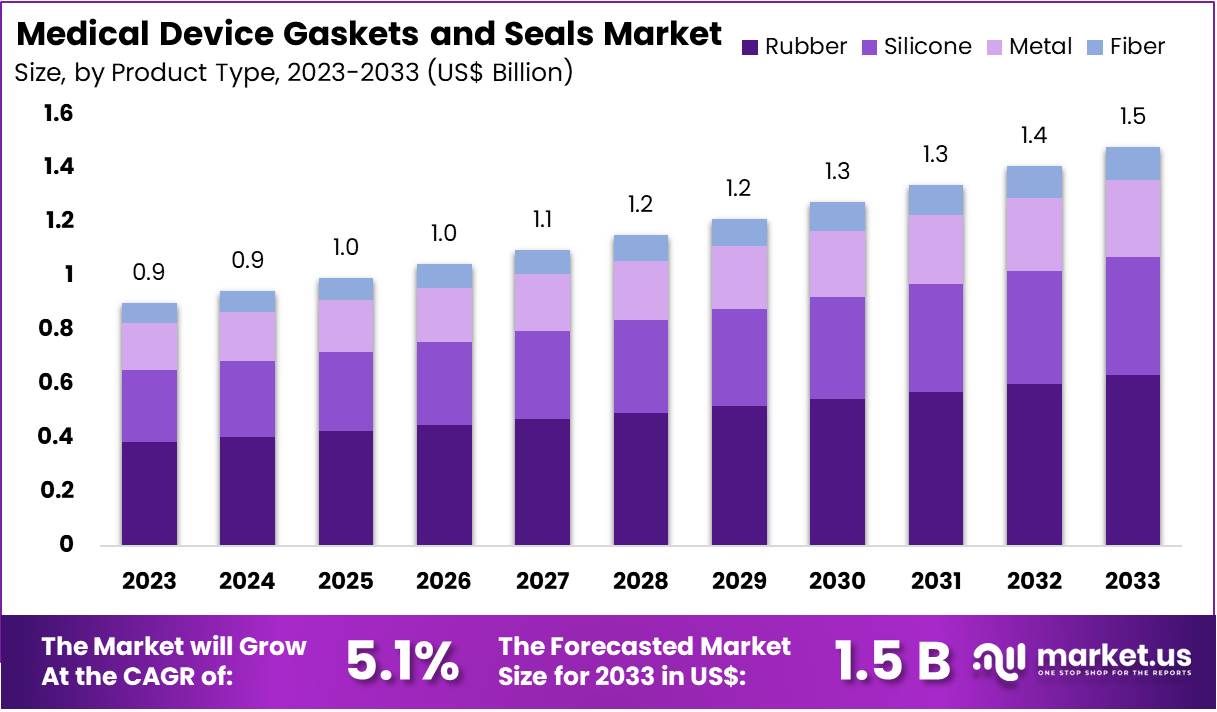
New York, NY – March 11, 2026 – The Medical Device Gaskets and Seals Market size is expected to be worth around US$ 1.5 billion by 2033 from US$ 0.9 billion in 2023, growing at a CAGR of 5.1% during the forecast period 2024 to 2033. North America held a dominant market position, capturing more than a 39.4% share and holds US$ 0.4 Billion market value for the year.
The global market for medical device gaskets and seals is experiencing steady growth as healthcare systems increasingly rely on advanced medical equipment and high-precision devices. These components play a critical role in ensuring device integrity, contamination control, and reliable performance in applications such as diagnostic equipment, drug delivery systems, ventilators, and surgical instruments.
Medical device gaskets and seals are designed to create secure barriers that prevent leakage of fluids, gases, and contaminants within medical equipment. Their performance is essential in maintaining sterility and operational safety in healthcare environments. Materials such as silicone, fluoropolymers, thermoplastic elastomers, and medical-grade rubber are commonly utilized due to their chemical resistance, flexibility, and biocompatibility.
Market expansion is being supported by the increasing production of medical devices, rising healthcare expenditure, and the growing demand for minimally invasive procedures. In addition, stringent regulatory requirements for safety and product reliability are encouraging manufacturers to invest in high-quality sealing solutions that meet medical-grade standards.
Technological advancements in material engineering and precision manufacturing are also contributing to the development of more durable and customizable sealing components. These innovations enable improved device efficiency while extending product lifespan.
Furthermore, the expansion of healthcare infrastructure in emerging economies and the rising adoption of home-based medical devices are expected to create new opportunities for manufacturers. As healthcare technologies continue to evolve, the demand for reliable and high-performance gaskets and seals in medical devices is anticipated to remain strong over the coming years.
Key Takeaways
- In 2023, the medical device gaskets and seals market generated revenue of US$ 0.9 billion and is projected to grow at a CAGR of 5.1%, reaching approximately US$ 1.5 billion by 2033.
- Based on product type, the market is categorized into rubber, metal, silicone, and fiber. Among these, rubber dominated the segment in 2023, accounting for a 42.7% market share.
- By application, the market is segmented into implants and catheters, diagnostic equipment, surgical instruments, and others. Diagnostic equipment represented the largest share, contributing 46.4% of the market in 2023.
- North America emerged as the leading regional market, holding a 39.4% share of the global market in 2023.
Regional Analysis
North America held the largest share of the medical device gaskets and seals market in 2023, accounting for 39.4% of total revenue. Market growth in the region is largely driven by strong demand for high-performance components used in advanced medical devices.
The approval of 41 new medical devices by the U.S. Food and Drug Administration (FDA) in 2022 highlights the country’s leading position in the global medical device industry, which represents more than 40% of the global market value. Continuous technological advancements, along with the rising prevalence of chronic diseases and a growing aging population, have increased the demand for reliable medical equipment, thereby supporting the need for durable sealing solutions.
Meanwhile, the Asia Pacific region is projected to register the fastest CAGR during the forecast period. Rapid healthcare expansion, increasing chronic disease incidence, and growing elderly populations in countries such as China, Japan, and India are driving demand for medical devices. Additionally, rising healthcare investments and regulatory activities are supporting sustained market growth.
Emerging Trends
- Rising Demand for Biocompatible Materials: The use of biocompatible materials such as silicone and medical-grade elastomers is increasing in medical device gaskets and seals. These materials reduce allergic reactions, resist chemicals, maintain flexibility, and support safer device performance in applications involving direct human tissue contact.
- Miniaturization of Medical Devices: Medical devices are becoming smaller and more portable, including wearables and implantable monitoring systems. This trend is increasing demand for compact, high-precision seals that prevent fluid or air leakage while maintaining durability and performance in limited installation spaces.
- High-Temperature and Chemical-Resistant Seals: Medical equipment frequently undergoes sterilization through high temperatures and chemical disinfectants. Advanced sealing materials such as high-performance silicones and thermoplastics are increasingly adopted to maintain durability, resist degradation, and ensure long-term performance in demanding hospital environments.
- Growth of Single-Use and Disposable Devices: Healthcare providers are increasingly adopting single-use medical devices to reduce infection risks and simplify sterilization processes. This trend is increasing demand for cost-efficient sealing solutions that maintain sterility, prevent leakage, and support large-scale manufacturing without compromising safety standards.
Use Cases
- Infusion Pumps: Infusion pumps deliver controlled medication doses to patients in hospitals and home care settings. High-quality gaskets and seals prevent fluid leakage, maintain pressure stability, and ensure accurate drug delivery, supporting patient safety and consistent treatment outcomes.
- Surgical Instruments: Reusable surgical instruments are exposed to repeated high-temperature sterilization and chemical cleaning procedures. Durable gaskets and seals made from medical-grade elastomers maintain structural integrity, protect moving components, and ensure hygiene while supporting longer operational life for surgical tools.
- Diagnostic Equipment: Diagnostic equipment such as blood analyzers and imaging systems relies on seals to protect sensitive internal components from fluids, dust, and air contamination. Reliable sealing improves device accuracy, minimizes maintenance requirements, and ensures consistent performance in high-volume laboratory environments.
- Implantable Medical Devices: Implantable medical devices, including pacemakers and insulin pumps, require highly reliable seals to prevent body fluids from entering electronic components. Biocompatible sealing materials ensure long-term durability, support device stability, and maintain patient safety throughout extended implantation periods.
Frequently Asked Questions on Medical Device Gaskets and Seals
- What materials are commonly used in medical device gaskets and seals?
Medical device gaskets and seals are commonly manufactured from silicone, EPDM, PTFE, fluorocarbon, and thermoplastic elastomers. These materials are selected due to their biocompatibility, chemical resistance, durability, and ability to withstand sterilization processes such as autoclaving and radiation exposure. - Why are gaskets and seals important in medical devices?
Gaskets and seals are essential for maintaining device reliability and patient safety by preventing leakage and contamination. They support precise pressure control and fluid containment, ensuring medical devices operate efficiently while complying with strict regulatory and hygiene standards. - What regulatory standards apply to medical device gaskets and seals?
Manufacturers must comply with strict regulatory standards including ISO 10993 for biocompatibility, FDA guidelines, and quality management standards such as ISO 13485. Compliance ensures materials and designs meet safety, performance, and sterilization requirements for medical applications. - How do sterilization processes affect gaskets and seals?
Medical gaskets and seals must maintain structural integrity and performance after repeated sterilization cycles. Exposure to heat, chemicals, or radiation can degrade materials, so specialized elastomers and polymers are selected to ensure durability and long-term reliability. - Which regions dominate the medical device gaskets and seals market?
North America holds a significant market share due to advanced healthcare infrastructure and strong medical device manufacturing presence. Meanwhile, Asia-Pacific is experiencing rapid growth, supported by expanding healthcare facilities, increasing investments, and rising medical device production. - Which industries or sectors contribute most to market demand?
Demand primarily originates from medical device manufacturers producing diagnostic equipment, surgical instruments, drug delivery systems, and life-support devices. Increasing technological integration in healthcare equipment continues to expand the application scope of high-performance sealing components. - How is technological innovation influencing this market?
Technological advancements in elastomer engineering, precision molding, and material science are improving durability and performance of sealing components. Innovations also support miniaturization of medical devices, enabling compact equipment designs while maintaining reliable sealing capabilities.
Conclusion
The medical device gaskets and seals market is positioned for steady expansion as healthcare systems increasingly depend on advanced medical technologies and high-performance equipment. Rising demand for reliable sealing components in diagnostic devices, surgical instruments, and implantable systems is supporting market growth.
Continuous advancements in material engineering, combined with strict regulatory requirements, are encouraging the adoption of durable, biocompatible sealing solutions. In addition, expanding healthcare infrastructure, increasing chronic disease prevalence, and the growing adoption of portable and home-based medical devices are expected to strengthen long-term demand. As innovation in medical technology progresses, the importance of efficient and reliable sealing components will continue to increase.
Discuss your needs with our analyst
Please share your requirements with more details so our analyst can check if they can solve your problem(s)




