


Table of Contents
Overview
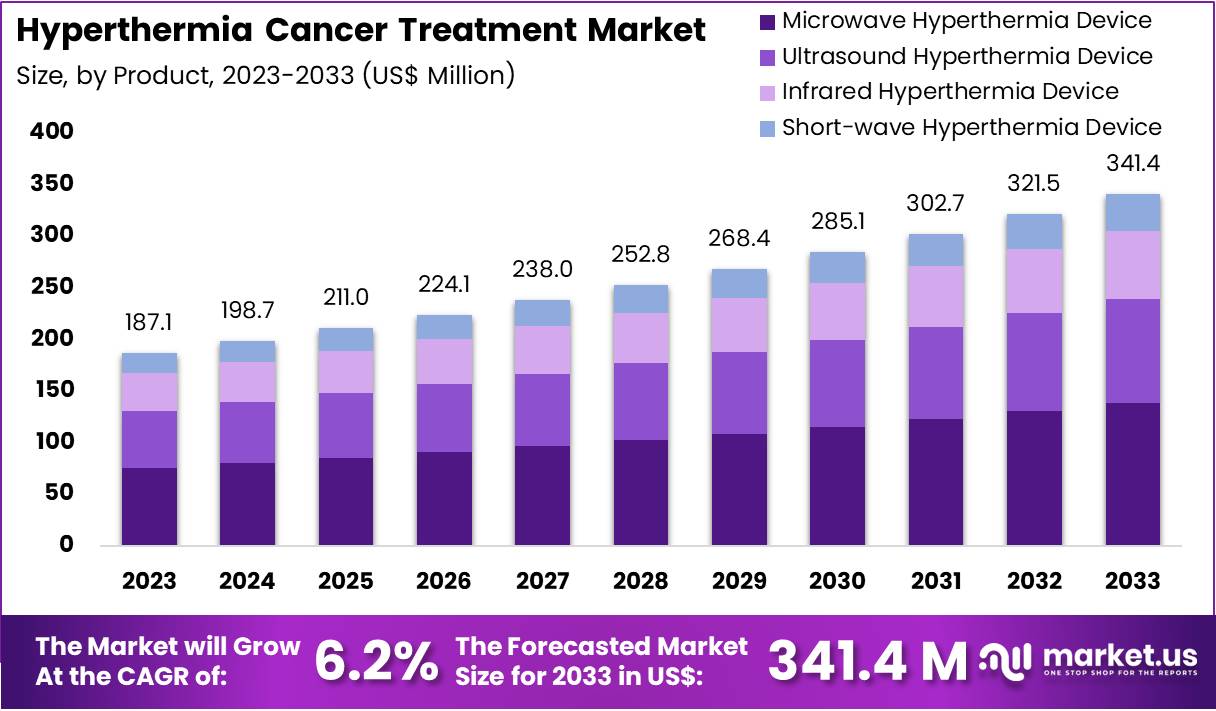
New York, NY – March 12, 2026 – The Global Hyperthermia Cancer Treatment Market Size is expected to be worth around US$ 341.4 Million by 2033, from US$ 187.1 Million in 2023, growing at a CAGR of 6.2% during the forecast period from 2024 to 2033. North America held a dominant market position, capturing more than a 38.6% share and holds US$ 72.2 Million market value for the year.
Hyperthermia cancer treatment has gained increasing attention as an innovative therapeutic approach designed to enhance the effectiveness of conventional cancer treatments. The technique involves the controlled heating of tumor tissues to temperatures typically ranging between 40°C and 45°C, which helps weaken or damage cancer cells while minimizing harm to surrounding healthy tissue.
Clinical studies have indicated that elevated temperatures can increase the sensitivity of cancer cells to treatments such as radiation therapy and chemotherapy. As a result, hyperthermia is often used as a complementary therapy rather than a standalone treatment. The therapy improves blood flow within the tumor region, which can enhance oxygen supply and facilitate better drug delivery, thereby improving treatment outcomes.
Hyperthermia can be administered through several methods, including local, regional, and whole-body treatment systems, depending on the type, size, and location of the tumor. Advanced technologies such as microwave, ultrasound, and radiofrequency devices are commonly utilized to generate controlled heat within targeted tissues.
Growing clinical research and technological advancements are expected to support wider adoption of hyperthermia therapy in oncology centers worldwide. Healthcare experts suggest that the integration of hyperthermia with standard treatment protocols may offer improved therapeutic response rates, particularly in certain solid tumors.
As awareness of precision oncology continues to expand, hyperthermia cancer treatment is being increasingly explored as part of multidisciplinary cancer care strategies aimed at improving patient outcomes and quality of life.
Key Takeaways
- In 2023, the global Hyperthermia Cancer Treatment market generated revenue of US$ 187.1 million. The market is projected to expand at a CAGR of 6.2% during the forecast period, reaching approximately US$ 341.4 million by 2033.
- Based on product type, the market is categorized into ultrasound hyperthermia devices, microwave hyperthermia devices, infrared hyperthermia devices, and short-wave hyperthermia devices. Among these, microwave hyperthermia devices dominated the segment in 2023, accounting for 40.5% of the total market share.
- In terms of application, the market is segmented into breast cancer, soft tissue sarcoma, liver cancer, head & neck tumors, and prostate cancer. The breast cancer segment held the leading position in 2023, contributing 41.2% of the overall market share.
- Regarding end users, the market is divided into hospitals, clinics, cancer centers, and research institutes. The hospitals segment emerged as the largest contributor, capturing 47.4% of the total revenue share in the Hyperthermia Cancer Treatment market.
- Regionally, North America represented the leading market in 2023, securing 38.6% of the global market share.
Regional Analysis
North America accounted for the largest share of the Hyperthermia Cancer Treatment market, representing 38.6% of global revenue in 2023 . Market expansion in the region has been supported by the rising incidence of cancer and increasing demand for advanced oncology therapies. According to the American Cancer Society, approximately 1.9 million new cancer cases and 609,360 cancer-related deaths were reported in the United States in 2022.
This growing disease burden has encouraged healthcare providers to explore complementary treatment options such as hyperthermia therapy. The technology, which uses controlled heat to damage cancer cells, has been increasingly integrated with radiation and chemotherapy to enhance treatment outcomes. Continuous technological advancements in hyperthermia equipment and increasing clinical evidence supporting its effectiveness in cancers such as breast, prostate, and head and neck tumors have further strengthened regional adoption.
The Asia Pacific region is projected to record the fastest CAGR during the forecast period, driven by improving healthcare infrastructure and a rising cancer burden in countries such as China and India. Increasing investments in oncology research and emerging innovations, including advanced ultrasound-based technologies, are expected to accelerate the adoption of hyperthermia treatment across the region.
Emerging Trends
- Growing Use of Hyperthermia in Combination Therapy: Hyperthermia is increasingly combined with radiation and chemotherapy to improve cancer treatment outcomes. Heat weakens tumor cells, making them more sensitive to therapies, allowing stronger results without increasing radiation exposure or drug dosage.
- More Interest in Non-Invasive Treatments: Demand for non-invasive cancer therapies is rising as patients prefer treatments with lower risk and faster recovery. Hyperthermia avoids surgical procedures, reduces infection risks, and suits elderly or high-risk patients.
- Advancements in Precision Technology: Technological advancements have improved hyperthermia equipment, enabling precise heat targeting directly to tumors while protecting healthy tissue. Accurate temperature control improves safety, reduces side effects, and enhances treatment effectiveness across multiple cancer types.
- Expanding Clinical Trials Across Cancer Types: Clinical trials are expanding hyperthermia applications beyond limited cancer types. Research now includes breast, liver, prostate, and head-neck cancers, generating stronger clinical evidence and encouraging hospitals to integrate hyperthermia into treatment protocols.
- Support from Government and Universities: Government agencies and universities are increasingly funding hyperthermia research and technology development. Public support accelerates clinical studies, reduces treatment costs, improves device innovation, and expands access to hyperthermia therapy globally.
Use Cases
- Breast Cancer Treatment in Women Over 40: Hyperthermia combined with radiation therapy is widely used for breast cancer patients aged 40–65. Heat improves tumor sensitivity to radiation, helping shrink tumors faster and improving treatment outcomes with fewer side effects.
- Treatment of Head and Neck Cancers: Hyperthermia is applied during chemotherapy sessions for head and neck cancers. Focused heat reduces tumor resistance to drugs, improving chemotherapy effectiveness and providing better symptom relief for patients with advanced or inoperable tumors.
- Liver Cancer in Elderly Patients: For elderly liver cancer patients unsuitable for surgery, hyperthermia provides a non-invasive treatment option. Targeted heat slows tumor growth, reduces pain, and improves overall quality of life in palliative cancer care.
- Use in Prostate Cancer Therapy: Hyperthermia combined with low-dose radiation is increasingly used for prostate cancer in men over 55. This approach improves radiation effectiveness, lowers recurrence risk, and reduces treatment complications while maintaining patient quality of life.
Frequently Asked Questions on Hyperthermia Cancer Treatment
- How does hyperthermia therapy help in cancer treatment?
Hyperthermia therapy enhances cancer treatment by increasing tumor temperature, which can make cancer cells more sensitive to radiation therapy and chemotherapy. Improved blood flow in heated tissues also supports better oxygen supply and drug delivery within tumor regions. - What are the major types of hyperthermia treatment devices?
Hyperthermia treatment devices include microwave, ultrasound, infrared, and short-wave hyperthermia systems. These technologies generate targeted heat to treat tumors in specific body areas, allowing controlled and localized heating while minimizing damage to surrounding healthy tissues. - Which cancers can be treated using hyperthermia therapy?
Hyperthermia therapy has been applied in the treatment of several cancers, including breast cancer, soft tissue sarcoma, liver cancer, prostate cancer, and head and neck tumors. It is generally used as an adjunct therapy to enhance the performance of standard treatments. - What is driving the growth of the Hyperthermia Cancer Treatment Market?
The Hyperthermia Cancer Treatment Market is expanding due to increasing global cancer incidence, rising demand for advanced oncology therapies, and technological developments in medical heating devices. Growing clinical research supporting hyperthermia effectiveness is also contributing to market growth. - Which regions dominate the Hyperthermia Cancer Treatment Market?
North America currently dominates the Hyperthermia Cancer Treatment Market due to advanced healthcare infrastructure, higher adoption of innovative cancer therapies, and strong research activities. Meanwhile, the Asia Pacific region is expected to record the fastest growth during the forecast period. - Who are the key end users in the Hyperthermia Cancer Treatment Market?
The primary end users in the Hyperthermia Cancer Treatment Market include hospitals, clinics, specialized cancer centers, and research institutes. Hospitals represent the largest share due to their advanced treatment facilities, higher patient volumes, and access to integrated oncology technologies.
Conclusion
The Hyperthermia Cancer Treatment market is demonstrating steady growth, supported by increasing cancer prevalence and the rising demand for advanced, targeted oncology therapies. The integration of hyperthermia with conventional treatments such as radiation therapy and chemotherapy has been shown to enhance therapeutic effectiveness while maintaining manageable safety profiles.
Technological advancements in heating devices and improved precision targeting have further strengthened clinical acceptance. North America currently leads market adoption, while Asia Pacific is expected to experience the fastest growth due to expanding healthcare infrastructure and research investments. Continued clinical studies and supportive government initiatives are expected to accelerate the global adoption of hyperthermia-based cancer treatment solutions.
Discuss your needs with our analyst
Please share your requirements with more details so our analyst can check if they can solve your problem(s)




