


Table of Contents
Overview
New York, NY – March 09, 2026 – The Global Genomic Urine Testing Market size is expected to be worth around US$ 3006.5 Million by 2033, from US$ 892.5 Million in 2023, growing at a CAGR of 13.15% during the forecast period from 2024 to 2033.
Genomic urine testing has emerged as an innovative diagnostic approach that enables the detection and monitoring of diseases through non-invasive biological samples. The method involves the analysis of genetic material, including DNA and RNA fragments, present in urine to identify molecular biomarkers associated with various medical conditions. This advancement represents a significant step in precision medicine, as it allows clinicians to evaluate genetic changes without the need for invasive procedures.
The basic formation of genomic urine testing begins with the collection of urine samples under standardized clinical conditions. These samples are subsequently processed to isolate nucleic acids using specialized extraction techniques. Following extraction, advanced genomic technologies such as next-generation sequencing and polymerase chain reaction are utilized to analyze genetic markers and detect variations linked to specific diseases. The resulting genomic data are interpreted through bioinformatics platforms, enabling accurate identification of mutations, gene expression patterns, and disease-related biomarkers.
The adoption of genomic urine testing has increased due to its convenience, safety, and diagnostic efficiency. Non-invasive sample collection significantly reduces patient discomfort and improves compliance in routine screening and disease monitoring. In addition, the method supports early detection of conditions such as cancers, kidney disorders, and metabolic diseases by identifying molecular signals at an early stage.
Overall, genomic urine testing is expected to play a critical role in the future of personalized healthcare. Continued technological advancements and expanding clinical applications are anticipated to enhance diagnostic accuracy and support more targeted treatment strategies across multiple therapeutic areas.
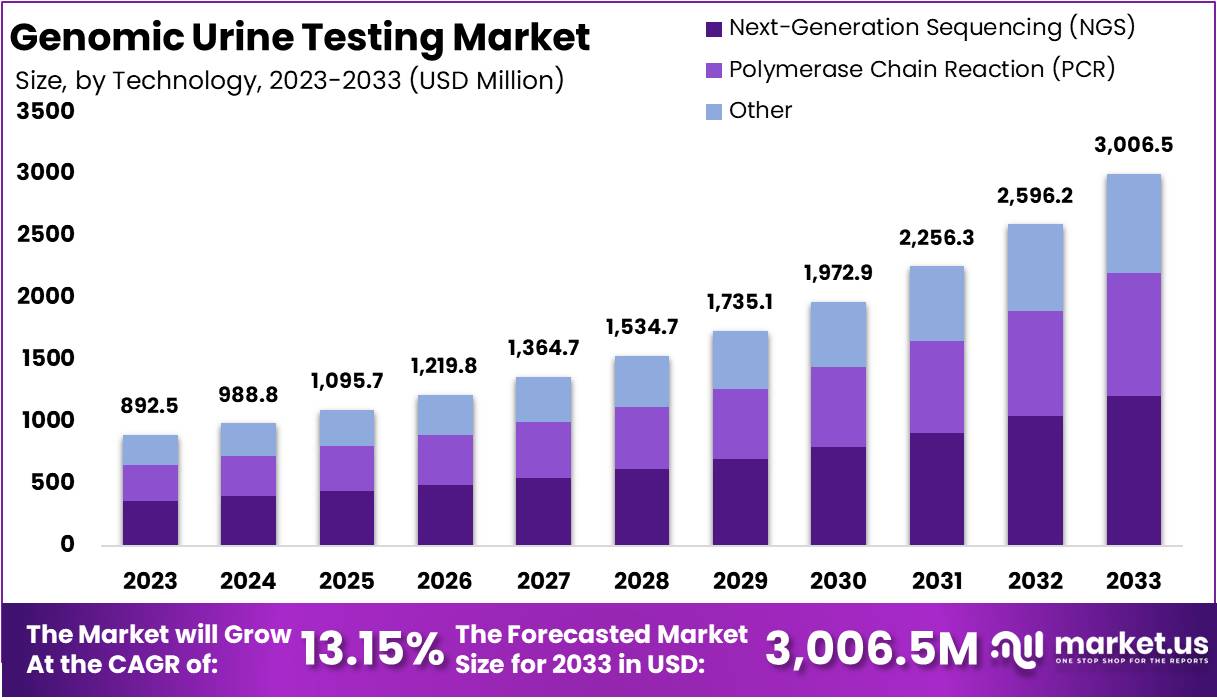
Key Takeaways
- The global genomic urine testing market is anticipated to reach approximately USD 3,006.5 million by 2033, increasing from USD 892.5 million in 2023.
- A compound annual growth rate (CAGR) of 13.15% is expected to be recorded during the forecast period from 2024 to 2033.
- In 2023, Next-Generation Sequencing (NGS) led the technology segment, accounting for more than 40.3% of the overall market share.
- Cancer diagnosis represented the leading application segment in 2023, capturing over 44.4% of the total market share.
- Hospitals and clinics dominated the end-user segment in 2023, holding more than 51.4% of the genomic urine testing market.
- North America maintained a strong market position in 2023, contributing over 33.18% of the global market and generating approximately USD 296.11 million in revenue.
Regional Analysis
In 2023, North America accounted for the leading share of the genomic urine testing market, representing more than 33.18% and reaching a market value of approximately US$ 296.11 million. This market leadership has been supported by the region’s advanced healthcare infrastructure and the increasing adoption of genomic diagnostic technologies. The presence of established diagnostic laboratories and research institutions has further strengthened the expansion of genomic urine testing services across the region.
The increasing prevalence of chronic conditions, particularly cancer and kidney-related disorders, has significantly driven demand for genomic urine testing. Healthcare providers are increasingly integrating genomic diagnostics into clinical practices to enable early disease detection and support personalized treatment strategies. In United States, strong investments in precision medicine programs have accelerated the adoption of genomic testing technologies.
Furthermore, research funding initiatives from organizations such as National Institutes of Health have encouraged innovation in genomic diagnostics, supporting broader clinical implementation and improving patient outcomes across the region.
Emerging Trends
- Rising Demand for Non-Invasive Testing: Genomic urine testing is gaining popularity because it is painless and convenient. It only requires a urine sample, avoiding needles or biopsies. This improves patient comfort, encourages early testing, and increases adoption across clinics.
- Integration with Artificial Intelligence (AI): Artificial Intelligence is improving genomic urine testing by analyzing complex genetic data quickly. AI tools identify patterns, support accurate diagnoses, and help doctors select personalized treatments, making diagnostic processes faster and more efficient.
- Increased Use in Cancer Detection: Genomic urine testing is increasingly used to detect cancers such as bladder and prostate cancer. By identifying genetic mutations in urine samples, it enables earlier diagnosis and reduces the need for invasive biopsy procedures.
- Focus on Early Disease Diagnosis: Genomic urine testing supports early disease detection by identifying DNA or RNA changes linked to kidney disorders, urinary conditions, and neurological diseases, allowing timely treatment and strengthening preventive healthcare strategies.
- Growth in At-Home Testing Kits: At-home genomic urine testing kits are expanding healthcare access. Patients collect urine samples at home and send them to laboratories for analysis, supporting convenient testing, remote healthcare monitoring, and reduced hospital visits.
- Personalized Medicine is Driving Growth: Genomic urine testing supports personalized medicine by providing insights into individual genetic profiles. Doctors can select therapies based on genetic responses, improving treatment effectiveness, reducing side effects, and enhancing patient care outcomes.
Use Cases
- Early Cancer Screening: Genomic urine tests enable early detection of cancers such as prostate, bladder, and kidney cancer. The non-invasive urine sample identifies genetic mutations before symptoms appear, supporting faster diagnosis and improved treatment outcomes.
- Monitoring Organ Transplant Health: After kidney transplantation, genomic urine testing helps monitor organ acceptance. By detecting immune markers and early rejection signals in urine samples, doctors can intervene promptly and improve long-term transplant success.
- Identifying Genetic Disorders: Genomic urine testing helps identify inherited genetic disorders by detecting mutations in urine samples. It offers a safer alternative to blood tests, supporting early diagnosis and improved disease management in newborns.
- Detecting Urinary Tract Infections (UTIs) at the Genetic Level: Genomic urine testing identifies bacteria responsible for urinary tract infections and analyzes their genetic characteristics. This helps doctors select effective antibiotics quickly, improving treatment accuracy and reducing antibiotic resistance risks.
- Tracking Drug Responses: Genomic urine testing helps evaluate how patients respond to medications by analyzing metabolic and genetic indicators in urine. This supports precision dosing, reduces adverse effects, and improves long-term treatment outcomes.
- Screening for Kidney Disease: Genomic urine testing supports early kidney disease detection by identifying genetic biomarkers related to kidney damage. Regular screening enables early treatment, improves disease management, and helps prevent severe complications like kidney failure.
Frequently Asked Questions on Genomic Urine Testing
- How does genomic urine testing work?
Genomic urine testing works by extracting genetic material such as DNA fragments or RNA molecules from urine samples. Advanced molecular techniques, including PCR and next-generation sequencing, are applied to identify gene mutations, biomarkers, or expression patterns linked with specific diseases. - What diseases can genomic urine testing help detect?
Genomic urine testing is widely used to detect and monitor conditions such as bladder cancer, prostate cancer, kidney disorders, and certain genetic abnormalities. The presence of disease-specific genomic biomarkers in urine provides valuable clinical insights for early detection and personalized treatment strategies. - What are the advantages of genomic urine testing compared to traditional diagnostic methods?
Genomic urine testing offers several advantages including non-invasive sample collection, reduced patient discomfort, and the ability to detect molecular changes at an early disease stage. It also supports continuous monitoring and personalized treatment planning in precision medicine applications. - Is genomic urine testing reliable for clinical diagnosis?
Genomic urine testing has demonstrated increasing reliability due to improvements in sequencing technologies and biomarker discovery. When combined with clinical evaluation and other diagnostic procedures, it provides highly informative data that can enhance diagnostic accuracy and treatment decision-making. - What factors are driving the growth of the genomic urine testing market?
Market growth is primarily driven by increasing demand for non-invasive diagnostic methods, rising prevalence of cancer and genetic diseases, and technological advancements in molecular diagnostics. Expanding adoption of precision medicine and biomarker-based testing further supports market expansion globally. - Which regions are leading in the genomic urine testing market?
North America currently dominates the genomic urine testing market due to strong healthcare infrastructure, significant research investments, and high adoption of advanced molecular diagnostics. Europe follows closely, while Asia-Pacific is expected to witness rapid growth due to expanding healthcare capabilities. - Who are the key participants in the genomic urine testing market?
The market includes biotechnology companies, diagnostic laboratories, and healthcare technology firms engaged in genomic testing solutions. These participants focus on biomarker discovery, advanced sequencing platforms, and strategic collaborations to strengthen their product portfolios and expand global market presence.
Conclusion
Genomic urine testing is emerging as a significant advancement in modern diagnostic practices, supporting non-invasive and precise disease detection. The technology enables identification of genetic biomarkers through simple urine samples, improving patient comfort and encouraging wider clinical adoption.
Increasing prevalence of chronic diseases, particularly cancer and kidney disorders, has accelerated demand for genomic-based diagnostics. Continuous advancements in sequencing technologies, artificial intelligence integration, and biomarker research are enhancing the accuracy and efficiency of testing procedures.
Additionally, the growing emphasis on personalized medicine and early disease detection is expected to strengthen market expansion. Overall, genomic urine testing is positioned to play an important role in future precision healthcare systems.
Discuss your needs with our analyst
Please share your requirements with more details so our analyst can check if they can solve your problem(s)




