


Table of Contents
Overview
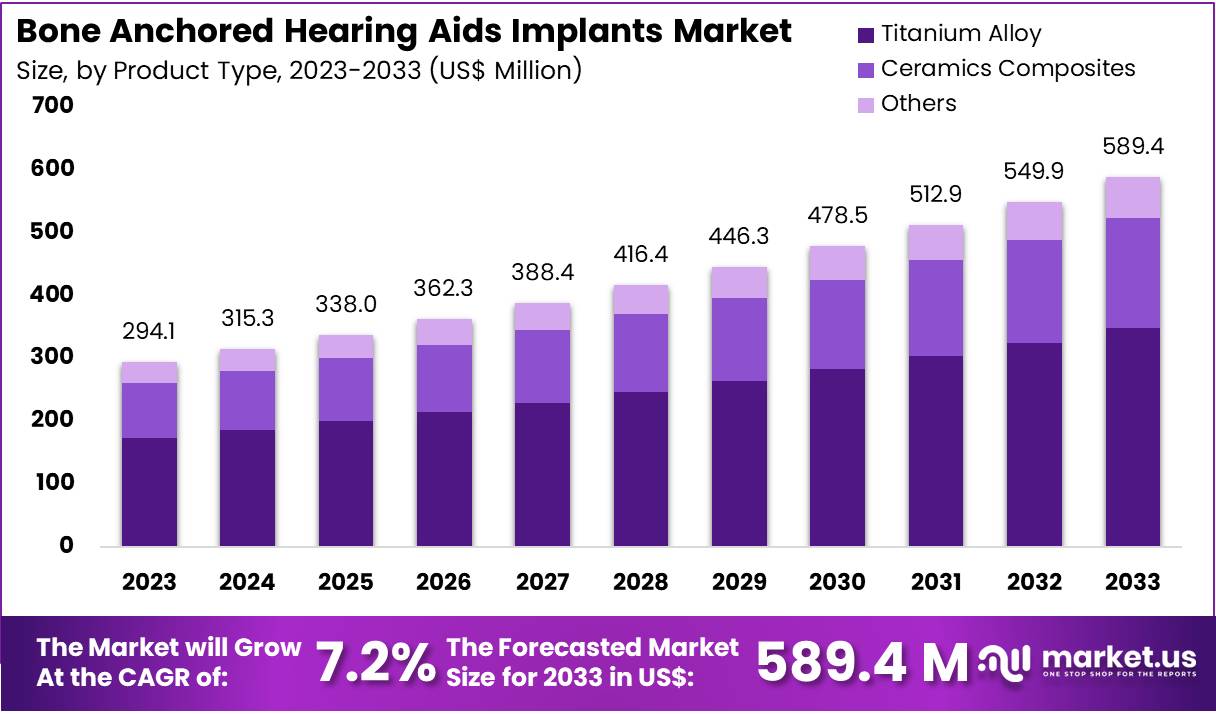
New York, NY – March 11, 2026 – The Global Bone Anchored Hearing Aids Implants Market size is expected to be worth around US$ 589.4 Million by 2033, from US$ 294.1 Million in 2023, growing at a CAGR of 7.2% during the forecast period from 2024 to 2033. North America held a dominant market position, capturing more than a 38.2% share and holds US$ 112.3 Million market value for the year.
Bone Anchored Hearing Aids (BAHA) implants are increasingly being recognized as an effective solution for individuals experiencing conductive or mixed hearing loss. The technology works by transmitting sound vibrations directly to the inner ear through the skull bone, bypassing the outer and middle ear. This mechanism enables clearer sound perception for patients who are unable to benefit from traditional air-conduction hearing aids.
The implant system typically consists of three key components: a titanium implant placed in the skull bone behind the ear, an abutment or magnetic connection, and an external sound processor. Sound captured by the processor is converted into vibrations and transmitted through the bone to the cochlea, where it is interpreted as sound signals by the brain.
Growing awareness of hearing rehabilitation technologies and advancements in minimally invasive surgical procedures have supported the adoption of bone anchored hearing solutions. Clinical studies have demonstrated improved speech recognition, enhanced sound quality, and greater patient comfort compared with conventional hearing aids in selected cases.
Healthcare providers and hearing specialists are increasingly recommending BAHA implants for patients with chronic ear infections, congenital ear canal conditions, or single-sided deafness. In addition, technological improvements in sound processors, wireless connectivity, and digital sound processing have further strengthened product performance.
With continued research and innovation in implantable hearing devices, bone anchored hearing aid implants are expected to play a significant role in advancing hearing restoration solutions and improving the quality of life for individuals affected by hearing impairment.
Key Takeaways
- In 2023, the global bone anchored hearing aids (BAHA) implants market generated revenue of US$ 294.1 million and is projected to expand at a CAGR of 7.2%, reaching approximately US$ 589.4 million by 2033.
- Based on product type, the market is categorized into ceramics composites, titanium alloy, and others. Among these, titanium alloy emerged as the leading segment in 2023, accounting for 59.1% of the total market share.
- By application, the market is segmented into conductive hearing loss, sensorineural hearing loss, mixed hearing loss, and single-sided deafness. The conductive hearing loss segment dominated the market, representing 45.7% of the overall share in 2023.
- In terms of end users, the market is classified into adults, pediatrics, and geriatrics. The adult population constituted the largest segment, contributing 64.2% of total market revenue.
- North America held the leading regional position in 2023, capturing 38.2% of the global bone anchored hearing aids implants market share.
Regional Analysis
North America held the leading position in the bone anchored hearing aids (BAHA) implants market, accounting for 38.2% of the total revenue share. Market growth in the region has been supported by the rising prevalence of hearing disorders and continuous advancements in implantable hearing technologies.
Reports indicate that nearly 60,000–65,000 cases of sudden sensorineural hearing loss are diagnosed annually in the United States, creating strong demand for advanced hearing solutions. BAHA implants have gained wider adoption as they provide an effective treatment option for patients with conductive and mixed hearing loss who may not benefit from conventional hearing aids. Improvements in implant design, enhanced sound performance, and shorter recovery times have further strengthened adoption.
The Asia Pacific region is anticipated to register the fastest CAGR during the forecast period. Market expansion is being driven by increasing awareness of hearing impairments, improving healthcare infrastructure, and expanding access to advanced medical technologies across countries such as India, China, and Japan. Government healthcare initiatives and improved affordability of implantable hearing devices are expected to further support regional market growth.
Emerging Trends
- Miniaturization of Implants: Modern BAHA implants are becoming smaller and lighter, improving comfort and usability. Compact designs allow discreet wear, especially for children and teens. Reduced implant size also supports minimally invasive procedures and faster post-surgical recovery.
- Wireless and App-Based Controls: BAHA implants are increasingly integrated with wireless connectivity and smartphone applications. Users can adjust volume and sound settings through mobile devices, enabling real-time control, improved accessibility, and seamless audio streaming from smartphones and televisions.
- Rising Demand Among Seniors: Demand for BAHA implants is increasing among seniors experiencing age-related hearing loss. The technology bypasses damaged ear structures and delivers sound through bone conduction, offering clearer hearing and easier device management for elderly patients.
- Focus on Pediatric Use: Healthcare providers are increasingly recommending BAHA implants for children with hearing impairment. Early implantation supports speech development, learning ability, and social interaction, while specially designed pediatric devices improve comfort, safety, and long-term hearing outcomes.
Use Cases
- For Patients with Conductive Hearing Loss: BAHA implants are widely used for patients with outer or middle ear disorders. The device bypasses damaged structures and transmits sound directly to the inner ear, improving clarity and long-term hearing performance.
- Used After Ear Surgeries: BAHA implants are commonly recommended after ear surgeries or severe ear infections that cause hearing impairment. The implant delivers stable sound transmission through bone conduction and provides an effective long-term hearing rehabilitation solution.
- Single-Sided Deafness (SSD): BAHA implants support individuals with single-sided deafness by capturing sound from the affected side and transferring it to the functioning ear. This improves sound awareness, speech comprehension, and spatial hearing performance.
- Support in Noisy Environments: BAHA implants help users manage hearing challenges in noisy environments such as workplaces or classrooms. The system directs sound efficiently to the functioning ear, improving speech clarity and enabling better communication.
Frequently Asked Questions on Bone Anchored Hearing Aids Implants
- What are Bone Anchored Hearing Aids (BAHA) implants?
Bone Anchored Hearing Aids implants are surgically implanted hearing systems that transmit sound vibrations directly to the inner ear through the skull bone. This technology bypasses the outer and middle ear, making it effective for patients with conductive hearing loss or single-sided deafness. - How do Bone Anchored Hearing Aids implants work?
Bone Anchored Hearing Aids implants operate by capturing sound through an external processor that converts acoustic signals into vibrations. These vibrations are transmitted through a titanium implant fixed in the skull, directly stimulating the cochlea and enabling improved hearing clarity. - Who are the ideal candidates for Bone Anchored Hearing Aids implants?
Bone Anchored Hearing Aids implants are generally recommended for individuals experiencing conductive or mixed hearing loss, chronic ear infections, or single-sided deafness. Patients who cannot benefit from conventional hearing aids due to ear canal conditions are often considered suitable candidates. - What are the key advantages of Bone Anchored Hearing Aids implants?
Bone Anchored Hearing Aids implants provide improved sound quality, reduced feedback issues, and enhanced speech recognition compared with traditional hearing aids. The device bypasses damaged ear structures, enabling clearer sound transmission while offering long-term durability and patient comfort. - Are Bone Anchored Hearing Aids implants safe and effective?
Bone Anchored Hearing Aids implants are widely regarded as safe and clinically effective. High success rates have been reported in clinical studies, with most patients experiencing improved hearing performance, better sound localization, and enhanced quality of life following implantation procedures. - What factors are driving growth in the Bone Anchored Hearing Aids implants market?
Market growth is primarily driven by the rising prevalence of hearing impairment, increasing geriatric population, and advancements in implantable hearing technologies. Additionally, improved reimbursement policies and greater awareness regarding hearing loss treatment are contributing to market expansion. - Which regions dominate the Bone Anchored Hearing Aids implants market?
North America and Europe currently represent the leading regional markets due to advanced healthcare infrastructure, high adoption of implantable hearing technologies, and supportive reimbursement frameworks. Increasing healthcare investments are expected to accelerate growth in Asia-Pacific markets.
Conclusion
In conclusion, the bone anchored hearing aids (BAHA) implants market is experiencing steady growth, supported by technological advancements, increasing awareness of hearing rehabilitation, and the rising prevalence of hearing disorders. The ability of BAHA implants to bypass damaged ear structures and deliver clear sound directly to the inner ear has strengthened their clinical adoption.
Market expansion is further supported by improved implant designs, wireless connectivity features, and growing acceptance among pediatric, adult, and geriatric populations. With strong demand in North America and rapid development across Asia Pacific, BAHA implants are expected to remain an important solution for long-term hearing restoration and improved patient quality of life.
Discuss your needs with our analyst
Please share your requirements with more details so our analyst can check if they can solve your problem(s)




