


Table of Contents
Overview
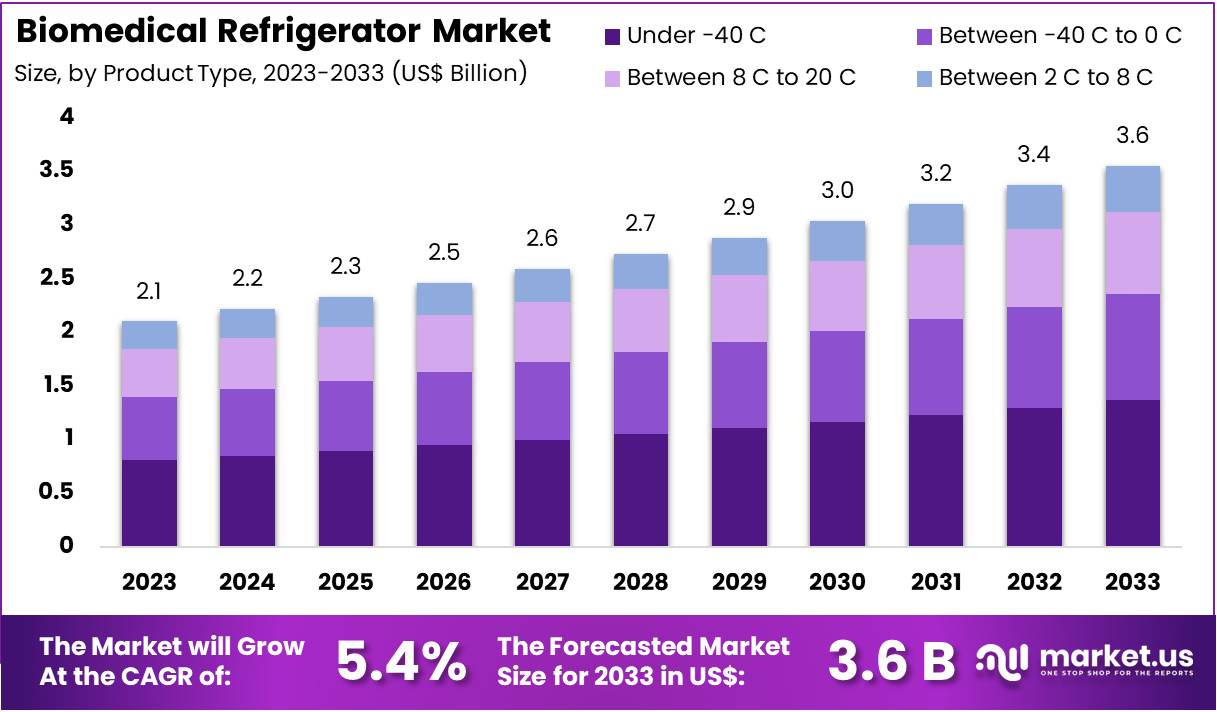
New York, NY – March 11, 2026 – The Global Biomedical Refrigerator Market Size is expected to be worth around US$ 3.6 Billion by 2033, from US$ 2.1 Billion in 2023, growing at a CAGR of 5.4% during the forecast period from 2024 to 2033. North America held a dominant market position, capturing more than a 40.1% share and holds US$ 0.8 Billion market value for the year.
Biomedical refrigerators have become an essential component in modern healthcare and laboratory environments. These specialized refrigeration systems are designed to maintain precise temperature conditions required for the safe storage of vaccines, biological samples, blood products, reagents, and pharmaceutical materials. Unlike conventional refrigeration units, biomedical refrigerators are engineered with advanced temperature control systems that ensure consistent cooling performance and minimize fluctuations that may compromise sensitive medical substances.
The design structure of a biomedical refrigerator typically includes high-precision temperature sensors, microprocessor-based controllers, and uniform air circulation technology. These components collectively enable the equipment to maintain stable temperature ranges, generally between 2°C and 8°C, which are considered optimal for many medical and biological materials. In addition, insulated cabinet construction and energy-efficient compressors contribute to improved thermal stability and operational efficiency.
Modern biomedical refrigeration units are also equipped with digital monitoring systems and alarm mechanisms that alert users in the event of temperature deviations, power failures, or door openings. Such features enhance product safety and ensure regulatory compliance in hospitals, research laboratories, blood banks, and pharmaceutical facilities.
The growing demand for vaccine storage, clinical research activities, and biotechnology advancements has significantly increased the adoption of biomedical refrigeration systems worldwide. As healthcare infrastructure continues to expand, biomedical refrigerators are expected to play a crucial role in maintaining the integrity, safety, and quality of temperature-sensitive medical products.
Key Takeaways
- In 2023, the biomedical refrigerator market generated revenue of US$ 2.1 billion and is projected to expand at a CAGR of 5.4%, reaching approximately US$ 3.6 billion by 2033.
- Based on product type, the market is categorized into under -40°C, between 8°C to 20°C, between -40°C to 0°C, and between 2°C to 8°C. Among these, the under -40°C segment dominated the market in 2023, accounting for a 38.4% share.
- By application, the market is segmented into hospital, pharmacy, blood bank, and others. The pharmacy segment represented the largest share, contributing 44.6% of the total market in 2023.
- North America emerged as the leading regional market, capturing 40.1% of the global market share in 2023.
Regional Analysis
North America accounted for the largest share of the biomedical refrigerator market in 2023, representing 40.1% of total revenue. Market leadership in the region is largely supported by the increasing need for reliable storage systems for vaccines, blood products, and temperature-sensitive medical materials.
The U.S. healthcare system demonstrates strong demand for such solutions, with approximately 16 million blood components transfused annually, highlighting the necessity for advanced medical refrigeration infrastructure. Continuous expansion of healthcare facilities and research laboratories has further increased the adoption of biomedical refrigerators capable of maintaining precise temperature conditions.
In addition, technological developments focused on energy-efficient and environmentally sustainable refrigeration systems, along with strict regulatory requirements for vaccine storage, have accelerated product adoption.
The Asia Pacific region is projected to register the highest CAGR during the forecast period. Growth is supported by expanding healthcare infrastructure, rising pharmaceutical manufacturing, and increasing vaccine production. Countries such as India and China play a critical role in global biologics and antibiotic production, strengthening regional demand for advanced biomedical refrigeration systems.
Emerging Trends
- Smart Refrigeration with IoT Features: Biomedical refrigerators are increasingly equipped with IoT-enabled sensors that continuously monitor internal temperatures. These systems send instant alerts during temperature deviations, helping prevent product loss. Real-time monitoring improves compliance, reduces manual errors, and enhances cold storage reliability in healthcare facilities.
- Eco-Friendly and Energy-Saving Designs: Manufacturers are focusing on energy-efficient biomedical refrigerators that reduce electricity consumption and environmental impact. Advanced insulation, eco-friendly refrigerants, LED lighting, and efficient compressors are commonly integrated, enabling hospitals and laboratories to lower operational costs while supporting sustainability initiatives.
- More Focus on Vaccine Storage: Growing global vaccination programs are increasing demand for reliable biomedical refrigeration systems. Refrigerators designed to maintain 2°C–8°C ensure vaccine stability and effectiveness. Solar-powered and battery-supported models are also being developed to support storage in remote and low-resource healthcare facilities.
- Customized Storage Solutions: Healthcare institutions increasingly require refrigeration systems tailored to specific medical storage needs. Biomedical refrigerators are now designed for applications such as blood storage, pharmaceuticals, tissue samples, and laboratory reagents, providing precise temperature ranges and improving storage efficiency and regulatory compliance.
Use Cases
- Vaccine Storage in Pharmacies and Clinics: Pharmacies and clinics depend on biomedical refrigerators to store vaccines within the 2°C to 8°C temperature range. These systems maintain consistent cooling, prevent spoilage, and include alarm systems and backup power features to ensure vaccine safety and reduce wastage.
- Blood Bank Storage: Blood banks rely on biomedical refrigerators to store blood units at controlled temperatures between 1°C and 6°C. Stable cooling conditions help preserve blood quality and reduce spoilage. Advanced monitoring systems also support compliance with strict healthcare storage standards.
- Hospital Use for Critical Drugs: Hospitals use biomedical refrigerators to safely store temperature-sensitive medications such as insulin, biologics, and chemotherapy drugs. Precise temperature control and digital monitoring systems ensure drug stability, helping healthcare providers maintain treatment effectiveness and patient safety.
- Research Labs for Sample Preservation: Research laboratories utilize biomedical refrigerators and ultra-low freezers to preserve sensitive materials including DNA samples, enzymes, and biological cultures. Reliable temperature control prevents sample degradation, ensuring research accuracy and protecting valuable laboratory experiments and medical studies.
Frequently Asked Questions on Biomedical Refrigerator
- What are the primary applications of biomedical refrigerators?
Biomedical refrigerators are widely used in hospitals, diagnostic laboratories, blood banks, research institutions, and pharmaceutical facilities. Their primary function is to preserve biological samples, vaccines, enzymes, and reagents under controlled conditions to prevent degradation and maintain clinical and research accuracy. - Why is temperature stability important in biomedical refrigerators?
Temperature stability is critical because biological materials and pharmaceuticals are highly sensitive to environmental changes. Even minor temperature fluctuations can degrade vaccines, damage samples, and reduce drug efficacy, making precise temperature control essential for medical storage and regulatory compliance. - What temperature range do biomedical refrigerators typically maintain?
Most biomedical refrigerators are designed to maintain a controlled temperature range between 2°C and 8°C. This range is considered optimal for preserving vaccines, biological specimens, and pharmaceutical products while minimizing microbial growth and chemical degradation. - What features differentiate biomedical refrigerators from domestic refrigerators?
Biomedical refrigerators include advanced features such as digital temperature monitoring, alarm systems, forced air circulation, data logging, and backup power support. These features ensure consistent cooling performance and regulatory compliance, which are not typically available in standard household refrigerators. - What factors are driving the growth of the biomedical refrigerator market?
Market growth is primarily driven by increasing vaccine distribution programs, expanding pharmaceutical research activities, and rising demand for safe biological sample storage. Additionally, advancements in healthcare infrastructure and laboratory expansion contribute significantly to market development. - Which end-use sectors generate the highest demand for biomedical refrigerators?
Hospitals, pharmaceutical companies, biotechnology laboratories, blood banks, and research institutes represent the major end-use sectors. These organizations require reliable cold storage solutions to maintain the integrity of medical products, research samples, and diagnostic materials. - How do regulatory standards influence the biomedical refrigerator market?
Regulatory guidelines from healthcare authorities require strict temperature monitoring, storage validation, and equipment reliability. Compliance with standards such as Good Laboratory Practices (GLP) and Good Distribution Practices (GDP) significantly influences product design and adoption across healthcare facilities. - What technological advancements are shaping the biomedical refrigerator industry?
Technological developments include smart temperature monitoring systems, IoT-enabled data logging, energy-efficient compressors, and automated alarm notifications. These innovations improve operational efficiency, enhance storage reliability, and support compliance with strict healthcare storage regulations.
Conclusion
The biomedical refrigerator market is experiencing steady growth due to increasing demand for safe storage of vaccines, blood products, pharmaceuticals, and biological samples. Advanced temperature control technologies, digital monitoring systems, and regulatory compliance requirements are driving product adoption across healthcare facilities and research laboratories.
Expanding vaccination programs, rising biotechnology research, and growing healthcare infrastructure further support market expansion. Additionally, innovations such as IoT-enabled monitoring, energy-efficient designs, and customized storage solutions are strengthening industry development. As global healthcare systems continue to modernize, biomedical refrigeration equipment will remain critical for maintaining the safety, stability, and quality of temperature-sensitive medical products.
Discuss your needs with our analyst
Please share your requirements with more details so our analyst can check if they can solve your problem(s)




