


Table of Contents
Overview
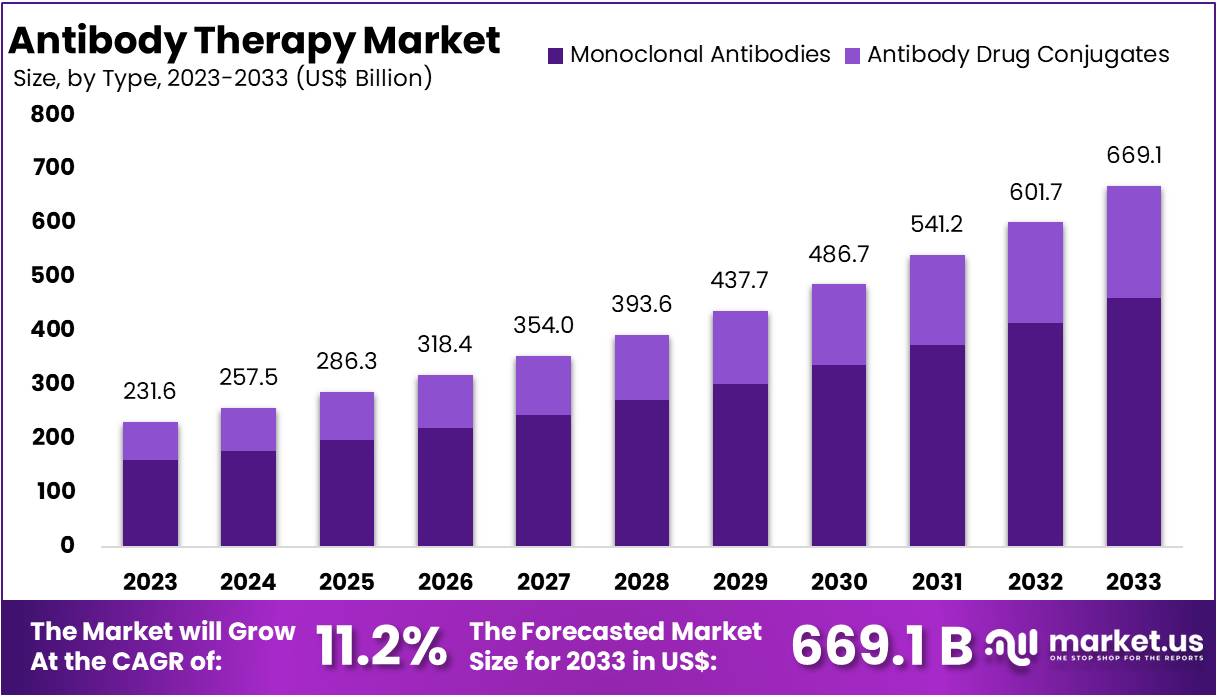
New York, NY – Feb 19, 2026 – The Global Antibody Therapy Market Size is expected to be worth around US$ 669.1 Billion by 2033, from US$ 231.6 Billion in 2023, growing at a CAGR of 11.2% during the forecast period from 2024 to 2033.
Antibody therapy represents an advanced and targeted approach in modern medicine, designed to enhance the body’s immune response against diseases. Antibodies are specialized proteins naturally produced by the immune system to recognize and neutralize harmful pathogens such as viruses, bacteria, and abnormal cells. In therapeutic applications, monoclonal antibodies are engineered in controlled laboratory environments to specifically bind to selected disease targets.
The basic formation of antibody therapy begins with the identification of a disease-associated antigen, which may include cancer cells, inflammatory markers, or viral proteins. Scientists then isolate immune cells capable of producing antibodies against the selected antigen. Using biotechnology processes such as hybridoma technology or recombinant DNA techniques, identical copies of highly specific antibodies are produced at scale. These antibodies are purified, tested for safety and efficacy, and formulated into injectable or intravenous therapeutic products.
Once administered, therapeutic antibodies function through multiple mechanisms. They may block disease pathways, mark harmful cells for immune destruction, or deliver targeted treatment while minimizing damage to healthy tissues. This precision-based mechanism contributes to improved treatment outcomes and reduced systemic side effects compared with traditional therapies.
Antibody therapy has demonstrated strong clinical potential across oncology, autoimmune disorders, infectious diseases, and rare conditions. Ongoing research and technological advancements continue to expand its applications, supporting the development of next-generation biologics and personalized treatment strategies within the global healthcare landscape.
Key Takeaways
- The Antibody Therapy Market is expected to expand from US$ 231.6 billion in 2023 to US$ 669.1 billion by 2033, registering a compound annual growth rate (CAGR) of 11.2% during the forecast period.
- Monoclonal antibodies dominated the type segment in 2023, accounting for more than 69.1% of the total Antibody Therapy Market share.
- Hospitals emerged as the primary end-user segment in 2023, contributing over 47.4% of the overall market revenue.
- North America held the leading regional position in 2023, representing 38.9% of the global antibody therapy market, with a market valuation of US$ 90.1 billion.
Regional Analysis
North America maintained a leading position in the antibody therapy market in 2023, accounting for over 38.9% of the global share, with a market valuation of approximately US$ 90.1 million. The region’s dominance can be attributed to its well-established healthcare infrastructure, strong investment in research and development, and efficient regulatory pathways that support faster approval and commercialization of innovative therapies.
The United States remained the primary growth driver, supported by advanced biotechnology capabilities and continuous innovation in targeted treatment solutions. Rising incidence rates of chronic diseases, including cancer and autoimmune disorders, have further accelerated the adoption of antibody-based therapies across clinical settings.
Canada contributed significantly through supportive government initiatives promoting healthcare innovation and biopharmaceutical advancement. Active collaboration between academic institutions and biotechnology companies has strengthened research capabilities and accelerated product development.
Collectively, technological advancement, personalized healthcare adoption, and favorable regulatory support continue to reinforce North America’s leadership in the antibody therapy market.
Emerging Trends
- Faster Approvals and Regulatory Support: Regulatory authorities are accelerating approval pathways for antibody therapies through priority review and fast-track programs. These initiatives shorten development timelines, improve patient access to innovative treatments, and stimulate global investment and confidence in biologics innovation.
- AI Is Changing How Antibodies Are Made: Artificial intelligence is transforming antibody development by predicting molecular behavior, identifying optimal therapeutic targets, and improving clinical trial selection. AI-driven discovery reduces research costs, increases efficiency, and accelerates delivery of safer, more effective antibody therapies.
- Easier and More Convenient Treatments: Healthcare companies are developing antibody therapies designed for home administration through subcutaneous injections. These convenient delivery methods reduce hospital visits, improve patient adherence, lower treatment costs, and enhance overall patient comfort in long-term disease management.
- The Rise of Biosimilars: Biosimilars are emerging as cost-effective alternatives to patented antibody drugs, offering comparable safety and efficacy. Their adoption expands treatment accessibility, reduces healthcare expenditure, and drives competitive pricing across global markets, particularly within developing healthcare systems.
Use Cases
- Cancer Treatment: Antibody therapy plays a central role in oncology by selectively targeting cancer cells while preserving healthy tissues. Improved precision reduces adverse effects and enhances treatment outcomes, supporting its growing adoption across breast cancer, lymphoma, leukemia, and solid tumor therapies.
- Autoimmune Disease Management: Antibody therapies help regulate immune system activity in autoimmune diseases by reducing inflammation and preventing tissue damage. Patients benefit from improved symptom control, enhanced mobility, and better long-term disease management compared with traditional immunosuppressive treatments.
- Alzheimer’s Disease and Brain Health: Emerging antibody therapies target abnormal brain proteins associated with Alzheimer’s disease progression. Although not curative, these treatments may slow cognitive decline, preserve functional independence longer, and represent an important advancement in neurodegenerative disease management strategies.
- Infectious Disease Prevention: Antibody therapies support prevention and treatment of infectious diseases by providing immediate immune protection. Widely used during viral outbreaks such as COVID-19 and RSV, they protect high-risk populations and strengthen global preparedness against emerging infectious threats.
Frequently Asked Questions on Antibody Therapy
- How does Antibody Therapy work in disease treatment?
Antibody therapy works by recognizing unique markers present on pathogens or abnormal cells. Once attached, antibodies can block disease pathways, stimulate immune responses, or directly destroy harmful cells while minimizing damage to surrounding healthy tissues. - What types of Antibody Therapies are commonly available?
Common antibody therapies include monoclonal antibodies, bispecific antibodies, antibody-drug conjugates, and checkpoint inhibitors. These therapeutic categories are designed to enhance immune activation, deliver targeted drugs, or regulate immune system responses in complex disease conditions. - What are the primary applications of Antibody Therapy?
Antibody therapy is primarily utilized in cancer treatment, autoimmune disease management, infectious disease control, and inflammatory disorders. Growing adoption in precision medicine has expanded its clinical relevance, particularly in oncology, immunology, and rare disease therapeutics. - What advantages does Antibody Therapy offer compared to traditional treatments?
Compared with chemotherapy or conventional drugs, antibody therapy provides higher specificity and reduced systemic toxicity. Improved treatment outcomes, personalized targeting capabilities, and enhanced safety profiles have contributed significantly to increasing clinical adoption across therapeutic areas. - What factors are driving growth in the Antibody Therapy Market?
Market growth is driven by rising cancer prevalence, expanding biologics research, technological advancements in antibody engineering, and increasing investment in biopharmaceutical innovation. Supportive regulatory approvals and growing demand for targeted therapies further accelerate global market expansion. - Which regions dominate the Antibody Therapy Market?
North America leads the antibody therapy market due to advanced healthcare infrastructure, strong research funding, and early adoption of biologics. Europe follows closely, while Asia-Pacific shows rapid growth supported by increasing healthcare investment and expanding pharmaceutical manufacturing capabilities. - How is innovation shaping the future of Antibody Therapy?
Technological advancements such as antibody engineering, artificial intelligence-driven drug discovery, and next-generation biologics are transforming therapy development. Innovations in bispecific antibodies and personalized immunotherapies are expected to significantly enhance treatment efficacy and clinical outcomes.
Conclusion
The antibody therapy market represents a rapidly advancing segment of modern healthcare, supported by strong scientific innovation, expanding clinical applications, and favorable regulatory environments. Increasing adoption across oncology, autoimmune disorders, neurological conditions, and infectious diseases highlights its growing therapeutic importance.
Market expansion is reinforced by technological advancements such as artificial intelligence integration, biosimilar development, and patient-centric treatment delivery models. North America continues to maintain regional leadership, while global demand steadily rises due to precision medicine adoption and rising chronic disease prevalence. Overall, antibody therapy is expected to remain a cornerstone of next-generation biologics and personalized treatment strategies worldwide.
Discuss your needs with our analyst
Please share your requirements with more details so our analyst can check if they can solve your problem(s)




