


Table of Contents
Overview
New York, NY – Feb 26, 2026 –The Global Medical Nutrition Market Size is expected to be worth around US$ 52.1 Billion by 2033, from US$ 30.8 Billion in 2023, growing at a CAGR of 5.4% during the forecast period from 2024 to 2033.
The global medical nutrition market is witnessing steady growth, supported by rising prevalence of chronic diseases and an expanding aging population. Medical nutrition refers to specially formulated nutritional products designed for the dietary management of patients under medical supervision. These formulations are developed to address specific health conditions, including malnutrition, metabolic disorders, gastrointestinal diseases, oncology-related complications, and neurological conditions.
The growth of the market can be attributed to the increasing burden of lifestyle-related diseases such as diabetes, cardiovascular disorders, and cancer. According to global health estimates, chronic diseases account for over 70% of total deaths worldwide, creating sustained demand for clinically validated nutritional solutions. In addition, growing awareness among healthcare professionals and patients regarding the importance of early nutritional intervention is supporting market expansion.
Medical nutrition products are broadly categorized into oral nutritional supplements, enteral nutrition, and parenteral nutrition. Among these, oral nutritional supplements represent a significant share due to ease of administration and improved patient compliance. Hospitals, long-term care facilities, and home care settings constitute key end-user segments.
Innovation in formulation technologies, including disease-specific blends enriched with proteins, omega-3 fatty acids, vitamins, and minerals, is further strengthening product adoption. Emerging markets are expected to offer substantial growth opportunities due to improving healthcare infrastructure and increasing healthcare expenditure. Overall, the medical nutrition sector is positioned for sustained development, driven by clinical necessity and evolving patient care standards.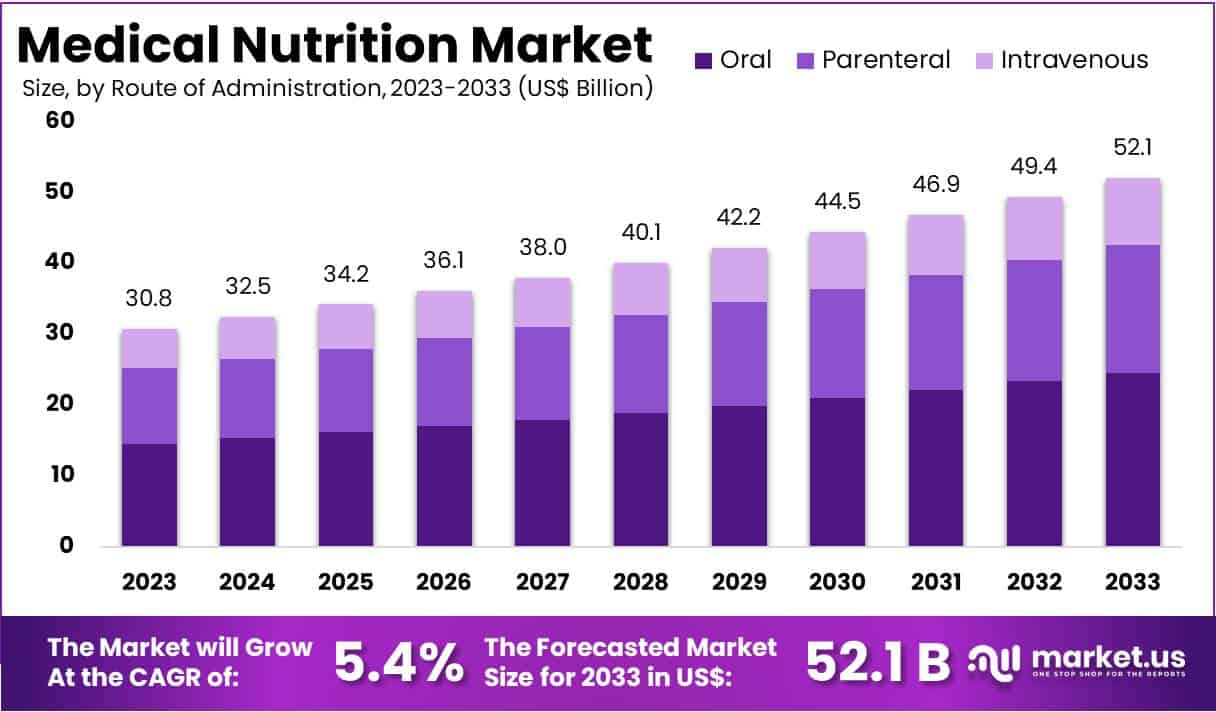
Key Takeaways
- In 2023, the medical nutrition market was valued at US$ 30.8 billion and is projected to reach US$ 52.1 billion by 2033, registering a CAGR of 5.4% during the forecast period.
- Based on product type, the market is categorized into amino acid solutions, antioxidants, lipid emulsions, multivitamin supplements, trace elements, and chamber beads. Amino acid solutions accounted for the highest share at 28.3% in 2023.
- By route of administration, the market is segmented into parenteral, oral, and intravenous. The oral segment dominated the market, capturing 47.2% of the total revenue share.
- In terms of application, the cancer segment emerged as the leading category, contributing 23.8% of the overall market revenue in 2023.
- Based on distribution channel, the market is divided into retail, online, and institutional segments. The institutional channel led the market with a 52.9% revenue share.
- With respect to end users, the pediatric segment held the largest share, accounting for 35.6% of total market revenue.
- Regionally, North America dominated the global medical nutrition market, securing a 41.2% market share in 2023.
Regional Analysis
North America accounted for the largest revenue share of 41.2% in 2023, supported by rising prevalence of chronic diseases, an expanding geriatric population, and increasing demand for personalized healthcare solutions. Higher adoption of disease-specific nutrition for diabetes, cardiovascular disorders, and gastrointestinal conditions has strengthened regional market growth.
In September 2023, RxFood Corporation partnered with Dexcom, Inc. in Canada to integrate AI-based personalized nutrition assessments with real-time continuous glucose monitoring technology, reflecting the region’s focus on technology-enabled medical nutrition. Favorable reimbursement frameworks and growing consumer awareness further support market expansion.
The Asia Pacific region is projected to register the fastest CAGR during the forecast period. Growth is driven by increasing healthcare expenditure, rising incidence of non-communicable diseases, and improving healthcare infrastructure in countries such as China and India. In November 2023, Danone S.A. launched Fortimel in China, expanding its adult medical nutrition portfolio to address post-surgical recovery and disease-related nutritional requirements.
Emerging Trends
- Personalized Nutrition Is Gaining Popularity: Personalized medical nutrition is increasingly adopted, with formulations tailored to age, medical condition, lifestyle, genetics, and gut health. This targeted approach improves recovery outcomes, enhances immune response, and supports long-term management of chronic diseases effectively.
- Rise in Plant-Based Medical Nutrition: Plant-based medical nutrition products are expanding due to rising demand for sustainable, ethical, and lactose-free alternatives. Formulations using soy, pea protein, oats, and almonds provide improved digestibility and support clean-label healthcare preferences globally.
- Integration with Digital Health Platforms: Digital health platforms are strengthening medical nutrition adoption through real-time tracking, wearable integration, and remote consultations. These technologies enhance patient compliance, enable data-driven dietary adjustments, and improve treatment monitoring for chronic disease management.
- Focus on Preventive Care: Medical nutrition is increasingly utilized for preventive healthcare, targeting individuals at risk of diabetes, obesity, and cardiovascular disorders. Nutrient-enriched diets and supplements support early intervention strategies and reduce long-term healthcare burdens.
- Growth in Specialized Products for Aging Population: Rising global aging population is driving demand for age-specific medical nutrition solutions enriched with protein, calcium, and vitamins. Easy-to-consume formats support bone health, immunity, and cognitive function among elderly patients.
Use Cases
- Helping Cancer Patients Regain Strength: High-protein and calorie-dense medical nutrition products assist cancer patients in restoring muscle mass, improving immunity, and maintaining energy levels during treatment, thereby supporting faster recovery and reducing treatment-related fatigue.
- Managing Diabetes with Low-Glycemic Formulas: Low-glycemic medical nutrition formulas help regulate blood glucose levels by ensuring gradual energy release. These products reduce sugar spikes, improve insulin sensitivity, and support long-term diabetes management effectively.
- Supporting Premature Babies in Neonatal Units: Specialized medical nutrition formulations for premature infants provide easily digestible proteins and essential micronutrients, supporting healthy weight gain, cognitive development, and reduced hospitalization duration in neonatal care settings.
- Improving Recovery After Surgery: Post-surgical medical nutrition supplementation delivers essential proteins and nutrients required for tissue repair. Early nutritional support reduces infection risks, shortens hospital stays, and enhances overall recovery outcomes.
- Addressing Malnutrition in Elderly Populations: Medical nutrition supplements help prevent malnutrition among elderly individuals by providing concentrated vitamins, minerals, and protein, thereby improving mobility, immune strength, and overall quality of life.
Frequently Asked Questions on Medical Nutrition
- Who requires medical nutrition products?
Medical nutrition products are recommended for patients suffering from chronic illnesses, metabolic disorders, cancer, gastrointestinal diseases, and neurological conditions. They are also widely used in pediatric and geriatric populations where specialized nutritional support is essential for recovery and overall health management. - What are the main types of medical nutrition products?
Medical nutrition products are commonly categorized into oral nutritional supplements, enteral nutrition, and parenteral nutrition. These formulations may include amino acids, lipids, vitamins, minerals, and trace elements tailored to address specific therapeutic and nutritional requirements. - How does medical nutrition support disease management?
Medical nutrition supports disease management by improving nutrient intake, strengthening immune response, preventing muscle loss, and enhancing treatment outcomes. Early nutritional intervention has been shown to reduce hospital stays, lower complication risks, and improve overall patient quality of life. - Which region leads the medical nutrition market?
North America currently leads the medical nutrition market due to advanced healthcare infrastructure, strong reimbursement frameworks, and high chronic disease prevalence. However, Asia Pacific is projected to witness the fastest growth owing to improving healthcare access and rising healthcare investments. - Which segment dominates the medical nutrition market by application?
The oncology application segment holds a significant share of the medical nutrition market. Increasing cancer incidence globally has created higher demand for specialized nutritional formulations designed to support patients during treatment and recovery phases. - What is the future outlook of the medical nutrition market?
The medical nutrition market is expected to witness steady growth over the next decade, supported by innovation in disease-specific formulations, expanding home healthcare adoption, and increasing integration of digital health technologies into nutritional assessment and monitoring systems.
Conclusion
The global medical nutrition market is positioned for sustained expansion, driven by the rising burden of chronic diseases, demographic aging, and increasing emphasis on preventive and personalized healthcare. Strong revenue growth projections, diversified product portfolios, and expanding clinical applications underline the sector’s structural strength.
Regional leadership by North America and rapid acceleration in Asia Pacific highlight broad geographic opportunities. Technological integration, plant-based innovation, and specialized formulations for oncology, pediatrics, and geriatrics are further enhancing market penetration. Supported by institutional demand and favorable healthcare policies, medical nutrition is expected to remain a critical component of modern patient-centered care strategies.
Discuss your needs with our analyst
Please share your requirements with more details so our analyst can check if they can solve your problem(s)




