


Table of Contents
Overview
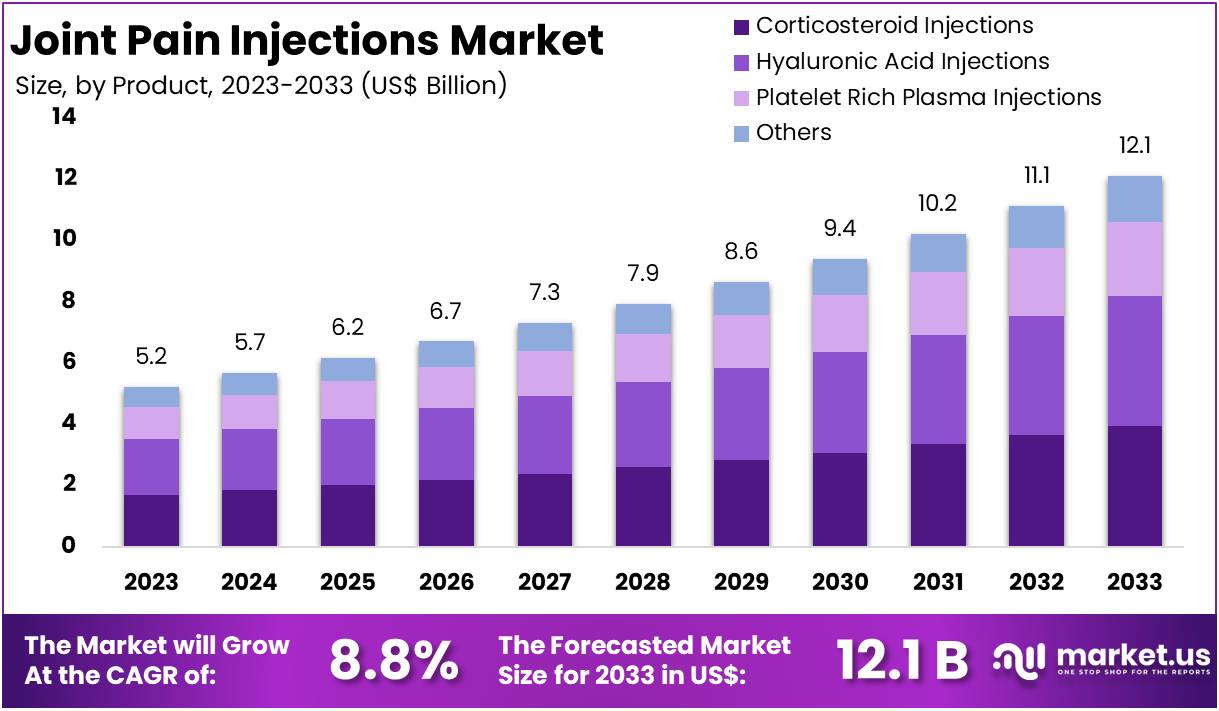
New York, NY – Feb 19, 2026 –The Global Joint Pain Injections Market size is expected to be worth around US$ 12.1 Billion by 2033, from US$ 5.2 Billion in 2023, growing at a CAGR of 8.8% during the forecast period from 2024 to 2033.
Joint pain injections are increasingly being adopted as a non-surgical treatment option for individuals experiencing chronic musculoskeletal discomfort. These injections are primarily formulated to reduce inflammation, alleviate pain, and improve joint mobility, particularly among patients suffering from osteoarthritis, rheumatoid arthritis, sports injuries, or age-related joint degeneration.
The basic formulation of joint pain injections typically includes anti-inflammatory agents, lubricating substances, or regenerative compounds. Corticosteroid injections remain one of the most commonly used formulations, designed to suppress inflammatory responses within affected joints and provide rapid pain relief. Hyaluronic acid injections are also widely utilized, functioning as viscosupplements that restore joint lubrication and cushioning, thereby improving movement and reducing stiffness.
In recent years, regenerative injection therapies have gained traction. Platelet-rich plasma (PRP) injections and biologic formulations containing growth factors are being explored to support tissue repair and long-term joint function improvement. Local anesthetics may be included in certain formulations to deliver immediate pain reduction during treatment administration.
The growing adoption of joint pain injections can be attributed to increasing prevalence of joint disorders, rising aging populations, and growing demand for minimally invasive treatment alternatives. These therapies are typically administered under clinical supervision and are tailored according to patient condition, severity of joint damage, and treatment objectives.
As healthcare providers continue to emphasize pain management and mobility restoration, joint pain injections are expected to remain an important component of comprehensive orthopedic and pain management strategies.
Key Takeaways
- The Joint Pain Injections Market is anticipated to expand from US$ 5.2 billion in 2023 to approximately US$ 12.1 billion by 2033, registering a compound annual growth rate (CAGR) of 8.8% during the forecast period.
- Corticosteroid injections emerged as the leading product category in 2023, accounting for over 32% of the total Joint Pain Injections Market share.
- The knee joint application segment held the dominant position in 2023, contributing more than 35% of market revenue, primarily supported by the increasing incidence of knee-related disorders among aging populations and active athletes.
- Hospital pharmacies represented the largest distribution channel in 2023, capturing over 46% share within the Joint Pain Injections market landscape.
- North America maintained its leadership position in 2023, holding above 40% of the global market share, with an estimated market valuation of US$ 2.0 million.
Regional Analysis
In 2023, North America secured a leading position in the Joint Pain Injections Market, accounting for over 40% of the global share with a market valuation of approximately US$ 2.0 million. The region’s dominance is primarily supported by its well-established healthcare infrastructure, characterized by advanced medical facilities and widespread adoption of innovative treatment technologies.
A high prevalence of joint-related conditions, including osteoarthritis and rheumatoid arthritis, particularly among the aging population in the United States and Canada, has contributed to increasing demand for effective pain management solutions. Joint pain injections are widely preferred due to their ability to provide rapid and sustained symptom relief.
Furthermore, strong investment in pharmaceutical research and development has enabled continuous innovation in injection therapies, improving treatment outcomes and patient comfort. Favorable reimbursement policies and insurance coverage enhance patient accessibility, while ongoing awareness initiatives by healthcare organizations continue to promote adoption, supporting sustained regional market growth.
Emerging Trends
- Shift Toward Long-Lasting Relief: Healthcare providers are increasingly adopting joint pain injections designed for extended therapeutic duration. Advanced corticosteroid and biologic formulations reduce repeat procedures, improve patient convenience, enhance mobility outcomes, and support long-term management of chronic joint conditions.
- Advances in Imaging-Guided Injections: The adoption of imaging technologies such as ultrasound and MRI has improved injection precision. Enhanced visualization enables accurate placement within joints, reducing complications, improving treatment effectiveness, minimizing procedural discomfort, and strengthening patient confidence in clinical outcomes.
- Personalized Injection Therapies: Personalized joint pain treatments are expanding as physicians tailor injection selection based on age, activity level, and disease severity. Customized therapies improve clinical effectiveness, reduce adverse reactions, and align treatment strategies with individual patient lifestyle requirements.
- Gene-Based and Experimental Therapies: Emerging gene-based and regenerative therapies are being researched to address underlying causes of joint degeneration. Experimental injections aim to repair cartilage, control inflammation, and potentially deliver long-term disease modification, representing future innovation within orthopedic treatment landscapes.
Use Cases
- Managing Arthritis Pain: Joint pain injections are widely used to manage arthritis-related inflammation and stiffness. Corticosteroid and hyaluronic acid injections help reduce swelling, improve mobility, support daily activities, and provide non-surgical pain management solutions for chronic joint disorders.
- Post-Injury Recovery: Joint injections play a significant role in post-injury rehabilitation by reducing inflammation and accelerating healing processes. Treatments such as platelet-rich plasma and corticosteroids enhance recovery, improve comfort during physiotherapy, and support restoration of joint functionality.
- Tendon and Ligament Repair: Biologic injections, particularly platelet-rich plasma therapies, are increasingly utilized for tendon and ligament injuries. These treatments promote natural tissue regeneration, reduce inflammation, minimize surgical dependence, and enable faster recovery for patients experiencing chronic musculoskeletal conditions.
- Chronic Pain with Movement: Joint injections assist patients experiencing movement-related chronic pain by reducing inflammation and stiffness. Improved joint function supports mobility, encourages participation in physical activity and rehabilitation programs, and reduces long-term dependence on systemic pain medications.
Frequently Asked Questions on Joint Pain Injections
- How do joint pain injections work?
Joint pain injections function by delivering therapeutic agents directly into the joint cavity, enabling localized action. These treatments reduce inflammation, lubricate joint surfaces, or stimulate tissue repair mechanisms, thereby minimizing systemic side effects while improving pain relief and joint functionality. - What conditions are commonly treated using joint pain injections?
Joint pain injections are widely used for osteoarthritis, rheumatoid arthritis, bursitis, tendonitis, and sports injuries. They are particularly beneficial when oral medications or physical therapy fail to provide adequate relief, helping delay surgical intervention in many patients. - What types of joint pain injections are available in the market?
The market primarily includes corticosteroid injections, hyaluronic acid viscosupplementation, platelet-rich plasma injections, stem cell therapies, and emerging biologics. Each type targets different treatment objectives such as inflammation reduction, joint lubrication, or regenerative tissue repair processes. - Are joint pain injections safe for patients?
Joint pain injections are generally considered safe when administered by qualified healthcare professionals. Temporary discomfort or swelling may occur, while serious complications remain rare. Proper patient selection and sterile clinical practices significantly reduce risks associated with injection procedures. - How long do the effects of joint pain injections last?
The duration of effectiveness varies depending on injection type and patient condition. Corticosteroid injections may provide relief for weeks to months, while hyaluronic acid and regenerative therapies often deliver longer-lasting functional improvement and enhanced joint mobility outcomes. - What factors are driving growth in the joint pain injections market?
Market growth is driven by increasing osteoarthritis prevalence, aging populations, rising sports injuries, and growing preference for minimally invasive treatments. Advancements in biologic therapies and improved healthcare accessibility are further supporting global adoption of joint injection therapies. - Which regions dominate the joint pain injections market?
North America leads the market due to advanced healthcare infrastructure, high treatment awareness, and strong reimbursement systems. Europe follows closely, while Asia-Pacific is witnessing rapid growth driven by expanding healthcare investments, aging demographics, and rising orthopedic treatment demand. - Who are the major players operating in the joint pain injections market?
Key market participants include pharmaceutical companies, biotechnology firms, and medical device manufacturers focusing on injectable therapies. Strategic collaborations, product innovation, and regulatory approvals remain essential competitive strategies shaping market positioning among global industry leaders.
Conclusion
Joint pain injections have emerged as a vital component of modern orthopedic and pain management practices, offering effective non-surgical solutions for chronic joint disorders. Market expansion is being supported by rising arthritis prevalence, aging populations, and increasing demand for minimally invasive treatments.
Technological advancements, personalized therapies, and regenerative innovations are enhancing treatment outcomes and patient satisfaction. North America continues to lead regional adoption, while emerging markets present strong growth opportunities. With ongoing research, improved accessibility, and expanding clinical applications, the joint pain injections market is expected to maintain sustained growth and play a significant role in future musculoskeletal care management.
Discuss your needs with our analyst
Please share your requirements with more details so our analyst can check if they can solve your problem(s)




