


Table of Contents
Overview
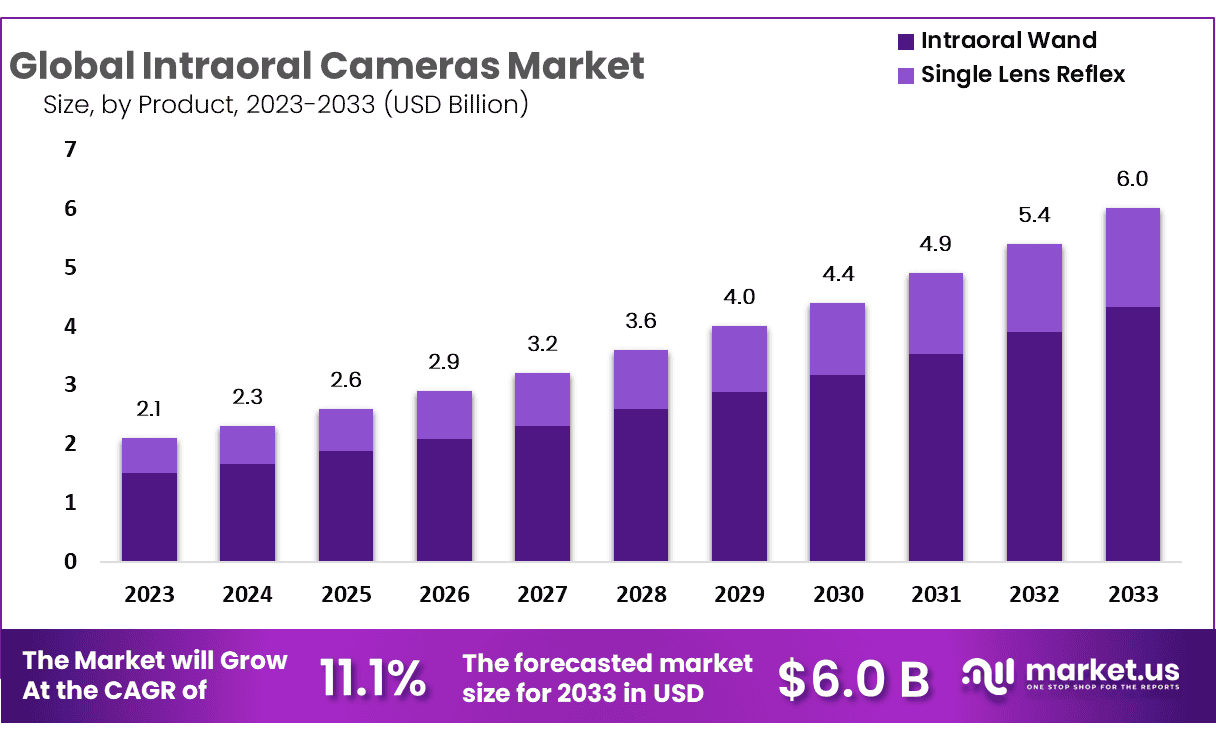
New York, NY – Jan 15, 2026 – The Global Intraoral Cameras Market size is expected to be worth around USD 6.0 Billion by 2033 from USD 2.1 Billion in 2023, growing at a CAGR of 11.1% during the forecast period from 2023 to 2033.
Intraoral cameras are increasingly being adopted in modern dental practices due to their ability to support accurate diagnosis and improve patient understanding. These compact imaging devices are designed to capture high-resolution images of the oral cavity, including teeth, gums, and other hard-to-see areas, which are displayed in real time on a chairside monitor.
The basic formation of an intraoral camera includes a lightweight handheld wand, a high-definition camera sensor, LED illumination, and a connection interface that links the device to a display system or dental software. The integrated LED lights are used to provide consistent illumination, ensuring clear visibility even in low-light areas of the mouth. Images captured by the camera can be stored digitally, allowing for easy documentation and long-term patient record management.
Intraoral cameras are widely used for detecting dental caries, cracks, plaque accumulation, and soft tissue abnormalities. By providing magnified visual evidence, these devices support more informed clinical decisions and enhance treatment planning. In addition, visual presentation of oral conditions is known to improve patient engagement, as treatment needs can be clearly explained using real images rather than verbal descriptions alone.
The growing focus on preventive dentistry and digital dental solutions is supporting the integration of intraoral cameras across clinics and hospitals. As dental practices continue to prioritize efficiency, accuracy, and patient-centric care, intraoral cameras are expected to remain a standard diagnostic tool, contributing to improved clinical outcomes and higher levels of patient trust.
Key Takeaways
- Market Size & Growth: The intraoral cameras market is projected to reach approximately USD 6.0 billion by 2032, rising from USD 2.1 billion in 2022, registering a compound annual growth rate (CAGR) of 11.1% during the forecast period.
- Product Analysis: By product type, the intraoral wand segment led the market, contributing more than 72.1% of global revenue in 2023, driven by its ease of use and widespread clinical adoption.
- Technology Analysis: Based on technology, fiber optic cameras represented the largest segment, accounting for over 38.1% of total global revenues in 2023, supported by superior image quality and reliability.
- End-Use Analysis: The dental clinics segment dominated the market, capturing the highest revenue share of 80.2% in 2023, reflecting the growing use of intraoral cameras in routine dental diagnostics.
- Regional Analysis: North America emerged as the leading regional market, holding more than 36.3% of global revenue in 2023, with a market value of approximately USD 0.764 billion.
Regional Analysis
North America emerged as the leading regional market in 2023, accounting for more than 36.3% of global revenue and reaching a market value of USD 0.764 billion. Market expansion in the region is primarily driven by the high incidence of dental disorders, including periodontitis, gingivitis, and dental caries. In addition, the presence of well-established and technologically advanced healthcare infrastructure, along with a high concentration of dental clinics, continues to support sustained market growth across North America.
The Asia Pacific intraoral cameras market is anticipated to witness rapid growth during the forecast period. This expansion is largely supported by the rising development of the healthcare and medical sectors in emerging economies within the region. Increasing awareness of oral health, growing expenditure on dental care, and the rising inflow of medical tourists seeking cost-effective dental treatments are expected to further accelerate market growth in Asia Pacific.
Emerging Trends
- Integration with Artificial Intelligence (AI): Intraoral cameras are increasingly being integrated with artificial intelligence to support the automated identification of dental conditions such as dental caries and periodontal disease. This development contributes to improved diagnostic consistency, reduces the likelihood of oversight, and enhances clinical workflow efficiency.
- Advancements in Imaging Technology: The adoption of high-definition (HD) and three-dimensional (3D) imaging technologies is enabling clearer and more detailed visualization of intraoral structures. These improvements support more accurate clinical assessments and contribute to improved treatment planning outcomes.
- Enhanced Patient Communication: The use of intraoral cameras allows dental professionals to share real-time visual evidence of oral health conditions with patients. This increased transparency improves patient understanding, strengthens trust, and supports higher levels of treatment acceptance and compliance.
Use Cases
- Improved Diagnostic Accuracy: High-resolution imaging provided by intraoral cameras supports the early and precise detection of conditions such as tooth decay, cracks, and gingival disease, enabling more informed clinical decision-making and optimized treatment strategies.
- Patient Education and Engagement: Real-time visualization of intraoral conditions enhances patient awareness and understanding of their oral health status. This visual approach encourages active patient involvement and supports preventive care behaviors.
- Documentation and Record-Keeping: Intraoral cameras enable systematic visual documentation of oral health conditions over time. This capability supports longitudinal monitoring, treatment evaluation, and compliance with clinical and insurance documentation requirements.
- Efficiency in Treatment Planning: Detailed intraoral images assist dental practitioners in developing precise and well-structured treatment plans. This improves interdisciplinary communication and contributes to greater procedural efficiency.
- Teledentistry Applications: In the context of expanding remote dental services, intraoral cameras play a critical role by enabling virtual oral assessments. This application enhances access to dental care, supports timely clinical guidance, and improves continuity of care in remote or underserved areas.
Frequently Asked Questions on Intraoral Cameras
- How do intraoral cameras benefit dental practices?
Intraoral cameras enhance diagnostic accuracy by providing magnified real-time images of oral conditions. Their use improves patient understanding, increases treatment acceptance, supports digital record keeping, and contributes to efficient and transparent clinical workflows. - What types of intraoral cameras are available?
Intraoral cameras are available as wand-based, USB-connected, wireless, and fiber optic models. Each type varies by image quality, connectivity, and ease of use, allowing dental professionals to select devices based on clinical and operational requirements. - Are intraoral cameras safe for patients?
Intraoral cameras are non-invasive and safe for routine dental use. They do not emit harmful radiation and are designed for patient comfort, making them suitable for frequent examinations across all age groups. - What factors are driving the intraoral cameras market growth?
Market growth is driven by rising prevalence of dental diseases, increasing adoption of digital dentistry, technological advancements in imaging devices, and growing emphasis on preventive dental care across clinics and hospitals worldwide. - Which end-use segment dominates the intraoral cameras market?
Dental clinics represent the dominant end-use segment due to high patient footfall, frequent diagnostic procedures, and increasing investments in advanced dental technologies to improve service quality and operational efficiency. - Which region leads the global intraoral cameras market?
North America leads the global market due to advanced healthcare infrastructure, high dental care expenditure, widespread adoption of digital tools, and a strong presence of established dental clinics and technology providers. - What is the future outlook for the intraoral cameras market?
The market outlook remains positive, supported by rising demand in emerging economies, growth in medical tourism, and continued innovation in dental imaging technologies, which are expected to expand adoption across global dental care settings.
Conclusion
The intraoral cameras market is positioned for sustained growth, supported by the increasing adoption of digital dentistry and the rising emphasis on preventive oral healthcare. These devices have become essential diagnostic tools due to their ability to deliver high-resolution, real-time visualization, improve clinical accuracy, and enhance patient communication.
Strong market performance is being driven by technological advancements, including HD, 3D, and AI-enabled imaging, alongside growing utilization in dental clinics. Regional expansion, particularly in North America and Asia Pacific, further strengthens market prospects. Overall, intraoral cameras are expected to remain integral to modern, patient-centric dental practices worldwide.
Discuss your needs with our analyst
Please share your requirements with more details so our analyst can check if they can solve your problem(s)




