


Table of Contents
Overview
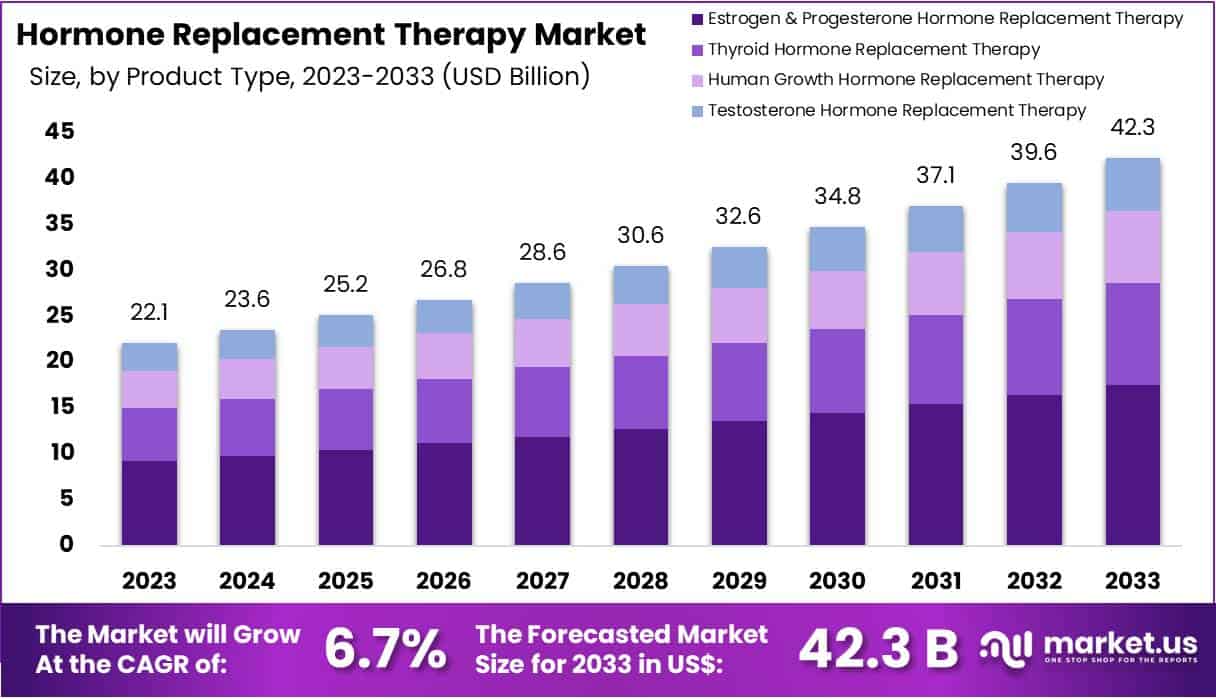
New York, NY – Feb 26, 2026 – The Global Hormone Replacement Therapy Market Size is expected to be worth around US$ 42.3 Billion by 2033 from US$ 22.1 Billion in 2023, growing at a CAGR of 6.7% during the forecast period 2024 to 2033.
Hormone Replacement Therapy (HRT) is a clinically established treatment designed to restore hormonal balance in individuals experiencing deficiencies or age-related hormonal decline. It is primarily indicated for the management of symptoms associated with menopause, andropause, thyroid disorders, and other endocrine imbalances. The therapy involves the administration of hormones such as estrogen, progesterone, testosterone, or thyroid hormones to compensate for reduced natural production within the body.
The global demand for Hormone Replacement Therapy has increased steadily, driven by the rising aging population and growing awareness regarding long-term health management. It has been observed that women aged 45–55 represent a significant proportion of HRT users, as menopause-related symptoms such as hot flashes, mood instability, sleep disturbances, and bone density loss are effectively addressed through regulated hormone supplementation. In men, testosterone replacement therapy has been increasingly adopted to manage fatigue, reduced muscle mass, and decreased libido associated with hormonal decline.
Advancements in drug delivery systems, including transdermal patches, gels, injections, and oral formulations, have improved patient compliance and safety profiles. Bioidentical hormone therapies are also gaining attention due to their structural similarity to naturally occurring hormones.
Clinical supervision remains essential to ensure appropriate dosage, risk assessment, and monitoring of potential side effects. Overall, Hormone Replacement Therapy continues to play a critical role in improving quality of life and supporting healthy aging across global populations.
Key Takeaways
- In 2023, the Hormone Replacement Therapy market generated revenue of US$ 22.1 billion. A compound annual growth rate (CAGR) of 6.7% is projected during the forecast period, with the market expected to reach US$ 42.3 billion by 2033.
- Based on product type, the market is categorized into estrogen & progesterone hormone replacement therapy, thyroid hormone replacement therapy, human growth hormone replacement therapy, and testosterone hormone replacement therapy. Among these, the estrogen & progesterone segment dominated in 2023, accounting for a 41.6% market share.
- By route of administration, the market is segmented into oral, transdermal, parenteral, and others. The oral segment held a prominent position in 2023, capturing 48.7% of the total market share.
- In terms of application, the market is divided into male hypogonadism, growth hormone deficiency, menopause, hypothyroidism, and others. The menopause segment emerged as the leading application area, representing 37.5% of the overall revenue share in 2023.
- Based on distribution channel, the market is segmented into hospital pharmacies, retail pharmacies, and online pharmacies. Hospital pharmacies led the segment with a revenue share of 52.8% in 2023.
- Regionally, North America dominated the global hormone replacement therapy market, securing a market share of 40.1% in 2023.
Regional Analysis
North America accounted for the largest share of the Hormone Replacement Therapy market in 2023, contributing 40.1% of total revenue. Market leadership has been supported by strong awareness levels, early diagnosis of hormonal imbalances, and a high prevalence of thyroid-related disorders.
According to the American Thyroid Association, nearly 12% of the U.S. population is expected to develop thyroid disease during their lifetime, with approximately 20 million individuals currently affected. The growing burden of hypothyroidism and menopause-related conditions has significantly strengthened demand for hormone therapies across the region.
Asia Pacific is projected to register the fastest CAGR over the forecast period. Growth is being driven by increasing incidence of menopause-related vasomotor symptoms and improving awareness regarding treatment options. A study published by the North American Menopause Society reported that 43% to 83% of women in East Asia experience hot flashes and night sweats, supporting expanding regional demand.
Emerging Trends
- Growth in Bioidentical Hormone Use: Bioidentical hormones are increasingly adopted as they closely replicate natural human hormones. These formulations are perceived to offer improved safety and reduced side effects. Rising patient preference for personalized, compounding-based therapies is accelerating this segment’s expansion.
- Personalized Treatment Plans: Personalized hormone therapy is gaining traction through data-driven treatment models. Patient-specific factors such as hormone levels, age, and lifestyle are assessed to optimize outcomes. This targeted approach enhances efficacy, minimizes adverse effects, and improves long-term treatment satisfaction.
- New Delivery Methods: Advanced delivery systems including patches, gels, creams, and implants are transforming hormone therapy administration. These alternatives provide sustained release, improved absorption, and higher patient compliance compared to traditional oral formulations, strengthening overall therapeutic effectiveness and convenience.
- Men’s Hormonal Health Awareness: Awareness regarding testosterone deficiency among men is expanding significantly. Increasing diagnosis of low testosterone levels and reduced social stigma are encouraging therapy adoption. Testosterone replacement is becoming integrated into mainstream preventive healthcare strategies for aging male populations.
- Digital Health Integration: Digital platforms and telehealth services are enhancing hormone therapy management. Remote consultations, wearable monitoring devices, and mobile applications enable continuous tracking of treatment progress. This integration improves accessibility, dosage precision, and patient engagement across diverse demographics.
Use Cases
- Managing Menopause Symptoms: Hormone Replacement Therapy is widely utilized to alleviate menopausal symptoms such as hot flashes, sleep disturbances, and mood instability. Estrogen and progesterone supplementation improves quality of life while supporting bone density preservation under controlled medical supervision.
- Treating Hypothyroidism: Hormone therapy for hypothyroidism involves synthetic thyroid hormone supplementation to restore metabolic balance. Regular administration effectively reduces fatigue, weight fluctuations, and depressive symptoms. Long-term monitoring ensures stable hormone levels and sustained physiological functioning in affected individuals.
- Pediatric Growth Hormone Deficiency: Growth hormone therapy supports children diagnosed with deficiency disorders by promoting normal height progression and skeletal development. Timely intervention improves muscle strength and overall growth outcomes, with dosage adjustments guided by continuous clinical assessment.
- Addressing Male Hypogonadism: Testosterone replacement therapy is implemented to manage male hypogonadism characterized by low energy, reduced libido, and muscle loss. Controlled hormone restoration enhances physical performance, mood stability, and overall well-being when administered under professional supervision.
- Hormone Therapy for Gender Transition: Hormone therapy is a critical component of gender-affirming care. Estrogen or testosterone administration supports development of desired secondary sexual characteristics, contributing to psychological well-being, social confidence, and alignment between physical traits and gender identity.
Frequently Asked Questions on Hormone Replacement Therapy
- Who is eligible for Hormone Replacement Therapy?
Hormone Replacement Therapy is generally recommended for individuals experiencing moderate to severe menopausal symptoms, premature menopause, or clinically diagnosed hormone deficiencies. Eligibility is determined after medical evaluation, considering age, health history, symptom severity, and potential risk factors. - What are the benefits of Hormone Replacement Therapy?
Hormone Replacement Therapy is associated with reduction in hot flashes, night sweats, mood instability, and vaginal dryness. It also supports bone density preservation and reduces osteoporosis risk. In selected patients, improved quality of life and metabolic stability have been observed. - What are the potential risks of Hormone Replacement Therapy?
Certain risks have been identified, including increased probability of blood clots, stroke, and specific cancers depending on therapy duration and formulation. Risk levels vary based on patient profile, dosage, and administration route, making individualized medical supervision essential. - What types of Hormone Replacement Therapy are available?
Hormone Replacement Therapy is available in systemic and localized forms, including oral tablets, transdermal patches, gels, injections, and vaginal preparations. Therapies may involve estrogen-only formulations or combined estrogen-progesterone regimens depending on patient-specific clinical requirements. - Which regions dominate the Hormone Replacement Therapy Market?
North America currently holds a significant market share due to advanced healthcare systems and high awareness levels. Europe follows closely, while Asia-Pacific is projected to experience accelerated growth driven by expanding patient pool and healthcare modernization. - What is the future growth potential of the Hormone Replacement Therapy Market?
The market is expected to demonstrate consistent growth over the forecast period, supported by innovation in personalized hormone therapies and increasing demand for preventive healthcare solutions. Strategic collaborations and product pipeline expansion are likely to enhance competitive positioning.
Conclusion
Hormone Replacement Therapy continues to demonstrate strong clinical and commercial relevance, supported by rising hormonal disorder prevalence and expanding aging populations. The market, valued at US$ 22.1 billion in 2023, is projected to reach US$ 42.3 billion by 2033, reflecting a CAGR of 6.7%.
Dominance of estrogen and progesterone therapies, oral administration routes, and menopause applications highlights established demand patterns. Regional leadership by North America and rapid growth in Asia Pacific further reinforce expansion prospects. Advancements in personalized care, bioidentical formulations, and digital health integration are expected to sustain long-term market momentum.
Discuss your needs with our analyst
Please share your requirements with more details so our analyst can check if they can solve your problem(s)




