


Table of Contents
Overview
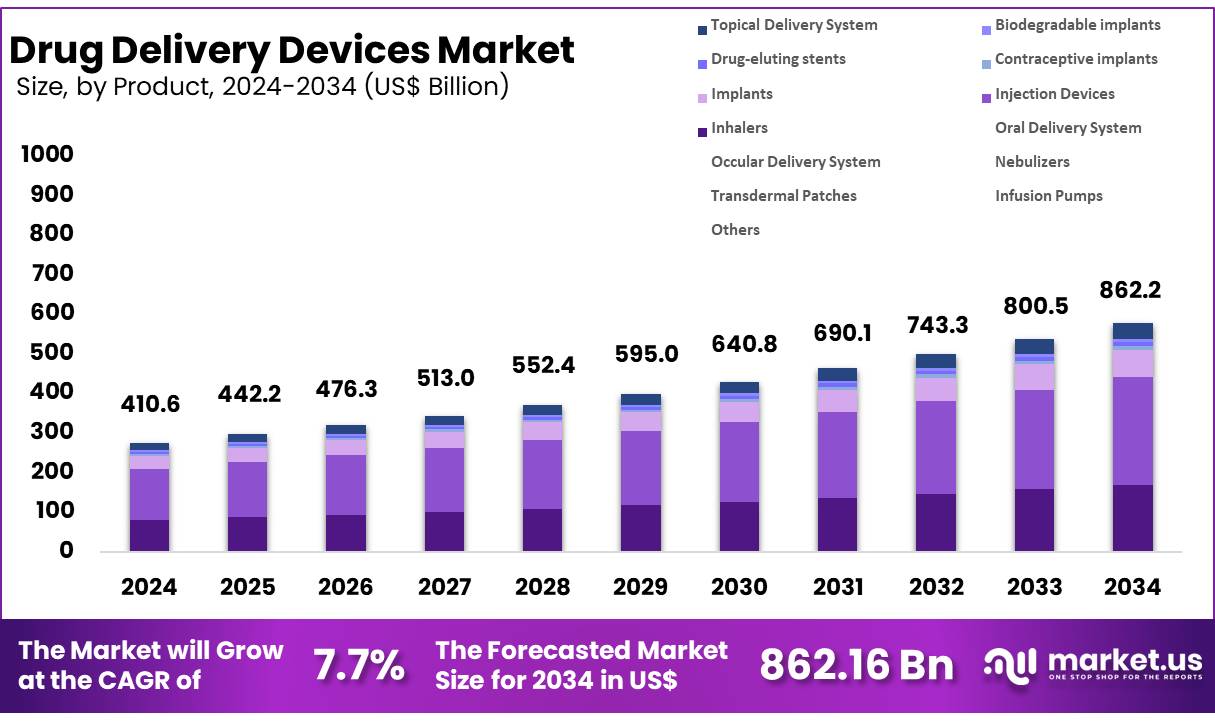
New York, NY – Dec 16, 2025 – Global Drug Delivery Devices Market size is expected to be worth around US$ 862.16 Billion by 2034 from US$ 410.61 Billion in 2024, growing at a CAGR of 7.7% during the forecast period 2025 to 2034. In 2024, North America led the market, achieving over 38.8% share with a revenue of US$ 159.32 Billion.
The drug delivery devices market represents a critical component of the global healthcare ecosystem, enabling the safe, accurate, and efficient administration of pharmaceutical products. Drug delivery devices are designed to deliver medications into the human body through various routes, including oral, injectable, inhalation, transdermal, and implantable methods. These devices play a vital role in improving treatment outcomes by enhancing dosage accuracy, patient compliance, and therapeutic effectiveness.
The development of drug delivery devices has been driven by the increasing prevalence of chronic diseases such as diabetes, cardiovascular disorders, respiratory conditions, and cancer. The growing demand for self-administration therapies and home-based healthcare solutions has further supported market expansion. Devices such as syringes, auto-injectors, inhalers, infusion pumps, and transdermal patches are widely adopted across hospitals, clinics, and homecare settings.
Technological advancements have led to the integration of smart features, including digital monitoring, dose tracking, and connectivity with healthcare systems. These innovations are aimed at reducing medication errors and improving patient adherence. In addition, the shift toward biologics and personalized medicine has increased the need for advanced delivery systems capable of handling complex drug formulations.
From a regulatory perspective, drug delivery devices are subject to stringent quality and safety standards to ensure patient protection. Continuous investments in research and development are being undertaken to enhance device performance and user convenience.
Overall, the drug delivery devices market is expected to demonstrate steady growth, supported by rising healthcare expenditure, technological progress, and an increasing focus on patient-centric treatment approaches.
Key Takeaways
- In 2024, the Drug Delivery Devices market recorded a revenue of US$ 410.61 billion and is projected to expand at a CAGR of 7.7%, reaching US$ 862.16 billion by 2034.
- Based on product type, the market is categorized into Inhalers, Injection Devices, Implants, Contraceptive Implants, Drug-Eluting Stents, Biodegradable Implants, Topical Delivery Systems, Oral Delivery Systems, Ocular Delivery Systems, Nebulizers, Transdermal Patches, Infusion Pumps, and Others, with Injection Devices emerging as the leading segment, accounting for 31.4% market share in 2024.
- By application, the market is segmented into Oncology, Infectious Diseases, Respiratory Diseases, Diabetes, Cardiovascular Diseases, Autoimmune Diseases, Central Nervous System Disorders, and Others, wherein Oncology dominated the market, capturing 29.2% of the total share.
- In terms of end users, the market is divided into Hospitals, Diagnostic Centers, Ambulatory Surgery Centers/Clinics, Home Care Settings, and Others, with Hospitals remaining the largest revenue-generating segment, holding a 44.8% share.
- Regionally, North America maintained its leadership position in 2024, accounting for 38.8% of the global Drug Delivery Devices market.
Regional Analysis
North America led the global drug delivery devices market, capturing a significant share due to several factors. The region benefits from a well-established healthcare infrastructure, which includes advanced medical facilities, widespread insurance coverage, and substantial healthcare spending. This robust system supports the demand for effective drug delivery solutions.
Additionally, the high prevalence of chronic diseases such as diabetes, cardiovascular disorders, and respiratory illnesses further drives the market. Technological advancements, particularly in connected and wearable drug delivery devices, have improved patient compliance and treatment outcomes. Furthermore, key players like BD, Medtronic, and Gerresheimer, who have a strong presence in North America, contribute to the market’s growth through continuous innovation and expansion.
The combination of these factors has positioned North America at the forefront of the drug delivery devices market, making it the leading region globally. For instance, in May 2023, the U.S. Food and Drug Administration has approved the Beta Bionics iLet ACE Pump and iLet Dosing Decision Software for individuals aged six and older with type 1 diabetes. These devices, when paired with a compatible FDA-cleared integrated continuous glucose monitor (iCGM), will create the iLet Bionic Pancreas system. This innovative automated insulin dosing (AID) system utilizes an algorithm to calculate and manage insulin delivery.
Emerging Trends
- Millirobots for Drug Delivery: Research activities are increasingly focused on miniature, swimming robotic systems capable of delivering drugs with high precision inside the human body. These systems are expected to significantly improve treatment accuracy and real-time therapeutic monitoring.
- Ultrasound-Targeted Drug Delivery (UTDD): The application of ultrasound-induced microbubble cavitation is gaining momentum as a method to enhance drug permeability at specific target sites, particularly in oncology, where localized drug uptake is critical.
- Automated Insulin Delivery Systems: The convergence of continuous glucose monitoring technologies with automated insulin pumps is advancing, enabling more accurate, responsive, and personalized diabetes management solutions.
- Telemedicine-Driven Drug Delivery: The growing adoption of telemedicine platforms is supporting remote prescribing, monitoring, and management of drug delivery, thereby improving patient access and continuity of care.
- Continuous Manufacturing Technologies: Pharmaceutical manufacturers are increasingly transitioning from traditional batch processing to continuous manufacturing, resulting in improved production efficiency, enhanced quality assurance, lower operational costs, and reduced environmental impact.
- AI-Enabled Medical Devices: The integration of artificial intelligence into drug delivery devices, including smart insulin pens, is expanding. These devices support dosage optimization, adherence tracking, and real-time patient monitoring.
- Drug Repurposing: The reuse of approved drugs for new therapeutic indications is gaining importance as a strategy to reduce development timelines, costs, and regulatory risks associated with novel drug discovery.
- Smart Injectable Devices: Innovations in smart injectable technologies are enabling real-time dose control and patient response monitoring, thereby improving treatment outcomes and enhancing patient safety.
- Expansion of Generic Drug Options: Patent expirations are driving the availability of generic alternatives for biologics and complex drug delivery systems, improving affordability and broadening patient access to advanced therapies.
- Nanotechnology in Drug Delivery: The continued development of nanotechnology-based delivery systems is supporting more targeted drug delivery, improved bioavailability, and a reduction in systemic side effects.
Key Use Cases
- Chronic Disease Management: Drug delivery devices such as insulin pumps and automated injectors enable patients with long-term conditions to manage medication schedules and dosages with greater accuracy and independence.
- Targeted Therapy: Advanced delivery platforms used in treatments such as chemotherapy allow drugs to be directed to specific tissues or organs, enhancing therapeutic effectiveness while minimizing adverse effects.
- Pediatric Care: Child-specific drug delivery devices are designed to ensure precise dosing and safe administration, addressing the heightened sensitivity of pediatric patients to medication variability.
- Geriatric Care: User-friendly devices, including pre-filled syringes and simplified inhalers, support medication adherence among elderly patients who may face physical or cognitive challenges.
- Vaccination: Needle-free delivery systems, such as jet injectors, are increasingly used to improve vaccination acceptance and compliance, particularly among individuals with needle aversion.
- Pain Management: Transdermal drug delivery systems provide sustained pain relief through non-invasive administration, reducing gastrointestinal complications associated with oral medications.
- Nutritional Support: Enteral feeding pumps are widely used in clinical settings to deliver controlled nutritional support to patients unable to consume food orally.
- Hormone Replacement Therapy: Implantable drug delivery devices enable the controlled and sustained release of hormones for applications including contraception and menopause treatment.
- Infection Control: Nebulizers facilitate direct drug delivery to the respiratory system, supporting effective treatment of pulmonary and respiratory infections.
- Allergic Emergencies: Auto-injectors, such as epinephrine pens, provide rapid, life-saving intervention during severe allergic reactions by enabling immediate drug administration.
Frequently Asked Questions on Drug Delivery Devices
- What are the major types of drug delivery devices?
Major drug delivery devices include inhalers, injectors, infusion pumps, transdermal patches, nasal sprays, and implantable systems. Each device type is engineered to deliver drugs through specific administration routes based on clinical requirements and drug formulation. - How do drug delivery devices improve patient outcomes?
Drug delivery devices enhance patient outcomes by enabling precise dosing, sustained drug release, reduced side effects, and improved adherence to treatment regimens. These benefits are especially significant in chronic disease management and long-term therapeutic applications. - What role does technology play in modern drug delivery devices?
Advanced technologies such as smart sensors, connectivity, and automated dosing systems are increasingly integrated into drug delivery devices. These innovations support real-time monitoring, personalized therapy, data tracking, and improved treatment accuracy across diverse healthcare settings. - Which therapeutic areas use drug delivery devices most extensively?
Drug delivery devices are widely used in diabetes, respiratory disorders, cardiovascular diseases, oncology, and autoimmune conditions. High prevalence of chronic diseases and increasing self-administration trends significantly support demand across these therapeutic segments. - What factors are driving the growth of the drug delivery devices market?
Market growth is driven by rising chronic disease prevalence, increasing geriatric population, technological advancements, and growing demand for home-based healthcare. Improved drug formulations and emphasis on patient-centric delivery systems further support market expansion. - Which regions dominate the drug delivery devices market?
North America and Europe dominate the market due to advanced healthcare infrastructure, high adoption of innovative devices, and strong regulatory frameworks. Asia-Pacific is expected to witness faster growth driven by expanding healthcare access and population growth. - What is the future outlook of the drug delivery devices market?
The market outlook remains cautiously optimistic, supported by smart drug delivery systems, biologics growth, and personalized medicine trends. Continued investment in research, digital integration, and minimally invasive technologies is expected to sustain long-term market growth.
Conclusion
The drug delivery devices market remains a foundational pillar of modern healthcare, supporting safe, precise, and patient-centric medication administration. Sustained growth is being driven by the rising burden of chronic diseases, increasing preference for self-administration, and rapid technological integration across delivery platforms. Advancements in smart, connected, and targeted delivery systems are enhancing therapeutic outcomes while improving adherence and safety.
Strong regulatory oversight, continued research investment, and expanding applications across oncology, diabetes, and respiratory care further reinforce market momentum. Overall, the market outlook remains stable and growth-oriented, supported by innovation, healthcare infrastructure expansion, and evolving treatment paradigms.
Discuss your needs with our analyst
Please share your requirements with more details so our analyst can check if they can solve your problem(s)




