


Table of Contents
Overview
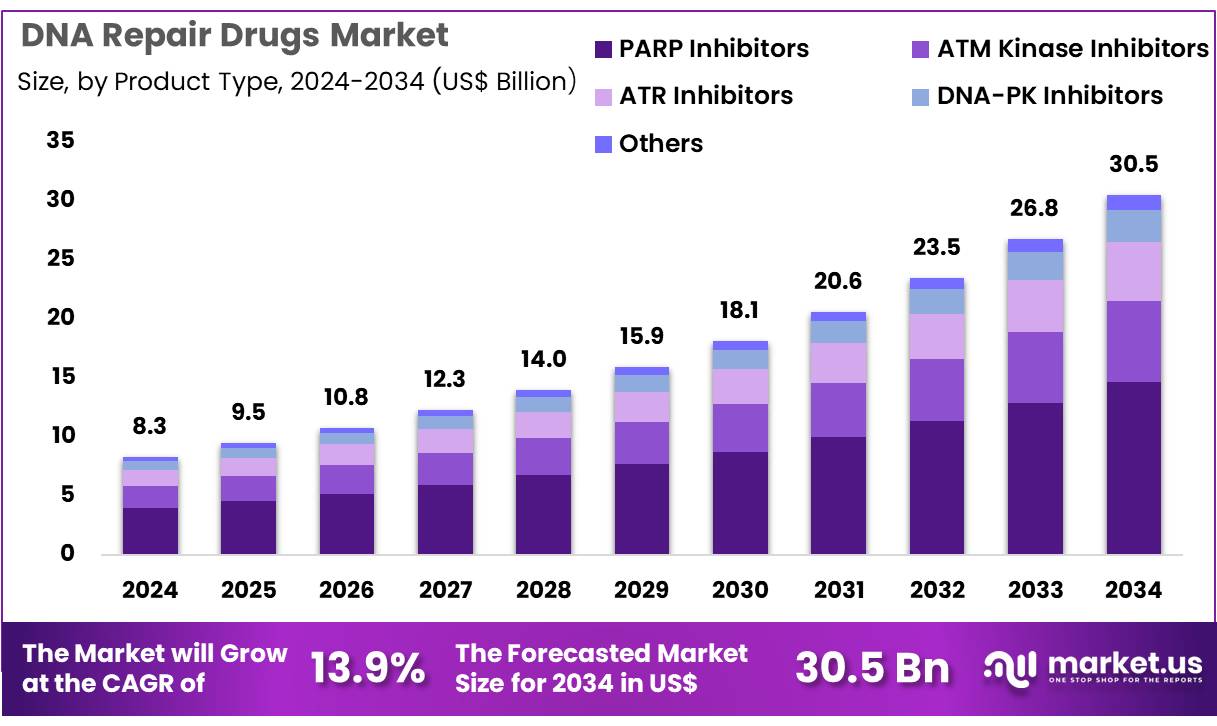
New York, NY – Dec 05, 2025 – Global DNA Repair Drugs Market size is expected to be worth around US$ 30.5 Billion by 2034 from US$ 8.3 Billion in 2024, growing at a CAGR of 13.9% during the forecast period 2025 to 2034. In 2024, North America led the market, achieving over 38.8% share with a revenue of US$ 3.2 Billion.
The global DNA repair drugs market is witnessing steady expansion as advancements in precision medicine and oncology continue to accelerate therapeutic innovation. Growth in the market has been attributed to increasing cancer incidence, rising demand for targeted therapies, and expanding research focused on genomic instability and DNA repair pathways. Strong emphasis on early-stage clinical programs and the adoption of synthetic lethality approaches have further supported market progression.
The market has been characterized by active development of PARP inhibitors, ATM/ATR inhibitors, and DNA-PK inhibitors. PARP inhibitors have maintained a dominant position due to widespread clinical acceptance in ovarian, breast, and prostate cancers. Continued investment by biopharmaceutical companies in next-generation DNA repair agents has been observed, particularly in combination therapies aimed at improving treatment response and overcoming drug resistance.
North America has accounted for a significant share of revenue, driven by robust R&D infrastructure and high treatment adoption rates. The Asia–Pacific region is expected to register notable growth, supported by expanding healthcare expenditure and rising clinical trial activity. Strategic collaborations between pharmaceutical companies and research institutes have strengthened drug discovery pipelines and enhanced translational research outcomes.
Regulatory support for novel oncology therapies has facilitated accelerated approvals and increased the commercialization potential of emerging candidates. As the understanding of DNA damage response mechanisms deepens, the market is expected to benefit from continuous scientific progress and expanding therapeutic applications across multiple cancer types.
The rising clinical focus on personalized oncology and precision-based interventions is anticipated to sustain long-term demand for DNA repair drugs, reinforcing the market’s position as a key component of future cancer treatment strategies.
Key Takeaways
- In 2024, the DNA repair drugs market generated US$ 8.3 billion in revenue and recorded a CAGR of 13.9%, with projections indicating an increase to US$ 30.5 billion by 2034.
- Based on product type, the market is segmented into PARP inhibitors, ATM kinase inhibitors, ATR inhibitors, DNA-PK inhibitors, and others, with PARP inhibitors leading the segment in 2024, accounting for 48.2% of total share.
- By application, the market is categorized into cancer therapy, genetic disorders, neurodegenerative diseases, immune deficiencies, and rare genetic syndromes, with cancer therapy representing the largest portion at 48.6%.
- Within the end-user segment, the market is divided into hospital pharmacies, retail pharmacies, online pharmacies, and specialty clinics, where hospital pharmacies emerged as the leading contributor, holding 52.1% of total revenue.
- Regionally, North America dominated the industry landscape in 2024, capturing 38.8% of the overall market share.
Regional Analysis
North America is Leading the DNA Repair Drugs Market
North America held the highest revenue share of 38.8%, supported by strong advancements in precision oncology and the rising detection of patients with homologous recombination deficiency (HRD) or gene-specific mutations. Continued approvals by the U.S. Food and Drug Administration (FDA) for therapies targeting DNA repair pathways have expanded treatment opportunities for patients with hard-to-treat cancers.
Breast cancer cases in U.S. females reached 279,731 in 2022, and ovarian cancer cases are projected to reach 20,890 in 2025, as reported by the CDC and the National Cancer Institute’s SEER program. These patient populations represent key candidates for targeted DNA repair therapies. AstraZeneca’s PARP inhibitor, Lynparza, recorded US$ 6.141 billion in global sales in 2024, reflecting strong market adoption.
Asia Pacific Expected to Experience the Highest CAGR
The Asia Pacific region is anticipated to register the fastest CAGR, driven by rising incidence rates of cancers responsive to DNA repair therapies, improving diagnostic infrastructure, and increasing healthcare spending. China’s National Medical Products Administration (NMPA) approved 48 first-in-class innovative drugs in 2023, with oncology remaining a leading focus, indicating a favorable regulatory environment for advanced treatments.
Japan’s Pharmaceuticals and Medical Devices Agency (PMDA) has also continued to approve new oncology therapies, supporting broader patient access. Government investment in healthcare is rising significantly, with China’s expenditure on health and family planning reaching RMB 2,034.8 billion (US$ 280 billion) by the end of 2024, strengthening access to specialized medicines and accelerating the adoption of precision-based therapeutic approaches.
Emerging Trends
- Growing Focus on Targeted Therapy: A rising emphasis on targeted therapy has encouraged the development of drugs that act on specific DNA repair mechanisms associated with cancer progression. This precision reduces unnecessary toxicity and enhances treatment outcomes. By directing action toward defined molecular defects, targeted agents demonstrate improved clinical effectiveness and support the creation of highly specialized therapeutic options.
- Personalized Medicine Is Gaining Ground: Personalized medicine is expanding rapidly due to improved genetic testing capabilities that identify patient-specific DNA repair deficiencies. These insights support tailored drug selection aligned with individual genomic profiles. Personalized treatment enhances therapeutic response, minimizes avoidable side effects, and strengthens overall patient outcomes, making individualized approaches increasingly central in DNA repair drug development strategies.
- Combination Treatments Are Becoming Popular: Combination regimens are receiving greater attention as DNA repair drugs demonstrate improved results when administered with chemotherapy, immunotherapy, or radiation. This strategy attacks tumors through multiple biological pathways, raising treatment success rates. Evidence from clinical studies shows superior effectiveness and potential survival benefits, encouraging ongoing research focused on multi-therapy approaches that reduce resistance.
- Expansion Beyond Cancer Treatment: Although oncology remains the primary application area, research efforts are extending the use of DNA repair drugs to neurodegenerative diseases and rare genetic disorders linked to DNA damage. This expansion broadens therapeutic potential, creates new market opportunities, and supports innovation that could benefit patients with limited existing treatment options across diverse clinical segments.
- Increased Investment in Research & Development: Rising pharmaceutical investment in research and development has strengthened discovery efforts targeting diverse DNA repair pathways. Enhanced funding accelerates molecule identification, supports advanced preclinical evaluation, and drives innovation toward safer and more effective therapies. A growing pipeline of drug candidates is expected to bolster future market expansion and improve patient access to novel treatments.
- Emergence of Biomarkers to Guide Therapy: Biomarkers that identify DNA repair deficiencies are becoming essential tools for optimizing treatment selection. Their use enables clinicians to match patients with therapies most likely to be effective. This biomarker-guided approach increases treatment precision, enhances response rates, reduces unnecessary exposure, and is rapidly becoming a standard component of DNA repair–based therapeutic strategies.
Use Cases
- Treatment of Certain Types of Cancer: DNA repair drugs are used effectively in cancers driven by defective DNA repair mechanisms, particularly ovarian, breast, and prostate cancers with BRCA mutations. These therapies exploit tumor vulnerabilities to block growth and improve outcomes. Their targeted action supports significant clinical benefits and has become a critical component of modern cancer treatment strategies.
- Overcoming Resistance to Chemotherapy: Chemotherapy resistance often arises when cancer cells repair treatment-induced DNA damage. DNA repair drugs inhibit these repair pathways, restoring chemotherapy effectiveness. This combination approach enables renewed therapeutic response in previously resistant cases, enhancing clinical outcomes and providing a valuable strategy for managing tumors that fail to respond adequately to conventional chemotherapy alone.
- Personalized Cancer Therapy: Genetic testing identifies DNA repair abnormalities within a patient’s tumor, enabling physicians to select the most suitable DNA repair drug. Personalized therapy targets specific cellular weaknesses, improving treatment accuracy, reducing toxicity, and enhancing overall patient outcomes. This customized approach is increasingly integrated into modern oncology as precision-based cancer care becomes more widely adopted.
- Preventing Cancer Recurrence: Residual cancer cells can lead to disease recurrence after initial treatment. DNA repair drugs target these remaining cells by exploiting defects in repair mechanisms, helping prevent relapse. Maintenance therapy with these agents prolongs progression-free survival, strengthens long-term disease control, and provides patients with improved chances of maintaining durable remission over extended periods.
- Combination with Other Therapies: DNA repair drugs often demonstrate greater effectiveness when combined with chemotherapy, immunotherapy, or radiation. This multimodal approach attacks cancer through different mechanisms, improving response rates and overcoming resistance. Combination strategies expand therapeutic options, enhance clinical outcomes, and continue to guide research aimed at maximizing the effectiveness of DNA repair–based treatments.
Frequently Asked Questions on DNA Repair Drugs
- How do DNA repair drugs work?
These drugs function by blocking key enzymes responsible for repairing damaged DNA. When repair processes are disrupted, cancer cells accumulate lethal mutations, resulting in apoptosis. This mechanism supports improved treatment outcomes, particularly in genetically unstable tumors. - Which diseases are treated with DNA repair drugs?
DNA repair drugs are primarily used in the treatment of cancers such as breast, ovarian, pancreatic, and prostate cancers. Their application is driven by genetic mutations like BRCA1 and BRCA2, where impaired DNA repair creates therapeutic vulnerability. - What are PARP inhibitors?
PARP inhibitors are a major class of DNA repair drugs. They inhibit the PARP enzyme involved in single-strand DNA repair. Their use promotes synthetic lethality in cancer cells with BRCA mutations, improving the clinical management of advanced and recurrent cancers. - Are there side effects associated with DNA repair drugs?
Common side effects include fatigue, nausea, anemia, and reduced platelet counts. These effects arise from the suppression of DNA repair in rapidly dividing cells. Monitoring and dose adjustments are generally implemented to maintain treatment safety and patient tolerance. - Which regions dominate the DNA repair drugs market?
North America dominates the market due to strong research infrastructure, high healthcare spending, and rapid adoption of novel therapies. Europe follows closely, supported by active oncology research networks and growing acceptance of genetic testing and personalized cancer treatments. - Who are the key players in the DNA repair drugs market?
The market consists of established pharmaceutical companies developing PARP inhibitors and next-generation DNA repair modulators. Prominent players include AstraZeneca, Merck, Pfizer, GSK, and smaller biotech firms advancing targeted oncology pipelines through strategic collaborations. - What future opportunities exist in this market?
Future opportunities include combination therapies, novel targets beyond PARP, and expanded indications for existing drugs. Increasing investment in biomarker discovery and personalized oncology is expected to support robust development pipelines and enhance commercial attractiveness.
Conclusion
The global DNA repair drugs market is expected to maintain strong growth as demand for precision-based oncology continues to rise. Expansion has been supported by increasing cancer incidence, rapid advancement in targeted therapies, and sustained R&D investment focused on DNA damage response pathways. PARP inhibitors remain the leading product class, while emerging agents and combination strategies are strengthening future opportunities.
North America continues to lead, with Asia–Pacific projected to grow rapidly due to improving healthcare infrastructure. As biomarker-driven treatment and personalized medicine advance, the market is positioned for long-term expansion and broader therapeutic applications across multiple cancer types.
Discuss your needs with our analyst
Please share your requirements with more details so our analyst can check if they can solve your problem(s)




