


Table of Contents
Overview
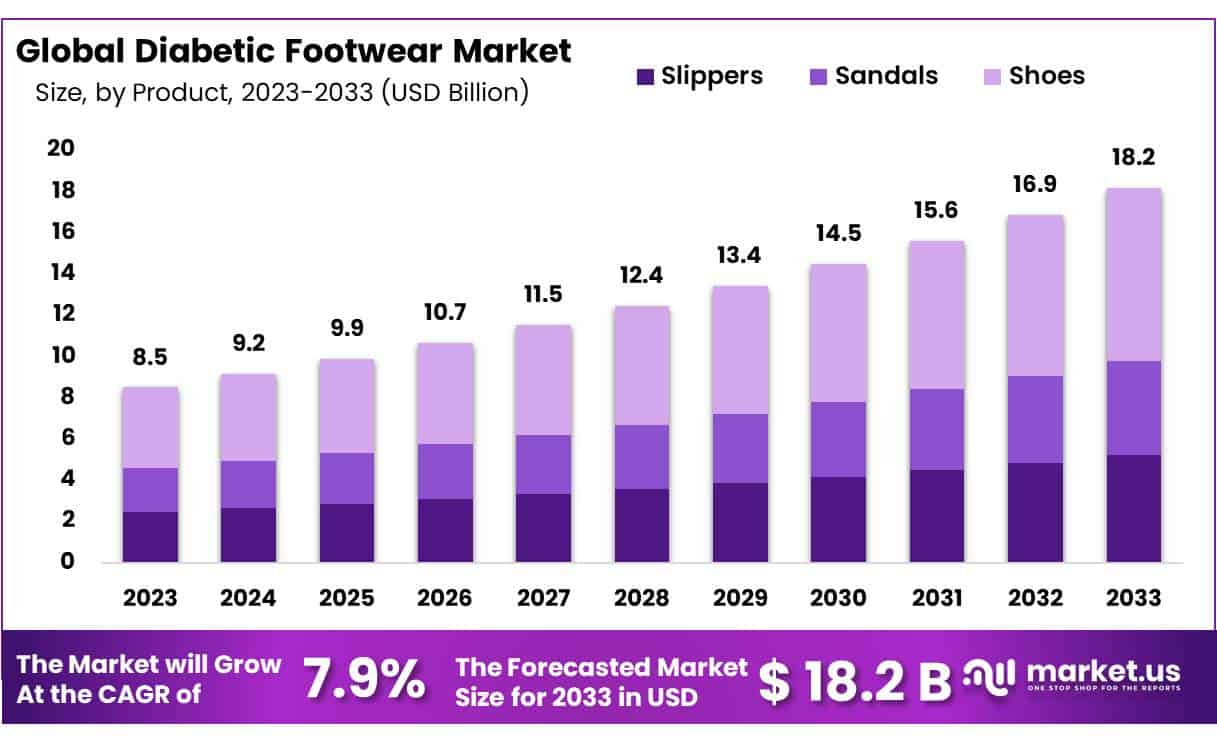
New York, NY – Jan 29, 2026 – The Global Diabetic Footwear Market size is expected to be worth around USD 18.2 Billion by 2033 from USD 8.5 Billion in 2023, growing at a CAGR of 7.9% during the forecast period from 2024 to 2033.
The global diabetic footwear segment is witnessing steady growth, driven by the rising prevalence of diabetes and increasing awareness of foot-related complications associated with the condition. Diabetic footwear is specifically designed to reduce pressure points, enhance blood circulation, and minimize the risk of ulcers, infections, and amputations. As a result, its adoption is expanding across both clinical and consumer healthcare settings.
Diabetic footwear is typically manufactured using soft, breathable materials and seamless interiors to prevent skin irritation. Features such as extra depth, wide toe boxes, cushioned insoles, and shock-absorbing soles are integrated to provide enhanced comfort and stability. These design elements support proper weight distribution and reduce mechanical stress on sensitive areas of the foot, which is critical for diabetic patients.
The market is supported by growing recommendations from healthcare professionals, including podiatrists and orthopedic specialists. In addition, the expansion of geriatric populations and the increasing incidence of obesity are contributing to higher demand for preventive foot care solutions. Technological advancements in footwear design and materials are further improving product performance and patient compliance.
Distribution channels have diversified, with products increasingly available through hospitals, specialty stores, pharmacies, and online platforms. Manufacturers are focusing on combining medical functionality with aesthetic appeal to improve user acceptance and daily wearability.
Overall, the diabetic footwear market is expected to maintain consistent growth, supported by preventive healthcare trends, rising disease awareness, and continuous innovation in therapeutic footwear solutions.
Key Takeaways
- Market Size: The diabetic footwear market is projected to reach approximately USD 18.2 billion by 2033, increasing from USD 8.5 billion in 2023.
- Market Growth: The market is anticipated to expand at a compound annual growth rate (CAGR) of 7.9% over the forecast period spanning 2024 to 2033.
- Product Analysis: Diabetic footwear demonstrated strong market penetration, accounting for an estimated 36.2% share of the total market in 2023.
- Distribution Channel Analysis: Online distribution channels remained the leading sales platform, capturing approximately 55.6% of the overall diabetic footwear market share.
- Regional Analysis: North America maintained a dominant position in 2023, representing nearly 39.8% of global diabetic footwear sales.
Regional Analysis
North America accounted for a substantial share of diabetic footwear sales in 2023, with 39.8% of the global market concentrated in the region. This strong demand is primarily driven by the high prevalence of diabetes, as individuals affected by the condition frequently experience nerve damage and impaired blood circulation. These complications significantly increase the risk of foot ulcers and, in severe cases, lower-limb amputations. As a result, diabetic footwear is increasingly adopted as a preventive solution to reduce clinical risks and support long-term foot health.
Canada has demonstrated notable growth in diabetic footwear demand, supported by technological advancements in footwear design and a rapidly aging population that is more vulnerable to diabetes-related complications. According to Statistics Canada’s 2022 report, approximately 27.7% of individuals aged 50 years and above in the country are living with diabetes. This demographic trend has intensified the need for preventive and therapeutic foot care solutions.
In addition, public health initiatives and government-backed programs have played a meaningful role in strengthening disease awareness. Programs such as the CARMEN Initiative, Be He@lthy Be Mobile, and the Cuban Plan for Diabetes Education have contributed to improved understanding of diabetes risks and long-term complications. These efforts have positively influenced consumer behavior, encouraging early adoption of diabetic footwear and supporting sustained market growth across the region.
Emerging Trends
- Integration of Smart Technologies: Diabetic footwear is increasingly being developed with embedded sensors that measure foot pressure, temperature, and movement. These smart insoles generate real-time data, allowing potential complications to be identified early and managed through timely clinical intervention.
- Adoption of Advanced Manufacturing Techniques: Manufacturing methods such as 3D printing are being utilized to produce highly customized insoles with complex structural designs. This approach improves pressure redistribution, enhances comfort, and increases overall therapeutic effectiveness.
- Artificial Intelligence–Based Personalization: AI-enabled platforms are being applied to assess individual gait patterns and foot biomechanics. Based on this analysis, personalized footwear recommendations are generated, leading to improved patient compliance and better clinical outcomes.
- Increased Emphasis on Aesthetics and Comfort: Manufacturers are focusing on combining medical functionality with modern design and enhanced comfort. This shift supports regular usage by patients and improves long-term adherence to therapeutic footwear.
Key Use Cases
- Prevention of Diabetic Foot Ulcers: Therapeutic diabetic footwear is designed to evenly distribute plantar pressure, which significantly reduces ulcer formation. Clinical studies suggest that ulcer recurrence rates can be reduced from approximately 83% to 26% with proper footwear use.
- Continuous Monitoring of Foot Health: Sensor-enabled insoles monitor pressure and temperature variations and notify users of abnormal patterns. This capability supports early detection of complications and enables prompt medical attention.
- Improvement in Mobility and Quality of Life: By minimizing pain, improving support, and enhancing stability, diabetic footwear supports sustained mobility. This contributes positively to daily activity levels and overall quality of life for individuals with diabetes.
Frequently Asked Questions on Diabetic Footwear
- Why is diabetic footwear important for diabetic patients?
Diabetic footwear is important as it helps prevent foot ulcers, infections, and amputations caused by neuropathy and poor circulation. Proper footwear supports foot health by reducing friction, pressure points, and accidental injuries. - What features are commonly found in diabetic footwear?
Common features include extra depth, soft seamless interiors, shock-absorbing soles, wide toe boxes, and adjustable closures. These features collectively enhance comfort, accommodate deformities, and reduce the risk of skin breakdown. - Who should use diabetic footwear?
Diabetic footwear is recommended for individuals with diabetes, particularly those experiencing neuropathy, poor blood circulation, foot deformities, or a history of ulcers. It is also beneficial for elderly patients with sensitive or fragile feet. - Can diabetic footwear help prevent amputations?
Yes, diabetic footwear can significantly reduce the risk of lower-limb amputations by preventing foot ulcers and infections. Early adoption and consistent use support long-term foot protection and improved mobility among diabetic patients. - Which regions show strong demand for diabetic footwear?
North America and Europe show strong demand due to high diabetes prevalence and advanced healthcare infrastructure. Meanwhile, Asia-Pacific is witnessing rapid growth, supported by rising diabetes cases and improving access to medical footwear. - What role does technology play in the diabetic footwear market?
Technology plays a critical role through innovations such as pressure-mapping insoles, customized orthotic integration, and advanced cushioning materials. These developments improve product effectiveness and enhance patient compliance and comfort levels. - What is the future outlook for the diabetic footwear market?
The market outlook remains cautiously optimistic, supported by steady diabetes incidence, preventive healthcare adoption, and product innovation. Long-term growth is expected as healthcare systems increasingly emphasize foot complication prevention and patient quality of life.
Conclusion
The global diabetic footwear market is positioned for sustained and consistent growth, supported by rising diabetes prevalence, expanding geriatric populations, and increasing awareness of foot-related complications. Therapeutic footwear has become an essential preventive solution, reducing the risk of ulcers, infections, and amputations while improving patient mobility and quality of life.
Technological advancements, including smart insoles, AI-driven personalization, and advanced manufacturing techniques, are enhancing product effectiveness and user adherence. Strong healthcare recommendations, diversified distribution channels, and a growing focus on comfort and aesthetics are expected to further strengthen market adoption through 2033.
Discuss your needs with our analyst
Please share your requirements with more details so our analyst can check if they can solve your problem(s)




