


Table of Contents
Overview
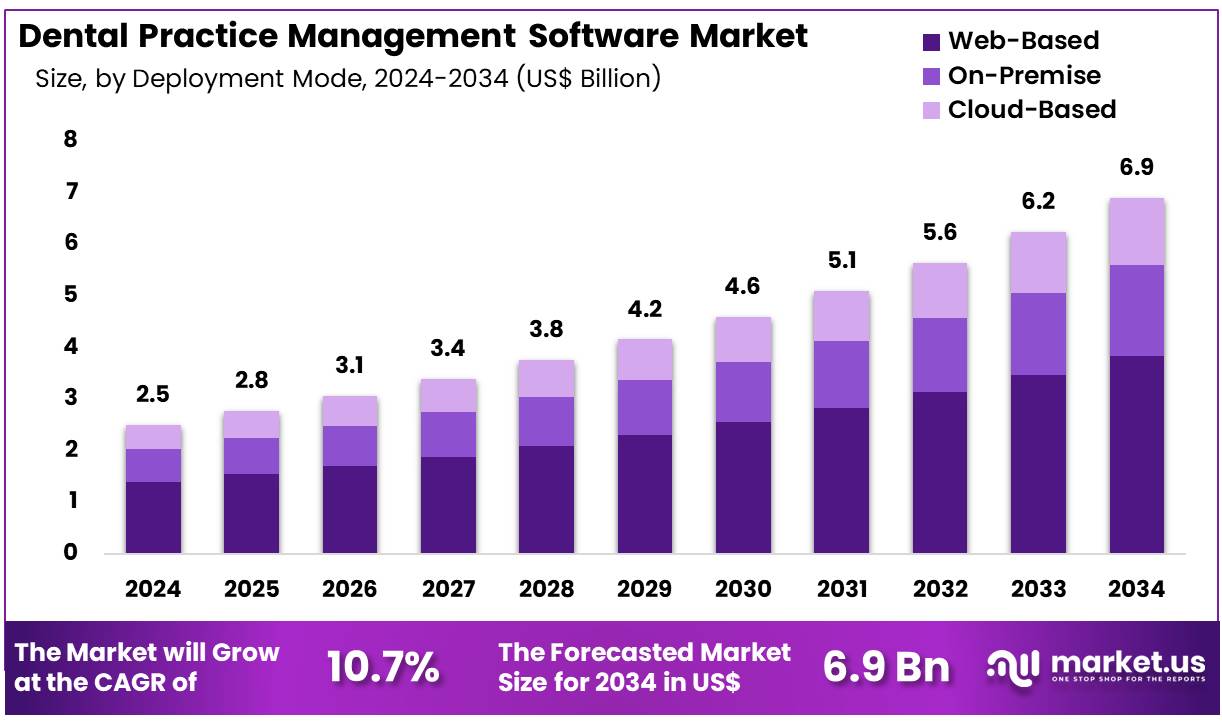
New York, NY – Dec 11, 2025 – Global Dental Practice Management Software Market size is expected to be worth around US$ 6.9 Billion by 2034 from US$ 2.5 Billion in 2024, growing at a CAGR of 10.7% during the forecast period 2025 to 2034. In 2024, North America led the market, achieving over 40.3% share with a revenue of US$ 1.0 Billion.
A new Dental Practice Management Software has been introduced to support clinics in achieving higher efficiency, improved patient engagement, and stronger financial performance. The platform has been designed to integrate clinical workflows, administrative tasks, and patient communication within a single interface. The adoption of such systems has been rising steadily, as the dental industry continues to prioritize digital transformation and optimized care delivery.
The software enables appointment scheduling, digital charting, treatment planning, billing, and insurance claims management. Automated reminders and integrated communication tools have been incorporated to support reduction in no-show rates and enhance patient compliance. Centralized data management ensures that clinical histories, imaging files, and patient records are securely stored and easily accessible.
The growth of the market has been driven by the increasing demand for streamlined workflows, the expansion of group dental practices, and the rising focus on operational transparency. Cloud-based deployment offers scalability, lower upfront investment, and enhanced accessibility across devices, which has contributed to widespread adoption among small and medium-sized practices.
The solution has been developed to bring measurable improvements in efficiency, with features that support real-time reporting, revenue cycle optimization, and regulatory compliance. The introduction of this platform is expected to strengthen digital capabilities within dental practices and support improved patient outcomes.
Key Takeaways
- In 2024, the dental practice management software market generated revenue of US$ 2.5 billion, supported by a 10.7% CAGR, and the market size is projected to reach US$ 6.9 billion by 2034.
- The deployment mode segment comprises web-based, on-premise, and cloud-based solutions, with web-based platforms leading in 2024 by capturing 55.6% of the market share.
- Based on application, the market is categorized into patient communication, payment processing, invoice/billing, insurance management, and other functions, with patient communication accounting for 43.5%, representing the largest share.
- By end user, the market is segmented into dental clinics, hospitals, and others, with dental clinics dominating the landscape and contributing 68.7% of total revenue in 2024.
- North America emerged as the leading regional market, securing a 40.3% share of global revenue in 2024.
Regional Analysis
North America accounted for the largest share of 40.3% in 2024, supported by the growing adoption of digital solutions among dental practices aiming to improve efficiency, streamline administrative workflows, and strengthen patient experience. The region’s well-established dental industry, dominated by independent practices, creates strong demand for practice management tools. In the U.S., nearly 73% of dentists operated independently in 2021, reflecting a substantial user base for scheduling, billing, insurance management, and electronic health record systems.
Industry leaders continue to reinforce market growth through technological investment. Henry Schein reported total net sales of US$ 12.7 billion in 2024, with its Global Technology segment rising by 4.7% from 2023. The company invested over US$184 million in research and development in 2023 to advance digital capabilities, contributing to sustained uptake of software solutions across dental settings.
Asia Pacific is projected to record the fastest CAGR during the forecast period due to modernization of healthcare infrastructure, increasing oral health awareness, and strong digital transformation initiatives. Countries such as China, India, Japan, and Australia are experiencing rising clinic establishments and expanding demand for advanced dental services. Government programs such as India’s Ayushman Bharat Digital Mission are further accelerating digital adoption. Technology providers, including Henry Schein and Dentsply Sirona, are expanding their presence, indicating increasing acceptance of digital dental management platforms across the region.
Emerging Trends
- Shift to Cloud-Based Solutions: The adoption of cloud-based dental practice software has increased as practices seek flexible access, reduced hardware costs, and stronger data security. Cloud systems enable remote access to patient records, support multi-device usage, and lower IT maintenance needs, improving operational efficiency and information protection.
- Integration with Digital Dentistry Tools: Dental practice software is increasingly integrated with digital tools such as intraoral scanners, digital X-rays, and 3D imaging. This integration centralizes clinical data, improves workflow efficiency, enhances diagnostic accuracy, reduces errors, and supports better treatment planning, establishing smoother operations in modern digital dental environments.
- Focus on Patient Experience: Dental software now emphasizes improved patient engagement through automated reminders, online appointment scheduling, and simplified billing. These features reduce no-shows, streamline communication, and support transparent payments, contributing to a smoother patient journey that strengthens satisfaction, trust, and long-term loyalty within dental practices.
- Data Analytics for Better Practice Management: Advanced analytics tools are being integrated into dental management platforms to assess appointment trends, patient feedback, and financial performance. These insights guide decisions related to staffing, marketing, and service optimization. Data-driven management supports operational efficiency, improved profitability, and more strategic practice growth.
- Tele-dentistry Support: Tele-dentistry capabilities allow virtual consultations for follow-ups and minor issues, expanding access to care. These tools reduce clinic crowding, save time, and support patients in remote areas. The trend enhances convenience and flexibility while maintaining continuity of dental care beyond traditional in-person visits.
- Mobile-Friendly Interfaces: Mobile-optimized dental software enables staff to access schedules, records, and treatment notes on smartphones or tablets. This mobility improves communication, accelerates decisions, and supports workflow efficiency. Mobile interfaces allow clinicians to remain responsive during busy workdays, aligning with the industry’s shift toward flexible digital tools.
Use Cases
- Appointment Scheduling and Reminders: Appointment software streamlines scheduling, prevents double-booking, and automates reminder notifications. These reminders reduce no-shows and cancellations, improving time management. Staff gain visibility into available slots, enhancing operational efficiency. Automated communication allows dentists to focus more on patient care rather than administrative scheduling tasks.
- Patient Records Management: Digital systems organize and store patient information, including histories, treatment plans, and imaging. Records are easily accessible during visits, supporting faster diagnoses and coordinated care. Paperless workflows reduce errors and clutter, improve internal communication, and ensure secure handling of sensitive clinical data for better patient experiences.
- Billing and Insurance Processing: Billing software automates invoice creation, payment processing, and insurance claim submission. This reduces paperwork, minimizes errors, and accelerates reimbursement. Practices benefit from clear financial reporting and improved cash flow visibility. Patients gain transparency in billing, while administrative workloads are reduced significantly through automation.
- Treatment Planning: Integrated treatment planning tools allow dentists to review past procedures, manage appointments, and design customized care plans. These systems support progress tracking and clear communication of treatment options. The streamlined approach enhances patient understanding, prevents scheduling conflicts, and promotes consistent, well-coordinated dental care delivery.
- Inventory Management: Inventory management tools track supply levels in real time, preventing shortages of critical materials. Automated alerts support timely reordering and reduce waste. This ensures uninterrupted clinical operations, cost control, and efficient stock handling, allowing staff to prioritize patient care instead of manual inventory monitoring.
- Patient Communication: Automated communication tools send reminders, follow-up instructions, and educational messages through email or text. This maintains patient engagement and supports oral health awareness. Practices benefit from time savings and consistent outreach, while patients receive clear, convenient updates that strengthen loyalty and improve overall care continuity.
Frequently Asked Questions on Dental Practice Management Software
- What is Dental Practice Management Software?
Dental practice management software is used to streamline clinic operations by integrating scheduling, billing, patient records, and workflow functions. Its use ensures structured administrative processes, enhanced patient handling, and more efficient coordination across clinical and financial activities. - How does the software improve clinic efficiency?
Efficiency is improved through automated appointments, digital charting, real-time billing, and centralized patient data. These features reduce manual work, minimize administrative errors, and enable smoother task execution across staff members, resulting in better time utilization and enhanced operational performance. - What features are commonly included?
Common features include patient scheduling, electronic health records, billing management, treatment planning, imaging integration, and analytics dashboards. These functionalities support seamless clinical documentation and coordinated patient care, while ensuring compliance with regulatory standards and operational continuity. - Can the software integrate with imaging systems?
Dental practice management software typically integrates with dental X-ray, intraoral cameras, and diagnostic imaging tools. This integration helps streamline diagnostic workflows by enabling immediate access to imaging files within patient records and improving treatment planning accuracy. - Is cloud-based software better than on-premise?
Cloud-based systems offer remote accessibility, lower initial costs, and automatic updates, while on-premise solutions provide greater control and localized data storage. The choice depends on infrastructure capacity, cybersecurity preferences, and long-term operational objectives of the dental practice. - How does the software support billing and insurance?
Billing modules manage claims submission, automate invoicing, and track reimbursements. Insurance integrations ensure accurate coding and real-time eligibility checks, leading to faster approval cycles and reduced administrative delays within the dental practice’s revenue management workflow. - Which regions dominate market adoption?
North America leads due to advanced healthcare infrastructure and strong digital readiness. Europe follows with rapid regulatory alignment, while Asia-Pacific demonstrates rising adoption driven by expanding dental care access and increased investments in practice digitalization. - Who are the major market players?
Prominent companies include Dentrix, Open Dental, Curve Dental, Eaglesoft, and Carestream Dental. Their offerings encompass extensive management functions, strong integration capabilities, and ongoing software improvements to support evolving clinical and operational requirements.
Conclusion
The dental practice management software market is experiencing steady expansion, supported by rising digital adoption, increasing operational demands, and the need for improved patient engagement. Cloud deployment, integrated clinical tools, and automated administrative functions have strengthened efficiency, reduced errors, and improved financial visibility across practices.
The dominance of dental clinics, strong uptake in North America, and rapid growth in Asia Pacific indicate sustained global momentum. Advancements in analytics, mobile access, and tele-dentistry are expected to further optimize workflows and enhance patient experience. Overall, the market is positioned for robust long-term growth as digital transformation accelerates within dental care settings.
Discuss your needs with our analyst
Please share your requirements with more details so our analyst can check if they can solve your problem(s)




