


Table of Contents
Overview
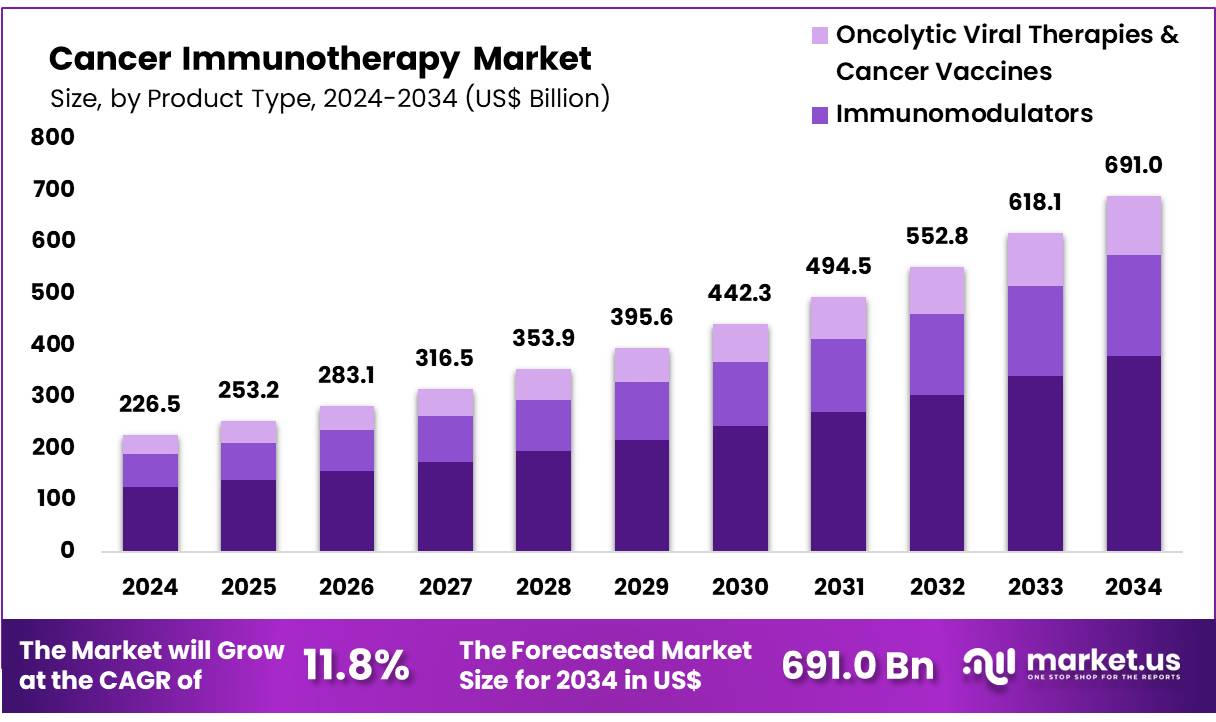
New York, NY – Dec 12, 2025 – Global Cancer Immunotherapy Market size is expected to be worth around US$ 691.0 Billion by 2034 from US$ 226.5 Billion in 2024, growing at a CAGR of 11.8% during the forecast period 2025 to 2034. In 2024, North America led the market, achieving over 41.1% share with a revenue of US$ 93.1 Billion.
Cancer immunotherapy is an advanced treatment approach that is designed to strengthen the body’s own immune system to identify, target, and eliminate cancer cells. Unlike traditional cancer treatments such as chemotherapy and radiation therapy, which directly destroy cancer cells, immunotherapy works by enhancing natural immune responses or restoring immune functions that cancer cells suppress.
The immune system is naturally equipped to detect abnormal cells. However, cancer cells often develop mechanisms to evade immune recognition. Cancer immunotherapy addresses this challenge by modifying immune pathways, activating immune cells, or removing barriers that prevent the immune system from functioning effectively. As a result, immune cells such as T cells can better recognize cancer-specific markers and initiate a targeted attack.
Several major types of cancer immunotherapy are currently used in clinical practice. These include immune checkpoint inhibitors, which block proteins that limit immune responses; monoclonal antibodies, which bind to specific cancer antigens; cancer vaccines, which stimulate immune recognition of tumor cells; and adoptive cell therapies, where immune cells are engineered or expanded outside the body and reinfused into the patient.
Immunotherapy has demonstrated significant clinical benefits across multiple cancer types, including melanoma, lung cancer, breast cancer, and certain blood cancers. In many cases, durable and long-term responses have been observed, indicating sustained immune protection against disease recurrence.
Ongoing research and clinical trials continue to expand the applications of cancer immunotherapy. Advances in biomarker identification, combination therapies, and personalized treatment strategies are expected to further improve patient outcomes. Cancer immunotherapy is increasingly viewed as a critical component of modern oncology and a key driver of innovation in cancer treatment.
Key Takeaways
- In 2024, the global cancer immunotherapy market recorded revenue of US$ 226.5 billion and is projected to expand at a CAGR of 11.8%, reaching US$ 691.0 billion by 2034.
- By product type, the market is categorized into monoclonal antibodies, immunomodulators, and oncolytic viral therapies & cancer vaccines, with monoclonal antibodies leading the segment and accounting for 55.0% of total market share in 2024.
- Based on application, the market includes lung cancer, breast cancer, colorectal cancer, melanoma, prostate cancer, head and neck cancer, ovarian cancer, pancreatic cancer, and others. Among these, lung cancer emerged as the leading application, capturing a 34.5% market share.
- In terms of end users, the market is segmented into hospitals & clinics, cancer research centers, and others, with hospitals & clinics dominating the landscape and contributing 59.5% of overall revenue.
- From a regional perspective, North America maintained its leadership position in 2024, holding a 41.1% share of the global cancer immunotherapy market.
Cancer Immunotherapy Statistics
- Global Research Landscape in Cancer Immunotherapy: Between 2000 and 2021, cancer immunotherapy research was conducted across 106 countries, reflecting its growing global importance. The United States emerged as the leading contributor, accounting for 6,739 publications, representing 35.89% of total research output. China followed with 4,213 publications (22.44%). Other significant contributors included Germany (8.94%), Italy (8.43%), and Japan (8.21%), indicating strong research activity across North America, Europe, and Asia.
- Rising Importance of Immunotherapy in Cancer Treatment: Cancer immunotherapy has become a prominent therapeutic approach by leveraging the body’s immune system to identify and eliminate cancer cells. This treatment modality has demonstrated strong clinical outcomes, particularly in melanoma, lung cancer, and certain lymphomas, where improvements in survival rates have been consistently reported.
- Key Applications of Cancer Immunotherapy: Several immunotherapy modalities have been extensively researched and adopted in clinical practice. These include immune checkpoint inhibitors, CAR-T cell therapy, and therapeutic cancer vaccines. Among these, immune checkpoint inhibitors especially PD-1 and PD-L1 inhibitors have significantly transformed treatment protocols for non-small cell lung cancer and melanoma, improving response rates and long-term outcomes.
- Global Cancer Burden: Prevalence and Mortality: In 2022, global cancer incidence reached approximately 20 million new cases, while cancer-related mortality stood at 9.7 million deaths. Lung cancer remained the most prevalent malignancy, with 2.5 million new cases, and was also the leading cause of cancer deaths, accounting for 1.8 million fatalities, or 18.7% of all cancer-related deaths worldwide.
- Five-Year Cancer Survival Trends: The global number of cancer survivors within five years of diagnosis was estimated at 53.5 million. However, survival outcomes vary significantly across populations. For example, in cervical cancer, five-year survival rates in the United States were estimated at 71% among white women, compared with 58% among black women, highlighting persistent disparities in healthcare access and outcomes.
- Geographic Inequalities in Cancer Outcomes: Approximately 70% of global cancer deaths occur in low- and middle-income countries, where access to advanced cancer care, including immunotherapy, remains limited. Less than 30% of low-income countries provide comprehensive cancer treatment services, compared with nearly 90% coverage in high-income countries, underscoring a significant global treatment gap.
- Cancer Coverage within Universal Health Systems: According to a World Health Organization survey, only 39% of countries include basic cancer management within their core health service packages. In addition, just 28% of countries offer palliative care services, including pain management, as part of universal health coverage, indicating insufficient integration of cancer care in many national health systems.
- Potential Impact of Improved Cancer Strategies: It has been estimated that up to 3.7 million lives could be saved each year through resource-appropriate interventions, including prevention, early diagnosis, and timely access to effective treatments such as immunotherapy. These strategies are particularly critical in resource-constrained settings.
- Immunotherapy and the Future of Oncology: Immunotherapy is expected to play an increasingly central role in the future of cancer treatment. Advances in personalized medicine, including therapies targeting specific genetic and molecular characteristics of tumors, are anticipated to improve treatment precision and outcomes. Ongoing global research and innovation in immunotherapy remain essential to enhancing survival rates and expanding alternatives to conventional treatments such as chemotherapy.
Regional Analysis
North America held the leading position in the cancer immunotherapy market, accounting for a revenue share of 41.1%. This dominance has been supported by a high cancer burden, continuous progress in immune-oncology research, and a favorable regulatory framework enabling faster approvals of innovative therapies. In the United States, 1,851,238 new cancer cases were reported in 2022, indicating a large patient base requiring advanced treatment options.
Canada also reported a strong disease burden, with 247,100 new cancer cases projected for 2024. Regulatory support from the U.S. FDA has accelerated market growth through approvals of novel immunotherapies, including Talvey and Elrexfio for multiple myeloma. Commercial performance further reflects market strength, as Merck’s Keytruda generated US$29.48 billion in global sales in 2024, while Bristol Myers Squibb’s Opdivo recorded solid revenue growth.
Asia Pacific is expected to register the fastest CAGR during the forecast period. Growth is being driven by rising cancer incidence, increasing healthcare expenditure, improved access to advanced treatments, and strong government support. China alone reported nearly 4.8 million new cancer cases in 2022, while the WHO estimated 2.37 million cases in Southeast Asia. Initiatives such as India’s launch of NexCAR19 CAR-T therapy in 2024 are expected to enhance accessibility and accelerate regional market expansion.
Key Use Cases
- Treatment of Metastatic Cancers: Immunotherapy is increasingly utilized in the management of metastatic cancers, including melanoma, non-small cell lung cancer, and renal cell carcinoma. Its application has expanded even in advanced disease stages, where durable responses and prolonged survival outcomes have been observed compared to conventional therapies.
- Advanced Melanoma Management: In patients with advanced melanoma, the use of immunotherapy as an early-line treatment has been associated with significant improvements in overall survival and progression-free survival. Clinical evidence indicates that initiating immunotherapy prior to targeted therapies can lead to more sustained disease control.
- Endometrial Cancer Therapy: In endometrial cancer, tumor-specific biological characteristics, particularly defects in DNA repair mechanisms, have been shown to influence responsiveness to immunotherapy. These findings support a more biomarker-driven approach to patient selection and treatment optimization.
- Lung Cancer Treatment Innovations: Targeted immunotherapy strategies in lung cancer, such as inhibition of the ART1 enzyme that enables tumor immune evasion, have demonstrated therapeutic effectiveness. These approaches highlight the potential of combining immune modulation with molecular targeting to improve treatment outcomes.
- Personalized and Comprehensive Cancer Care: Comprehensive cancer centers increasingly adopt personalized immunotherapy protocols tailored to individual patient profiles. Institutions such as Mays Cancer Center exemplify this approach, integrating immunotherapy into customized treatment plans to enhance clinical effectiveness and patient outcomes.
- Immune System Activation and Modulation: Immunotherapy functions by strengthening the immune system’s ability to recognize and eliminate cancer cells or by removing inhibitory signals that prevent effective immune responses. This dual mechanism underpins many modern immunotherapeutic strategies.
- Adoptive Cell Transfer Therapies: Adoptive cell transfer involves collecting and enhancing a patient’s own immune cells to improve their cancer-fighting capability. Techniques such as CAR T-cell therapy genetically modify T cells to more precisely identify and destroy malignant cells, particularly in certain hematologic cancers.
- Monoclonal Antibody-Based Treatments: Monoclonal antibodies are engineered to bind specific antigens on cancer cells or immune regulatory targets. By doing so, they enhance immune recognition and facilitate targeted destruction of tumor cells while limiting damage to healthy tissues.
- Cancer Vaccine Applications: Therapeutic cancer vaccines are designed to stimulate the immune system by introducing tumor-associated antigens. This approach promotes a targeted immune response aimed at preventing cancer progression or recurrence.
- Ongoing Research and Innovation: Continuous research and development efforts at leading institutions, such as the OSUCCC – James, are driving advancements in immunotherapy. These innovations are expanding treatment options, improving efficacy, and strengthening the role of immunotherapy in future cancer care strategies.
Frequently Asked Questions on Cancer Immunotherapy
- How does cancer immunotherapy work in the body?
Cancer immunotherapy works by activating immune cells, such as T cells, or by blocking mechanisms cancer uses to evade immune detection. This allows the immune system to identify cancer cells as threats and eliminate them effectively. - What types of cancer can be treated with immunotherapy?
Immunotherapy is used to treat cancers such as melanoma, lung cancer, bladder cancer, lymphoma, and certain breast and colorectal cancers. Its application is expanding as clinical trials demonstrate effectiveness across additional cancer types. - What are the main types of cancer immunotherapy?
The main types of cancer immunotherapy include immune checkpoint inhibitors, monoclonal antibodies, cancer vaccines, adoptive cell therapies such as CAR-T therapy, and cytokine therapies, each targeting the immune response through different biological mechanisms. - What are the benefits and limitations of cancer immunotherapy?
Cancer immunotherapy offers durable responses and improved survival in some patients. However, it may not be effective for all cancer types and can cause immune-related side effects due to excessive activation of the immune system. - Which immunotherapy segments dominate the market?
Immune checkpoint inhibitors dominate the cancer immunotherapy market due to their broad clinical applications and proven efficacy. Monoclonal antibodies and CAR-T therapies also represent high-growth segments, supported by strong research and commercialization activity. - What regions lead the cancer immunotherapy market?
North America leads the cancer immunotherapy market due to advanced healthcare infrastructure, high R&D spending, and early adoption of innovative therapies. Europe follows closely, while Asia-Pacific shows the fastest growth driven by expanding healthcare access.
Conclusion
Cancer immunotherapy has emerged as a transformative pillar of modern oncology, offering targeted, durable, and immune-driven treatment options across multiple cancer types. Strong clinical outcomes, expanding indications, and sustained innovation have reinforced its growing adoption worldwide.
Market expansion is being supported by robust research activity, favorable regulatory pathways, and rising global cancer burden, particularly in lung and melanoma indications. While access gaps persist across low- and middle-income regions, ongoing advances in personalized therapies, biomarkers, and combination strategies are expected to improve equity and outcomes. Overall, cancer immunotherapy is positioned as a long-term growth driver in global cancer care.
Discuss your needs with our analyst
Please share your requirements with more details so our analyst can check if they can solve your problem(s)




