


Table of Contents
Overview
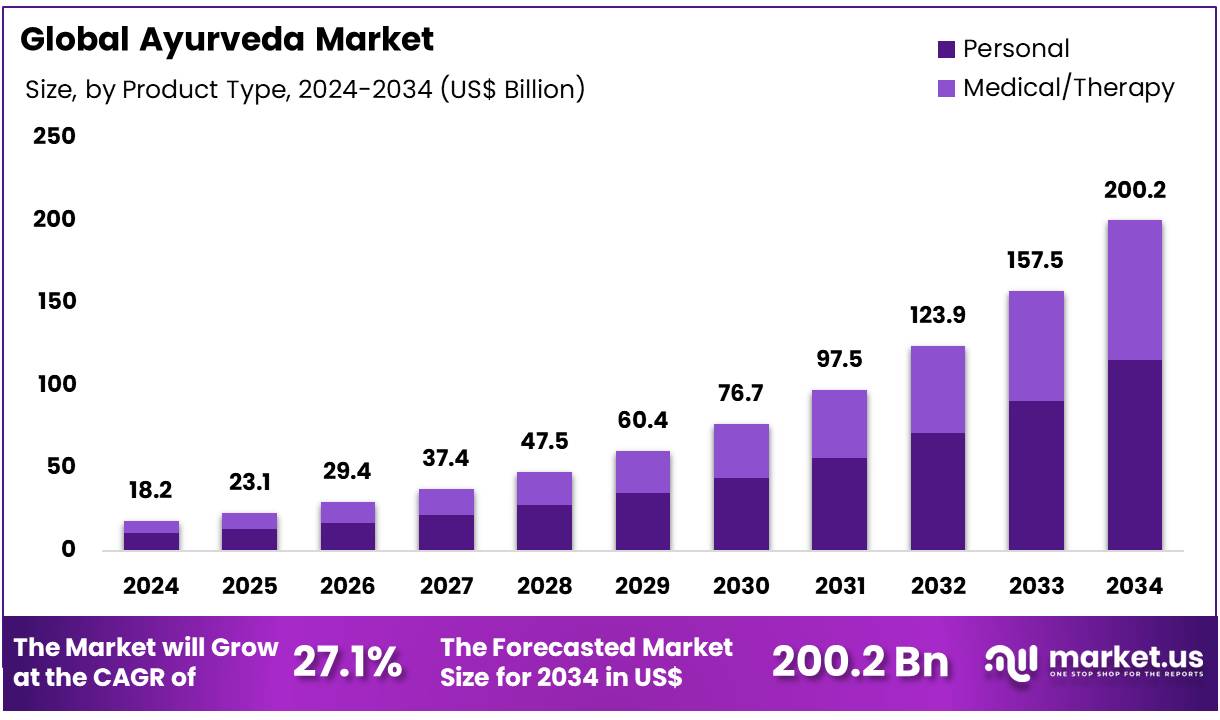
New York, NY – Dec 18, 2025 – Global Ayurveda Market size is expected to be worth around US$ 200.2 Billion by 2034 from US$ 18.2 billion in 2024, growing at a CAGR of 27.1% during the forecast period 2025 to 2034. In 2024, North America led the market, achieving over 37.8% share with a revenue of US$ 6.9 Billion.
Ayurveda is one of the world’s oldest holistic healthcare systems, with origins dating back more than 5,000 years in the Indian subcontinent. The system is based on the principle that health and wellness depend on a balanced relationship between the body, mind, and environment. Ayurveda focuses on disease prevention, long-term health maintenance, and natural healing practices rather than symptom-based treatment alone.
The foundational concept of Ayurveda is built around the theory of the three doshas Vata, Pitta, and Kapha which represent different combinations of the five natural elements: air, water, fire, earth, and space. Each individual is believed to possess a unique balance of these doshas, which determines physical characteristics, metabolic tendencies, and mental attributes. Imbalance among the doshas is considered a primary cause of illness.
Ayurvedic practices include the use of herbal formulations, dietary regulation, detoxification therapies, yoga, meditation, and lifestyle modifications. Treatments are typically personalized, taking into account an individual’s constitution, age, environment, and health condition. Natural ingredients such as herbs, minerals, and plant extracts are widely utilized due to their perceived safety and long-term benefits.
In recent years, Ayurveda has gained increased global attention due to the growing preference for natural, preventive, and sustainable healthcare solutions. Its integration into wellness, personal care, and nutraceutical markets reflects a broader shift toward traditional medicine systems supported by modern research and standardization efforts.
Key Takeaways
- In 2024, the market for ayurveda generated a revenue of US$ 18.2 billion, with a CAGR of 27.1%, and is expected to reach US$ 200.2 billion by the year 2034.
- The product type segment is divided into personal and medical/therapy, with personal taking the lead in 2024 with a market share of 57.8%.
- Considering form, the market is divided into herbal, mineral, and herbomineral. Among these, herbal held a significant share of 55.2%.
- Furthermore, concerning the application segment, the market is segregated into skin/hair, respiratory system, nervous system, infectious diseases, GI tract, cardiovascular system, and others. The skin/hair sector stands out as the dominant player, holding the largest revenue share of 34.1% in the ayurveda market.
- The distribution channel segment is segregated into direct sales, e-sales, and distance correspondence, with the direct sales segment leading the market, holding a revenue share of 42.6%.
- Considering end-user, the market is divided into hospitals & clinics and academia & research. Among these, hospitals & clinics held a significant share of 54.5%.
- North America led the market by securing a market share of 37.8% in 2024.
Regional Analysis
The Ayurveda market in North America, which accounted for a substantial 37.8% market share, recorded strong growth in 2024. This expansion was driven by increasing consumer inclination toward holistic and integrative healthcare, rising awareness of natural and traditional remedies, and growing demand for preventive healthcare solutions. Data from the National Center for Complementary and Integrative Health (NCCIH), under the US National Institutes of Health (NIH), highlights a notable rise in the adoption of complementary health approaches among US adults, with traditional alternative medicine and botanical products being widely used. This trend underscores a broader shift toward natural products and ancient healing systems, including Ayurveda.
Moreover, the rising burden of chronic diseases and growing interest in personalized wellness approaches have encouraged consumers to adopt Ayurvedic principles and formulations. Although precise revenue figures for exclusively Ayurvedic products in North America remain limited due to the lack of Ayurveda-only public entities, the overall growth in complementary health practices, along with the expanding regional presence of companies such as Himalaya Wellness Company and Dabur International, offering Ayurvedic-inspired products, supports the positive growth outlook of the market.
The Asia Pacific region is projected to register the highest CAGR over the forecast period, driven by strong structural and cultural factors. The Ayurveda market in this region is expected to witness robust expansion due to its deep-rooted traditional acceptance, particularly in countries such as India, increasing government initiatives, and the progressive integration of traditional medicine into national healthcare systems. Additionally, growing consumer preference for herbal and natural products continues to support market growth.
Government support has been a critical growth enabler. The Ministry of AYUSH in India has significantly increased its budget allocation, rising from Rs. 1,939.76 crores in 2019–20 to Rs. 3,647.50 crores (approximately US$437 million) in 2023–24, reflecting a strong policy-level commitment to the development and global promotion of traditional medicine. Furthermore, India’s advancements in integrating Artificial Intelligence (AI) with traditional systems such as Ayurveda, as recognized by the World Health Organization (WHO) in July 2025, are expected to improve diagnostic precision and enable personalized preventive care, thereby accelerating adoption.
From a corporate perspective, leading players continue to strengthen the market landscape. Dabur India Ltd., a key participant in Ayurvedic and natural healthcare, reported full-year revenue of Rs. 12,563 crores (approximately US$1.5 billion) in FY 2024–25, compared to Rs. 12,404 crores in the previous year, with its healthcare segment serving as a major growth driver. This performance, combined with rising health awareness and expanding distribution networks across Asia Pacific, indicates a sustained and robust growth trajectory for the regional Ayurveda market.
Emerging Trends
- Growing Popularity of Personalized Wellness: Personalized wellness is gaining momentum as consumers seek solutions aligned with their body type and lifestyle. Ayurveda’s dosha-based approach supports customized skincare, nutrition, and wellness programs, offering targeted benefits and holistic care tailored to individual health needs.
- Integration with Modern Science: Ayurvedic companies are integrating traditional knowledge with modern science to enhance credibility. Standardized formulations, clinical testing, and innovative delivery formats improve product safety, efficacy, and convenience, supporting wider acceptance among global and evidence-driven consumers.
- Rise in Preventive Healthcare: Preventive healthcare adoption is increasing as consumers prioritize long-term wellness. Ayurvedic products for immunity, digestion, and stress management support daily health maintenance, aligning with growing awareness of lifestyle-related disorders and the shift from reactive to proactive care.
- Expansion of Online Retail and E-Commerce: E-commerce platforms are expanding the reach of Ayurvedic brands globally. Online channels enhance accessibility, education, and convenience through subscriptions and digital marketing, enabling brands to engage health-conscious consumers and penetrate new regional and international markets.
- Sustainability and Ethical Sourcing: Sustainability is becoming a key purchasing factor. Ayurvedic brands are emphasizing organic cultivation, ethical sourcing, and eco-friendly packaging. Transparency in supply chains supports environmental responsibility, strengthens brand trust, and appeals to environmentally conscious consumers worldwide.
- Global Acceptance and Export Growth: Global demand for Ayurvedic products is rising across North America, Europe, and Asia. Increasing interest in natural wellness solutions is driving exports, international partnerships, and product adaptation to global regulatory standards while maintaining traditional authenticity.
Use Cases
- Skincare and Beauty: Ayurvedic skincare products use natural ingredients like turmeric and sandalwood to nourish skin, reduce pigmentation, and delay aging. Free from harsh chemicals, these formulations suit sensitive skin and support long-term skin health and a naturally radiant complexion.
- Haircare Solutions: Ayurvedic haircare solutions focus on scalp nourishment and root strengthening. Herbal oils and shampoos containing amla and bhringraj help reduce hair fall and dandruff, delivering long-term hair health benefits without reliance on chemical-based treatments.
- Digestive Health: Ayurvedic digestive products support gut health through natural herbs like ginger and triphala. These remedies improve metabolism, reduce bloating, and enhance nutrient absorption, offering safe, long-term solutions that address root causes rather than temporary symptom relief.
- Stress Management and Mental Wellness: Ayurvedic stress management solutions promote mental balance using herbs such as ashwagandha and brahmi. These natural formulations support relaxation, sleep quality, and emotional stability, offering sustainable mental wellness without dependence on synthetic stimulants or sedatives.
- Immunity Boosters: Ayurvedic immunity boosters strengthen natural defense systems using herbs like tulsi, giloy, and amla. Designed for daily use, these products support preventive health, enhance resilience, and help protect against seasonal and environmental health challenges.
- Therapeutic Treatments: Ayurvedic therapeutic treatments, including Panchakarma and herbal massages, focus on detoxification and energy balance. Customized therapies support physical and mental rejuvenation, stress reduction, and long-term wellness, offering a natural alternative to conventional therapeutic approaches.
Frequently Asked Questions on Ayurveda
- What are the core principles of Ayurveda?
Ayurveda is based on the balance of three doshas—Vata, Pitta, and Kapha. Health is maintained when these biological energies remain balanced, while disease is believed to result from their imbalance. - How does Ayurveda differ from modern medicine?
Ayurveda focuses on preventive healthcare and root-cause treatment using natural remedies, whereas modern medicine emphasizes symptom management and pharmaceutical interventions. Personalized treatment and long-term wellness are central features of Ayurvedic practice. - Are Ayurvedic medicines considered safe?
Ayurvedic medicines are generally considered safe when produced under standardized conditions and consumed as prescribed. Safety is enhanced through quality control, regulatory compliance, and proper dosage, especially in clinically validated formulations. - What conditions are commonly treated with Ayurveda?
Ayurveda is widely used to manage chronic conditions such as digestive disorders, stress, arthritis, skin diseases, and lifestyle-related illnesses. It is also applied for immunity enhancement and overall wellness improvement. - What factors are driving growth in the Ayurveda market?
Market growth is driven by rising awareness of natural therapies, increasing prevalence of lifestyle diseases, government support for traditional medicine systems, and growing global demand for herbal and organic healthcare products. - Who are the key end users in the Ayurveda market?
Key end users include individual consumers, hospitals, wellness centers, pharmaceutical companies, and cosmetic manufacturers. Demand is particularly strong among health-conscious consumers seeking long-term wellness and preventive healthcare solutions.
Conclusion
Ayurveda continues to emerge as a significant pillar of the global healthcare and wellness landscape, supported by its preventive, personalized, and natural treatment philosophy. Strong market growth is being driven by rising consumer preference for holistic health solutions, increasing prevalence of lifestyle-related disorders, and supportive government initiatives, particularly in Asia Pacific.
The integration of traditional Ayurvedic knowledge with modern science, expanding application across personal care and therapeutics, and growing global acceptance further strengthen its outlook. Collectively, these factors position Ayurveda as a sustainable, high-growth healthcare system with long-term relevance in global wellness markets.
Discuss your needs with our analyst
Please share your requirements with more details so our analyst can check if they can solve your problem(s)




