


Table of Contents
Overview
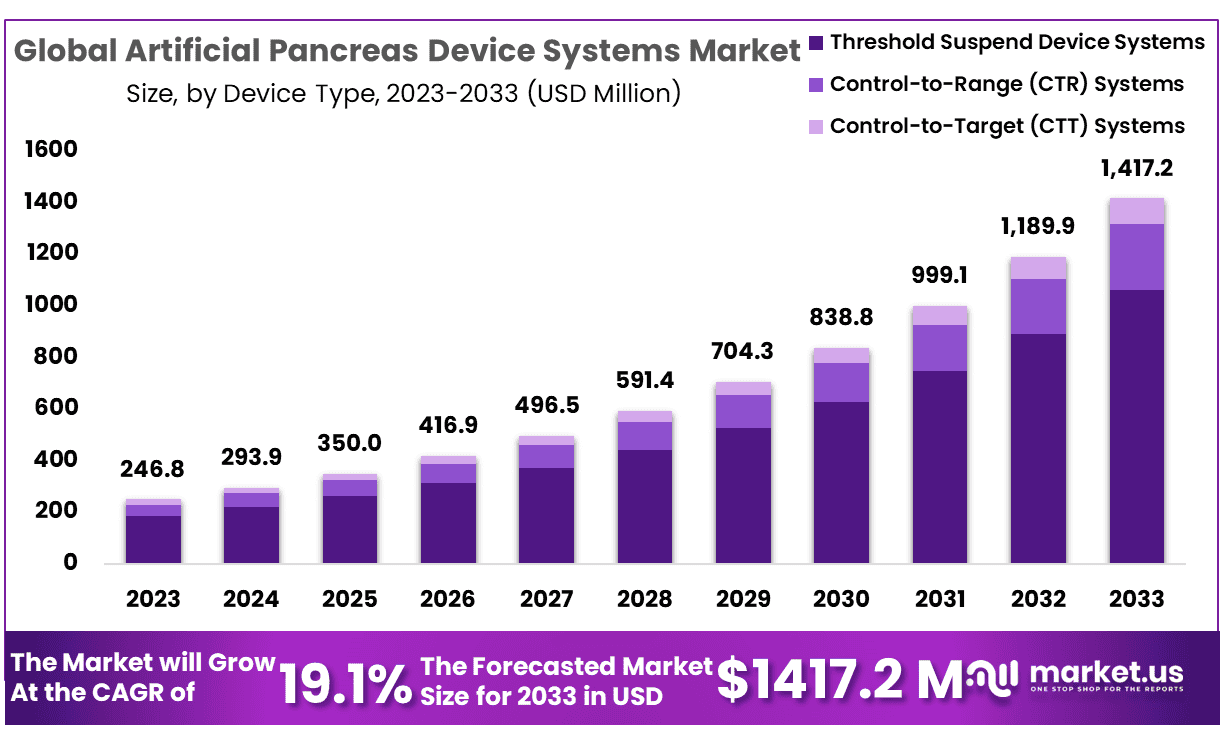
New York, NY – Jan 22, 2026 – The Global Artificial Pancreas Device Systems Market size is expected to be worth around USD 1417.2 Million by 2033 from USD 246.8 Million in 2023, growing at a CAGR of 19.1% during the forecast period from 2024 to 2033.
Artificial Pancreas Device Systems represent a significant advancement in diabetes management, particularly for individuals with type 1 diabetes and insulin-dependent type 2 diabetes. These systems are designed to automate glucose monitoring and insulin delivery, closely mimicking the glucose-regulating function of a healthy pancreas.
An artificial pancreas device system typically consists of three core components: a continuous glucose monitoring (CGM) sensor, an insulin infusion pump, and a control algorithm. The CGM sensor continuously measures glucose levels in real time and transmits the data to the control unit. Based on these readings, the control algorithm calculates the required insulin dose and directs the insulin pump to deliver precise amounts of insulin automatically.
The integration of these components enables closed-loop or hybrid closed-loop operation, reducing the need for frequent manual intervention. As a result, improved glycemic control can be achieved, along with a reduction in episodes of hypoglycemia and hyperglycemia. Clinical studies have demonstrated that the use of artificial pancreas systems is associated with increased time-in-range and enhanced quality of life for patients.
Growing adoption of digital health technologies, rising prevalence of diabetes, and continuous innovation in sensor accuracy and algorithm design are supporting the expansion of artificial pancreas device systems globally. Regulatory approvals in key markets and increasing awareness among healthcare professionals are further contributing to market development.
Overall, artificial pancreas device systems are positioned as a transformative solution in diabetes care, offering a more reliable, data-driven, and patient-centric approach to long-term glucose management.
Key Takeaways
- Market Size: The Artificial Pancreas Device Systems Market is projected to reach approximately USD 1,417.2 million by 2033, increasing from USD 246.8 million in 2023.
- Market Growth: The market is expected to expand at a compound annual growth rate (CAGR) of 19.1% during the forecast period from 2024 to 2033.
- Device Type Analysis: The threshold suspended system segment dominated the market in 2023, accounting for 74.9% of total global revenue.
- End-Use Analysis: Hospitals emerged as the leading end-use segment, representing 62.54% of the Artificial Pancreas Device Systems Market.
- Regional Analysis: North America held a dominant position with a 47.1% market share, generating USD 116.2 million in revenue in 2023.
- Cost as a Barrier: The high cost associated with artificial pancreas systems remains a key barrier to broader adoption, highlighting the importance of balancing technological innovation with cost efficiency.
- Research Opportunities: Ongoing research and development activities present significant opportunities for breakthrough innovations that can overcome existing limitations and improve affordability.
Regional Analysis
North America emerged as the leading market for artificial pancreas device systems in 2023, accounting for a 47.1% revenue share and generating USD 116.2 million. Market growth in the region is being driven by the rising prevalence of obesity, the presence of well-established reimbursement frameworks, and increasing awareness of advanced technologies for diabetes management.
Market expansion in North America is further supported by the strong presence of major industry players, high treatment expenditure, continuous technological advancements, and frequent product launches. In addition, the growing global burden of diabetes has attracted substantial public and private investments aimed at improving disease management. These factors are expected to accelerate the adoption of artificial pancreas device systems across the region.
The Asia Pacific artificial pancreas device systems market is projected to witness robust growth during the forecast period. This growth is largely attributed to increased healthcare spending, supportive government initiatives, and rising awareness programs focused on diabetes management. According to the International Diabetes Federation (IDF), India and China account for the largest populations of individuals living with diabetes worldwide.
Most countries in the Asia Pacific region are developing economies, where the prevalence of both type I and type II diabetes continues to rise. Despite the increasing disease burden, treatment costs remain comparatively lower, which supports broader access to care. Furthermore, rapid adoption of advanced medical technologies in developing countries is expected to further strengthen market growth in the region.
Emerging Trends
- Integration of Advanced Algorithms: Modern artificial pancreas device systems are increasingly incorporating advanced control algorithms, including artificial intelligence and machine learning. These technologies enable predictive glucose trend analysis and automated insulin adjustments, resulting in improved glycemic stability and a reduced incidence of hypoglycemic events.
- Miniaturization and Enhanced Wearability: There is a clear shift toward the miniaturization of artificial pancreas components to improve comfort and discretion. Compact, wearable devices with extended wear duration are gaining traction, supporting higher patient adherence and improving overall user experience in daily diabetes management.
- Growth of DIY Artificial Pancreas Systems: The emergence of do-it-yourself artificial pancreas systems reflects growing demand for personalized diabetes solutions. Built using open-source software and existing devices, these systems have intensified regulatory discussions around safety, standardization, and the need for reliable commercial alternatives.
Use Cases
- Pediatric Diabetes Management: Artificial pancreas device systems have demonstrated strong clinical benefits in pediatric populations with type 1 diabetes. Clinical evidence indicates improved glycemic control in children aged 2 to 6 years, with reduced exposure to both hypoglycemic and hyperglycemic episodes.
- Support for Athletic Performance: For individuals with type 1 diabetes engaged in sports, maintaining stable glucose levels is critical. Adoption of advanced APDS solutions has enabled young athletes to manage blood glucose effectively, allowing uninterrupted participation in physical activities and competitive sports.
- Reduction in Insulin Injection Burden: The deployment of artificial pancreas systems significantly reduces dependence on multiple daily insulin injections. Initiatives such as NHS adoption in England highlight the potential of APDS to automate insulin delivery, improving treatment adherence and reducing patient management burden.
Frequently Asked Questions on Artificial Pancreas Device Systems
- What is an Artificial Pancreas Device System?
An artificial pancreas device system is an automated diabetes management solution that continuously monitors glucose levels and delivers insulin accordingly. It integrates continuous glucose monitoring, insulin pumps, and advanced control algorithms to maintain optimal glycemic control. - How does an Artificial Pancreas Device System work?
The system works by using real-time glucose data from a continuous glucose monitor, which is processed through an algorithm to calculate insulin requirements. Insulin is then delivered automatically via a pump, reducing patient intervention. - Who can benefit from Artificial Pancreas Device Systems?
Artificial pancreas device systems are primarily used by individuals with type 1 diabetes and insulin-dependent type 2 diabetes. They are particularly beneficial for patients experiencing frequent hypoglycemia or difficulty maintaining stable blood glucose levels. - What are the key components of an Artificial Pancreas Device System?
Key components include a continuous glucose monitoring sensor, an insulin infusion pump, and a control algorithm software. These components work in coordination to automate insulin delivery and improve glycemic outcomes. - What are the advantages of using Artificial Pancreas Device Systems?
The use of artificial pancreas systems improves glycemic control, reduces hypoglycemic events, and enhances quality of life. Automation minimizes manual insulin adjustments, enabling better long-term diabetes management and reducing disease-related complications. - What factors are driving market growth?
Market growth is driven by increasing incidence of diabetes, growing adoption of continuous glucose monitoring technologies, favorable reimbursement policies, and rising demand for automated and patient-centric diabetes care solutions across developed and emerging regions. - Which regions dominate the Artificial Pancreas Device Systems Market?
North America dominates the market due to advanced healthcare infrastructure, high adoption of diabetes technologies, and strong presence of key manufacturers. Europe follows closely, supported by regulatory approvals and increasing awareness of automated insulin delivery systems. - What is the future outlook for the Artificial Pancreas Device Systems Market?
The market is expected to experience steady growth, supported by ongoing technological innovations, integration of artificial intelligence, and expanding indications. Increasing focus on personalized diabetes management is anticipated to further enhance long-term market prospects.
Conclusion
In conclusion, artificial pancreas device systems represent a major advancement in automated diabetes management, offering clinically proven improvements in glycemic control and patient quality of life. The integration of continuous glucose monitoring, insulin pumps, and advanced control algorithms has enabled more precise, data-driven insulin delivery with reduced manual intervention.
Strong market growth is being supported by rising diabetes prevalence, technological innovation, and favorable regulatory and reimbursement environments, particularly in North America and Asia Pacific. Despite high system costs remaining a barrier, ongoing research, miniaturization, and algorithm enhancements are expected to improve accessibility, affordability, and long-term adoption across global healthcare systems.
Discuss your needs with our analyst
Please share your requirements with more details so our analyst can check if they can solve your problem(s)




