


Table of Contents
Overview
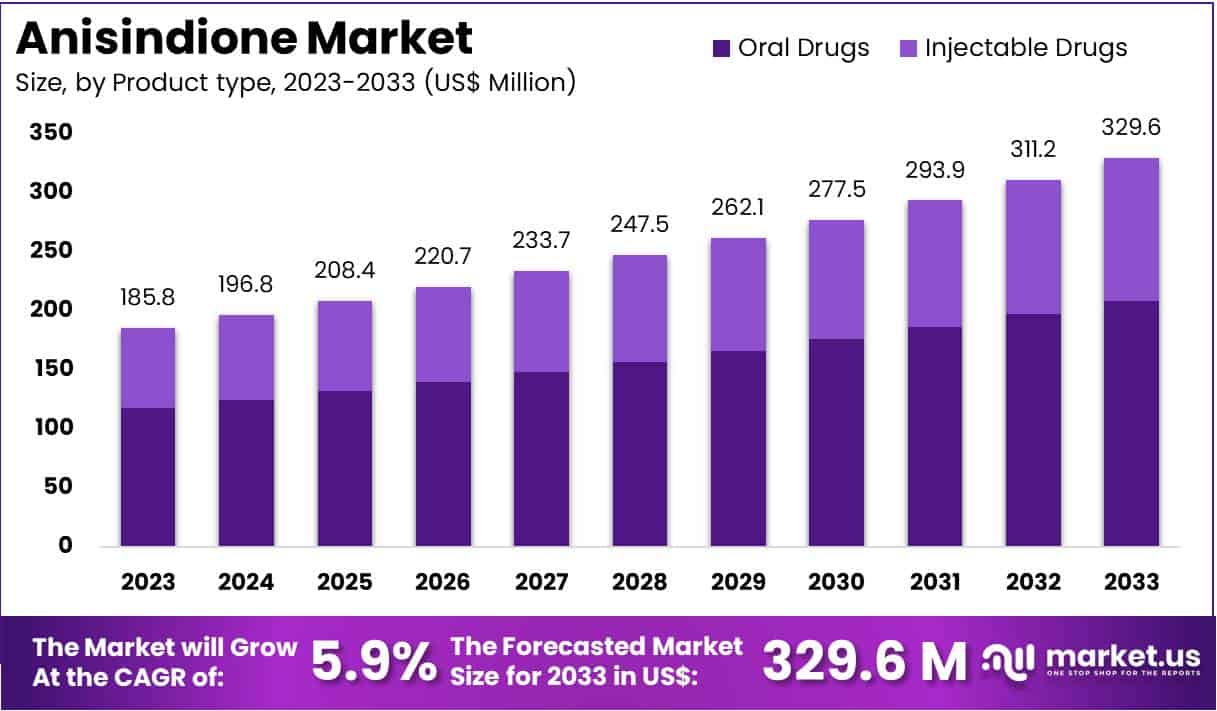
New York, NY – March 04, 2026 – The Global Anisindione Market size is expected to be worth around US$ 329.6 Million by 2033, from US$ 185.8 Million in 2023, growing at a CAGR of 5.9% during the forecast period from 2024 to 2033.
Anisindione is an oral anticoagulant that belongs to the indandione class of vitamin K antagonists. It has been utilized in clinical practice for the prevention and management of thromboembolic disorders, including deep vein thrombosis and pulmonary embolism. The therapeutic action of anisindione is achieved through the inhibition of vitamin K–dependent clotting factors, thereby reducing the formation of blood clots and supporting controlled anticoagulation.
The pharmacological profile of anisindione is characterized by its ability to interfere with hepatic synthesis of clotting factors II, VII, IX, and X. This mechanism of action contributes to its effectiveness in long-term anticoagulation therapy, particularly among patients requiring sustained management of coagulation disorders. Regular monitoring of prothrombin time and international normalized ratio (INR) is recommended to ensure optimal dosing and minimize adverse effects.
From a market perspective, anisindione represents a specialized segment within the global anticoagulant therapeutics landscape. Although newer direct oral anticoagulants have gained adoption, vitamin K antagonists continue to maintain relevance in specific patient populations due to established clinical familiarity and cost considerations.
The demand for effective anticoagulation therapies is supported by the rising global incidence of cardiovascular diseases, which remains a key growth driver in the broader anticoagulant market. Ongoing research and pharmacovigilance efforts continue to shape the therapeutic positioning of anisindione within this competitive environment.
Key Takeaways
- In 2023, the Anisindione market generated revenue of US$ 185.8 million. A compound annual growth rate (CAGR) of 5.9% is projected for the forecast period, with the market expected to reach US$ 329.6 million by 2033.
- By product type, the market is segmented into oral drugs and injectable drugs. Oral drugs dominated in 2023, accounting for a market share of 63.4%.
- Based on application, the market is categorized into protein hydrolysis, atrial fibrillation with embolization, anticoagulant, pulmonary embolism, and others. The anticoagulant segment held a leading position, capturing 40.7% of the total market share in 2023.
- Regionally, North America emerged as the leading market, securing a share of 38.5% in 2023.
Regional Analysis
North America accounted for the largest revenue share of 38.5% in the Anisindione market, primarily supported by its established use in anticoagulant therapy for thromboembolic disorders. According to the Centers for Disease Control and Prevention, venous thromboembolism affects up to 900,000 individuals annually in the United States, reinforcing the clinical need for effective anticoagulation management.
However, market growth has been moderated by the increasing adoption of newer anticoagulants offering enhanced safety profiles and reduced dietary restrictions. Despite competitive pressure, anisindione continues to maintain a niche role among patients requiring alternative treatment options due to contraindications or specific clinical considerations.
The Asia Pacific region is projected to register the highest CAGR over the forecast period. Rising cardiovascular disease prevalence in countries such as China and India supports demand. Nevertheless, limited awareness, regulatory complexities, and strong competition from advanced anticoagulants may constrain broader adoption, restricting growth to select patient segments.
Emerging Trends
- Focus on Patient-Friendly Formulations: Pharmaceutical manufacturers are emphasizing oral tablet formulations of Anisindione to enhance patient compliance and therapeutic convenience. Improved absorption profiles and reduced adverse effects are being targeted, supporting long-term anticoagulation management, particularly within outpatient and chronic care treatment frameworks.
- Increased Role in Personalized Medicine: Anisindione is increasingly evaluated within personalized treatment strategies, where patient-specific factors such as age, comorbidities, and organ function are assessed. This tailored approach enhances therapeutic safety and effectiveness, particularly among patients unsuitable for newer anticoagulant alternatives.
- Growing Attention in Niche Patient Groups: The drug is gaining measured adoption among niche patient populations with contraindications to modern anticoagulants. Individuals experiencing drug intolerance, allergies, or renal complications represent targeted segments, sustaining selective yet stable demand across specialized healthcare environments.
- Use in Combination Therapies: Clinical research is exploring Anisindione’s integration within combination therapy regimens for complex cardiovascular cases. Preliminary findings indicate potential improvements in risk management and treatment precision, supporting broader strategies focused on optimized, multi-drug anticoagulation protocols.
Use Cases
- Treatment of Deep Vein Thrombosis (DVT): Anisindione is prescribed for managing Deep Vein Thrombosis, where clot formation occurs in deep leg veins. By inhibiting clot progression, it reduces complications such as pulmonary embolism and supports improved recovery outcomes.
- Managing Atrial Fibrillation (AFib): In patients diagnosed with Atrial Fibrillation, Anisindione is utilized to lower stroke risk by preventing thrombus formation. Long-term anticoagulation therapy contributes to stable cardiovascular management, particularly among high-risk or medication-intolerant individuals.
- Preventing Pulmonary Embolism: Anisindione is administered to prevent Pulmonary Embolism by reducing clot migration to pulmonary arteries. Its anticoagulant mechanism supports recurrence prevention, particularly among patients with prior thromboembolic history.
- Post-Surgical Anticoagulation: Following major orthopedic procedures, Anisindione is used to minimize postoperative thrombotic complications. Anticoagulation therapy during recovery lowers venous clot risks, particularly in patients unsuitable for direct oral anticoagulants or requiring monitored therapeutic alternatives.
Frequently Asked Questions on Anisindione
- What are the primary therapeutic applications of Anisindione?
Anisindione has been primarily prescribed for the prevention and management of thromboembolic conditions such as deep vein thrombosis and pulmonary embolism. It has also been used in patients with atrial fibrillation and prosthetic heart valves to reduce clot formation risks. - How does Anisindione differ from Warfarin?
Anisindione and Warfarin both function as vitamin K antagonists; however, differences exist in chemical structure, pharmacokinetics, and adverse effect profiles. Warfarin has largely replaced Anisindione due to its broader clinical acceptance, standardized monitoring protocols, and established therapeutic guidelines. - What factors are influencing the Anisindione market growth?
The Anisindione market is influenced by the prevalence of cardiovascular and thromboembolic disorders, healthcare infrastructure development, and evolving anticoagulation guidelines. However, market expansion remains constrained due to limited product adoption and strong competition from newer anticoagulant therapies. - Which regions hold significance in the Anisindione market?
North America and parts of Europe have historically represented notable markets due to established cardiovascular treatment frameworks. However, demand remains limited. Emerging economies may demonstrate marginal opportunities, primarily driven by cost-sensitive healthcare systems and generic drug accessibility. - Who are the key participants in the Anisindione market?
The market landscape is characterized by a limited number of generic pharmaceutical manufacturers and regional suppliers. Large multinational companies have gradually shifted focus toward advanced anticoagulants, resulting in reduced competitive intensity within the Anisindione segment. - What is the future outlook of the Anisindione market?
The future outlook of the Anisindione market remains modest and stable, with limited growth prospects. Market sustainability is expected to depend on niche clinical demand, regulatory positioning, and pricing strategies in regions where alternative anticoagulants remain less accessible.
Conclusion
Anisindione remains a specialized yet clinically relevant anticoagulant within the broader therapeutic landscape. Although competitive pressure from newer direct oral anticoagulants has limited its widespread adoption, stable demand is sustained by niche patient populations and cost-sensitive healthcare systems.
The market, valued at US$ 185.8 million in 2023, is projected to expand at a CAGR of 5.9% through 2033, supported by the rising global burden of cardiovascular and thromboembolic disorders. Regional leadership by North America and emerging growth in Asia Pacific indicate selective expansion opportunities, while innovation in formulations and personalized treatment strategies continues to reinforce its targeted market positioning.
Discuss your needs with our analyst
Please share your requirements with more details so our analyst can check if they can solve your problem(s)




